Grado
A lagoon island settled by refugees from Aquileia, with basilicas of the sixth century still in use.
Updated 19 October 2026
AI illustration
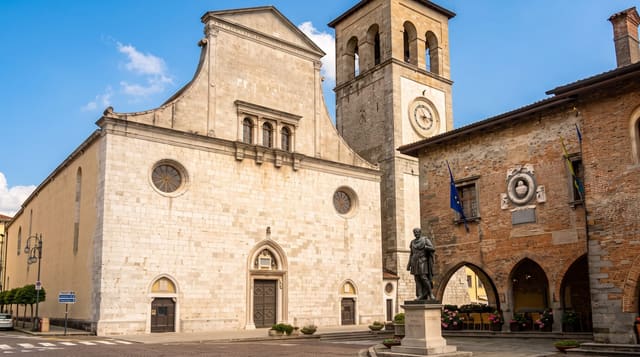
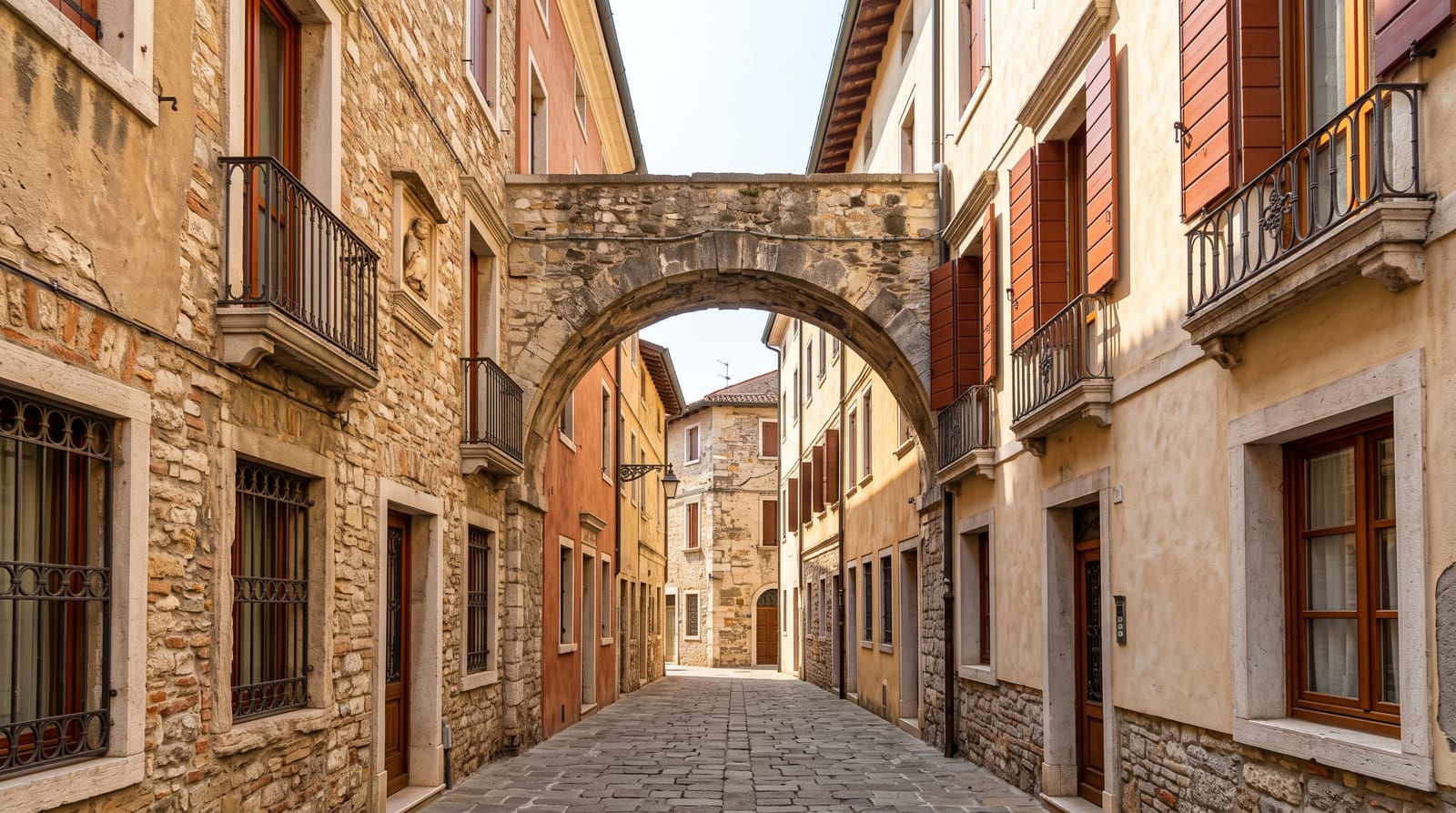
When Aquileia fell, its bishops and population moved to this island in the lagoon, and Grado became for a time a patriarchal seat; the basilica of Sant'Eufemia of 579 and the smaller Santa Maria delle Grazie both survive with mosaic floors and early Christian fittings, and a lapidary of sarcophagi sits between them. The old town is a knot of narrow calli around them. From the nineteenth century Grado developed as a sea-bathing resort for the Austrian empire, and it kept that role. Out in the lagoon stand casoni, thatched reed fishermen's huts, some still maintained and used.
History
Once mainly a fishing centre, the town on the lagoon between the mouth of the Isonzo and the Adriatic is now known as the "Island of the Sun", and it has been a spa town since 1873 (Wikipedia, Grado, Friuli Venezia Giulia).
What's there
- Sant'Eufemia - a basilica of 579 with its mosaic floor intact.
- The lapidary - early Christian sarcophagi between the two churches.
- The casoni - thatched reed huts on lagoon islets.
- The old calli - a compact grid of narrow lanes around the basilicas.
When to go
May to September for the beach and lagoon boats; the island is quiet out of season with many places shut. The Perdon de Barbana boat procession is in early July.
Practical notes
The resort side is developed and busy in August. Lagoon boat trips are seasonal. Casoni are private and viewed from the water.
Nearby
Aquileia lies inland; Trieste is east.
What to pack for Grado
Chosen from what this place is for. Tap a kit for the full checklist.
- Travel rod + reel - A packable multi-piece rod fits in a case and covers most holiday fishing. Find on Amazon
- Reef-safe sunscreen - High SPF that will not bleach the coral you are swimming over. Find on Amazon
- Comfortable walking shoes - Sightseeing means kilometres of pavement and cobbles daily. Find on Amazon
- Modest clothing - Shoulders and knees covered - the single most common requirement. Find on Amazon
Some links on this page are Amazon affiliate links - if you buy through them we may earn a small commission at no extra cost to you.
All packing kitsPlan your trip
Where to start if Grado is going on the list.
Booking links on this page are affiliate links - if you book through them we may earn a small commission at no extra cost to you. It never changes what we write about a place.
Opening times, ticket prices and seasonal closures change - check the official source before you go: official site.