Ferrara
The first planned city expansion of the Renaissance, ringed by nine kilometres of walls you can cycle.
Updated 18 October 2026
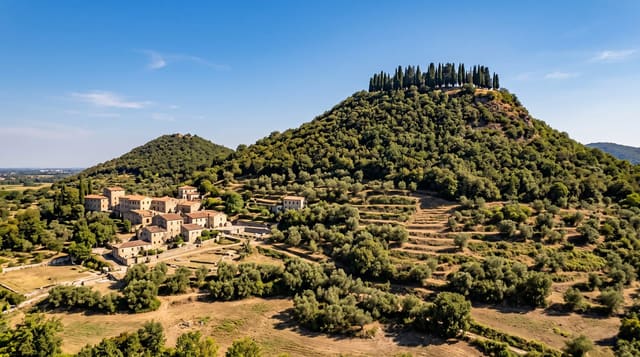
AI illustration
UNESCO World Heritage
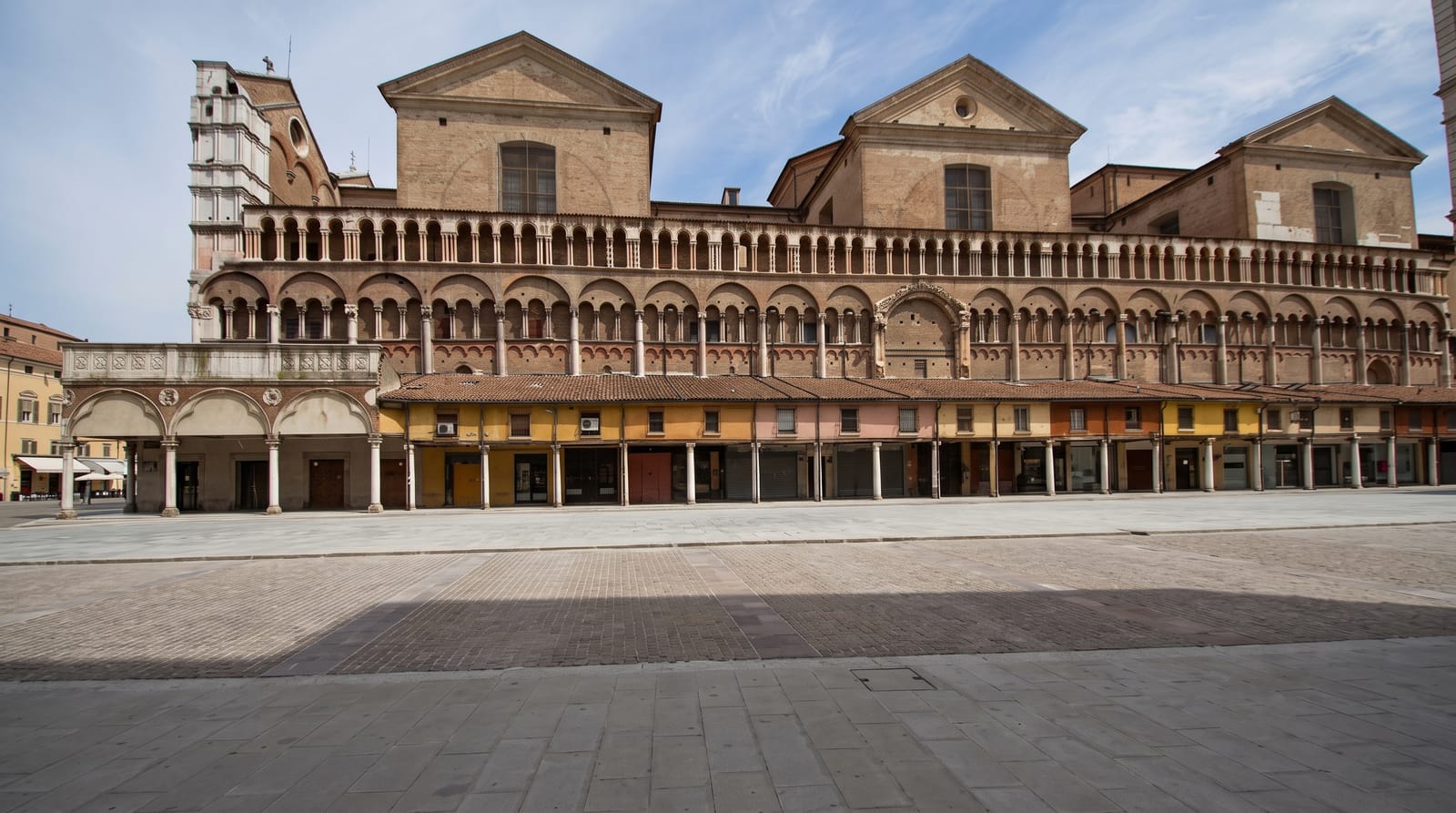
Ercole I d'Este commissioned Biagio Rossetti, in 1484 or 1492 by different accounts, to double the city northward on a planned grid of wide straight streets, an addition known as the Herculean Addition and often described as the first modern town planning in Europe; UNESCO listed the city for it in 1995. The Este castle sits moated in the middle with dungeons below the water line. The Palazzo dei Diamanti is faced with over eight thousand marble blocks cut to points. Nine kilometres of walls survive almost entirely and carry a cycling and walking path; Ferrara has more bicycles than most Italian cities and flat streets to use them on.
History
The first documented settlements in the area date from the 6th century BC, and the Etruscan town of Spina near the old mouth of the Po, lost until drainage works in 1922 revealed a necropolis of more than 4,000 tombs, was a major centre. Ferrara itself may have grown from two small Byzantine settlements, and it first appears in a document of the Lombard king Desiderius in 753; given to the papacy by the Franks, ceded to the House of Canossa in 988 and a free commune from 1115, it came under the Este, who ruled it until 1598. Borso d'Este was made duke of Ferrara by Pope Paul II in 1471, and under Lionello and Ercole I the city became an international centre of architecture, music, literature and art; in 1484 Ercole I asked Biagio Rossetti to draft the plan of the Herculean Addition, one of the most important examples of Renaissance town planning. An earthquake in 1570 ruined the economy, Alfonso II died without heirs in 1597, and Ferrara passed to the Papal States for almost 300 years of steady decline (Wikipedia, Ferrara).
What to look for
- The Herculean Addition - a planned Renaissance city extension on a grid.
- The moated castle - the Este fortress with dungeons below water level.
- The Palazzo dei Diamanti - a facade of eight thousand pointed marble blocks.
- The nine-kilometre walls - a near-complete circuit used for cycling.
When to go
April to June and September to October; the Palio in May claims to be the oldest in Italy. Summer on the Po plain is humid and winter is foggy and cold.
What to expect
Summer humidity and winter fog are both heavy on the plain. Some palaces close for exhibitions changeover. The wide planned streets can feel empty.
Nearby
Comacchio lies east; Bologna is south.
Key facts
Source: Wikidata, item Q13362, read on 18 October 2026.
What to pack for Ferrara
Chosen from what this place is for. Tap a kit for the full checklist.
- Padded shorts - The one thing that makes a full day in the saddle bearable. Find on Amazon
- Strong insect repellent - DEET or picaridin; the jungle is where bites and disease risk are highest. Find on Amazon
- Comfortable walking shoes - Sightseeing means kilometres of pavement and cobbles daily. Find on Amazon
- Helmet - Bring your own if you have a good one; rentals vary wildly. Find on Amazon
Some links on this page are Amazon affiliate links - if you buy through them we may earn a small commission at no extra cost to you.
All packing kitsPlan your trip
Where to start if Ferrara is going on the list.
Booking links on this page are affiliate links - if you book through them we may earn a small commission at no extra cost to you. It never changes what we write about a place.
Opening times, ticket prices and seasonal closures change - check the official source before you go: official site.