Domus Aurea
Nero's palace, buried by his successors and rediscovered when Renaissance artists lowered themselves in on ropes.
Updated 19 October 2026
AI illustration
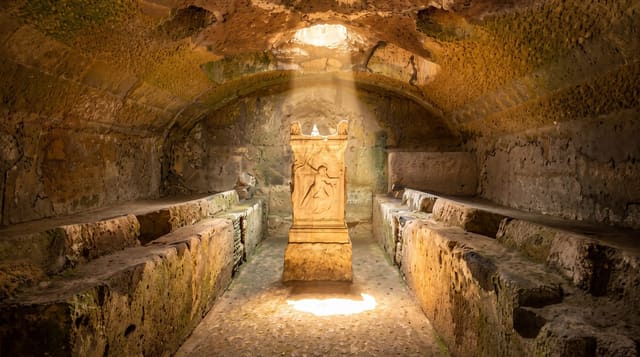
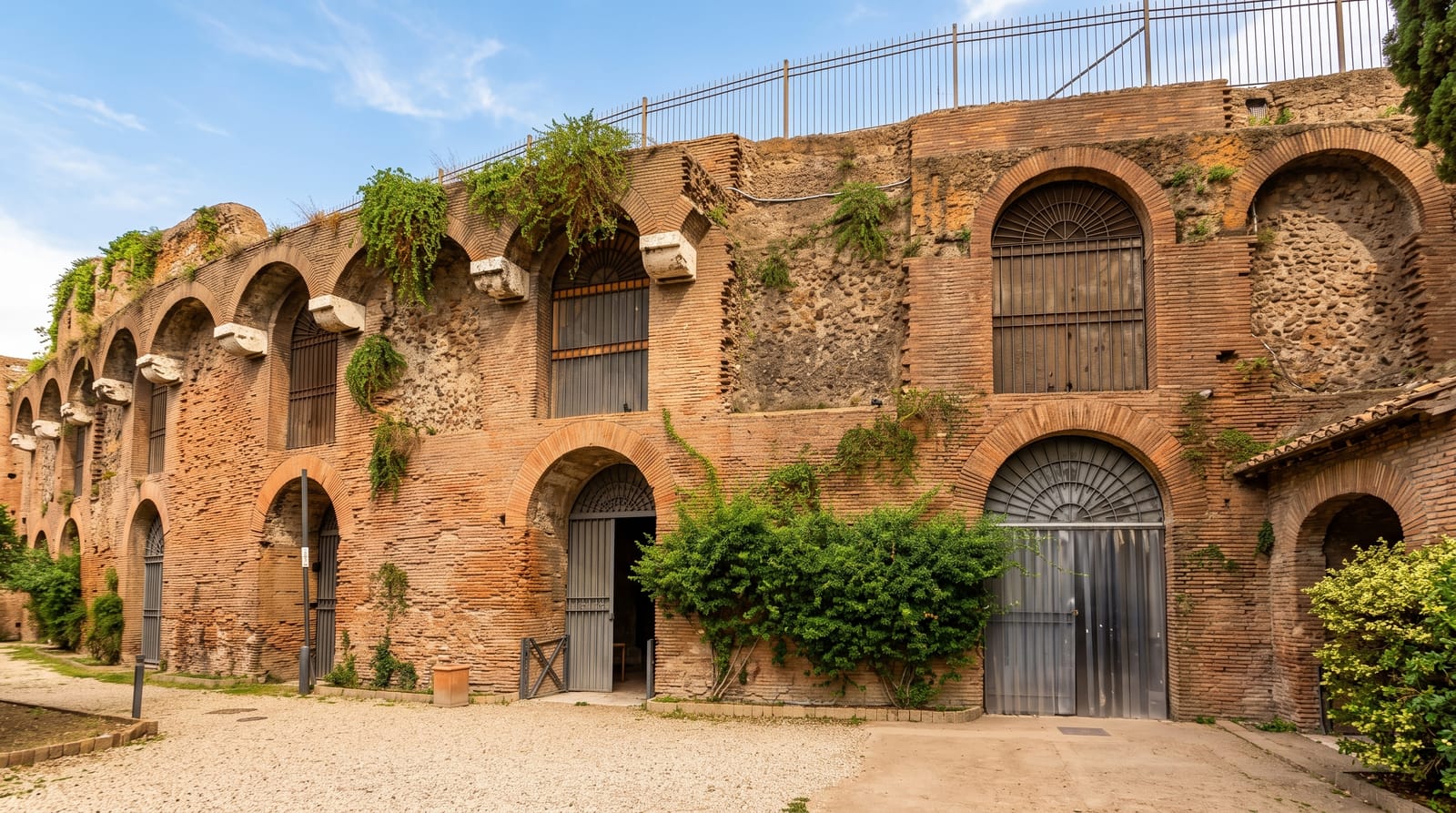
After the fire of 64 Nero took a large part of central Rome for a palace of gilded rooms, an artificial lake and a colossal statue of himself. His successors erased it: the lake became the site of the Colosseum, and Trajan filled the halls with rubble and built baths on top, which accidentally preserved them. In the 1480s people found they could drop through a hole into the ceilings, and artists including Raphael and Michelangelo were lowered in to copy the painted decoration, calling the buried rooms grottoes, which is where the word grotesque comes from. Visits now use virtual reality headsets to show the rooms as they were.
History
Nero began the palace after the great fire of 64 AD, replacing and extending his first palace on the site, the Domus Transitoria, on the Oppian Hill, and it was nearly complete by his death in 68, a remarkably short time for such an enormous project (Wikipedia, Domus Aurea).
Highlights
- The buried halls - rooms preserved because Trajan filled them with rubble.
- The Renaissance graffiti - names cut by artists who were lowered in.
- The octagonal room - a domed hall with an oculus, ahead of its time.
- The virtual reconstruction - headsets showing the decoration and the lost views.
When to go
Year-round; tours run on limited days, usually weekends, and must be booked well ahead. It is cool and damp inside whatever the season, so a layer is needed.
Things to know
Access is by booked guided tour on restricted days and slots sell out. The site is an active excavation and parts are closed. It is damp, cold and dimly lit.
Nearby
The Colosseum lies below; the Baths of Trajan are on the same hill.
Key facts
Source: Wikidata, item Q622438, read on 18 October 2026.
What to pack for Domus Aurea
Chosen from what this place is for. Tap a kit for the full checklist.
- Head torch + spare batteries - Hands-free light is essential; caves are truly dark. Find on Amazon
- Comfortable walking shoes - Sightseeing means kilometres of pavement and cobbles daily. Find on Amazon
- Grippy closed shoes - Cave floors are wet, muddy and slick with formations. Find on Amazon
- A slim anti-theft daypack - Zips that close properly; keep it in front in crowds and on transit. Find on Amazon
Some links on this page are Amazon affiliate links - if you buy through them we may earn a small commission at no extra cost to you.
All packing kitsPlan your trip
Where to start if Domus Aurea is going on the list.
Booking links on this page are affiliate links - if you book through them we may earn a small commission at no extra cost to you. It never changes what we write about a place.
Opening times, ticket prices and seasonal closures change - check the official source before you go: official site.