Capodimonte Museum
A Bourbon palace built to hold an inherited collection, in a park that was originally a hunting reserve.
Updated 16 October 2026
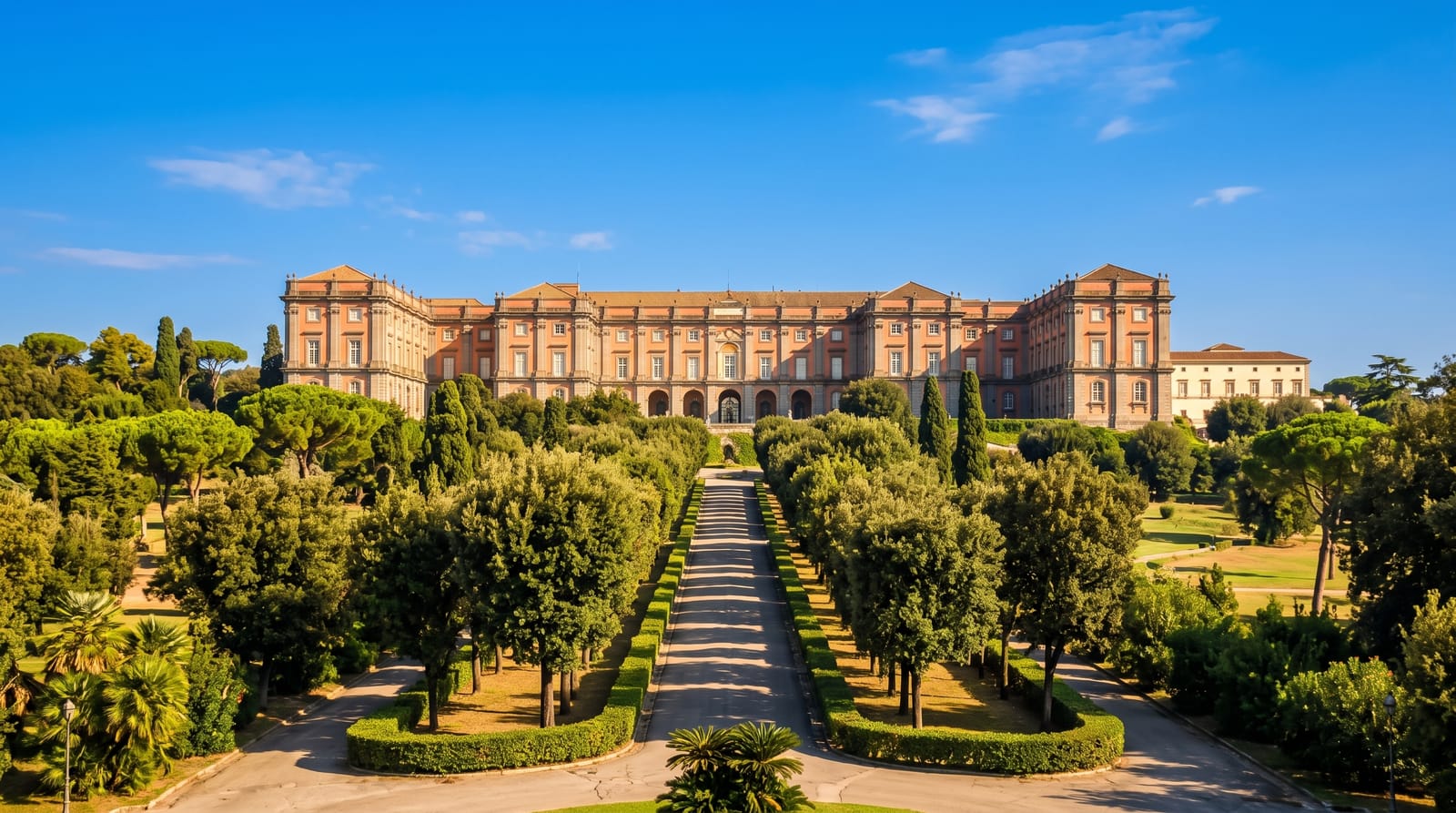
AI illustration
Charles of Bourbon began the palace in 1738 partly to house the Farnese collection he had inherited through his mother, and it holds Titian, Raphael, Parmigianino, Masaccio, Bruegel's The Blind Leading the Blind, and Caravaggio's Flagellation, painted in Naples. A separate floor covers Neapolitan painting from the thirteenth century onward, and there is a contemporary section including Warhol's Vesuvius. The royal porcelain manufactory operated here and one room is lined entirely with porcelain panels. The surrounding park of about a hundred and thirty hectares was a hunting reserve and is now open as a public park.
Background
Charles first meant to put up a hunting lodge on the hill, but the Palace of Portici was too small for his court, so a grand palace was planned instead. His mother, Elisabetta Farnese, was the last descendant of the ducal family of Parma. In 1787 a laboratory for restoring paintings opened on the advice of Jacob Philipp Hackert. The palace was completed in 1840, along with a gallery of contemporary art. The boudoir of Maria Amalia of Saxony came from Portici in 1866, and a Roman era marble floor from a villa on Capri followed in 1877. In 1950 the palace became solely a national museum, and its current form was inaugurated in 1957.
Source: Wikipedia, "Museo di Capodimonte"
Highlights
- The Farnese collection - Titian, Raphael, Parmigianino and Bruegel.
- Caravaggio's Flagellation - painted during his time in Naples.
- The porcelain room - a chamber lined entirely in Capodimonte porcelain.
- The park - 130 hectares of former royal hunting ground, free to enter.
When to go
Year-round; the museum closes Wednesdays. It is far quieter than Naples' central sights. The park is a genuine escape from the city in summer.
Good to know
It is on a hill outside the centre and the bus can be slow. The collection is very large and tiring in one visit. Some floors close in rotation.
Nearby
The Catacombs of San Gennaro lie below; the centre is south.
Key facts
Source: Wikidata, item Q290549, read on 18 October 2026.
What to pack for Capodimonte Museum
Chosen from what this place is for. Tap a kit for the full checklist.
- Comfortable walking shoes - Sightseeing means kilometres of pavement and cobbles daily. Find on Amazon
- A slim anti-theft daypack - Zips that close properly; keep it in front in crowds and on transit. Find on Amazon
- A refillable water bottle - Many cities have public fountains; save money and plastic. Find on Amazon
- A light layer + compact umbrella - For museum air-con and a sudden shower. Find on Amazon
Some links on this page are Amazon affiliate links - if you buy through them we may earn a small commission at no extra cost to you.
All packing kitsPlan your trip
Where to start if Capodimonte Museum is going on the list.
Booking links on this page are affiliate links - if you book through them we may earn a small commission at no extra cost to you. It never changes what we write about a place.
Opening times, ticket prices and seasonal closures change - check the official source before you go: official site.