Baths of Caracalla
A bath complex for sixteen hundred bathers, whose brick walls still stand thirty metres high.
Updated 19 October 2026

AI illustration
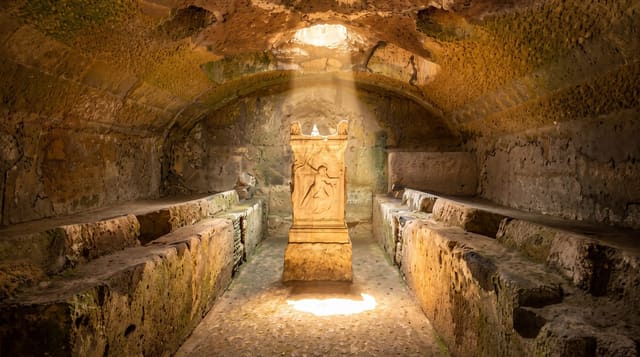
Caracalla's baths opened in 216 and covered about eleven hectares, taking an estimated sixteen hundred bathers at a time through a sequence of hot, warm and cold rooms with two gymnasia, libraries and gardens; water came by a dedicated aqueduct branch and was heated by furnaces stoked in service tunnels beneath, where slaves worked out of sight. The Goths cut the aqueducts in 537 and the baths were abandoned. What remains is the brick core, stripped of its marble but standing to about thirty metres, with mosaic floors surviving in places. Opera is staged in the ruins each summer.
History
The baths, the second largest public baths of Rome after those of Diocletian, were probably built between AD 212 and 216, and they inspired later buildings from the Baths of Diocletian and the Basilica of Maxentius to the original Pennsylvania Station in New York (Wikipedia, Baths of Caracalla).
What you'll find
- The standing brick walls - a Roman interior surviving to thirty metres.
- The service tunnels - the underground level where the furnaces were worked.
- The mosaic floors - geometric paving surviving across large areas.
- The summer opera - Rome's opera house staging productions in the ruins.
When to go
April to June and September to October; summer opera runs in the ruins in July and August, which restricts daytime access on performance days. The site closes Mondays.
Things to know
All the marble, statues and fittings are gone, so the effect is scale rather than decoration. There is little shade. Opera season limits visiting hours.
Nearby
The Circus Maximus lies north; the Appian Way runs south.
Key facts
Source: Wikidata, item Q502098, read on 18 October 2026.
What to pack for Baths of Caracalla
Chosen from what this place is for. Tap a kit for the full checklist.
- Head torch + spare batteries - Hands-free light is essential; caves are truly dark. Find on Amazon
- Comfortable walking shoes - Sightseeing means kilometres of pavement and cobbles daily. Find on Amazon
- Modest clothing - Shoulders and knees covered - the single most common requirement. Find on Amazon
- Grippy closed shoes - Cave floors are wet, muddy and slick with formations. Find on Amazon
Some links on this page are Amazon affiliate links - if you buy through them we may earn a small commission at no extra cost to you.
All packing kitsPlan your trip
Where to start if Baths of Caracalla is going on the list.
Booking links on this page are affiliate links - if you book through them we may earn a small commission at no extra cost to you. It never changes what we write about a place.
Opening times, ticket prices and seasonal closures change - check the official source before you go: official site.