Appian Way
The road Romans called the queen of roads, still paved with its original basalt and lined with tombs.
Updated 21 October 2026

AI illustration
UNESCO World Heritage
Appius Claudius Caecus began the road in 312 BC and it eventually ran to Brindisi, the main route to Greece and the east. Roman law forbade burial inside the city, so the roadside filled with tombs, and long stretches still carry them: family monuments, columbaria and the drum tomb of Caecilia Metella. Sections of the original basalt paving survive with cart ruts worn into them. The six thousand survivors of Spartacus's revolt were crucified along this road in 71 BC. On Sundays the inner section closes to traffic and it becomes a walking and cycling route under umbrella pines.
History
The censor Appius Claudius Caecus began and completed the first section in 312 BC as a military road south from Rome, the first long Roman road built to move troops beyond the region of the city; Statius later called it the queen of the long roads. It was built in layers - a levelled bed, small stones and mortar, gravel, then tightly fitted stone paving, cambered and ditched - and is believed to be the first Roman road to use lime cement; a causeway of about 31 kilometres carried it across the Pontine Marshes, where a parallel canal was dug in 162 BC, and it was later extended to Brindisi. In July 2024 the Appian Way was inscribed on the World Heritage List (Wikipedia, Appian Way).
The main sights
- The original paving - basalt blocks with cart ruts worn into them.
- The roadside tombs - family monuments and columbaria along the verges.
- Caecilia Metella - a large drum tomb turned medieval fortress.
- The Sunday closure - the road given over to walkers and cyclists.
When to go
April to June and September to October, and specifically a Sunday, when the inner section closes to cars. Summer is hot with little shade on the open stretches.
Practical notes
On weekdays traffic uses the narrow road with no pavement, which makes walking unpleasant and unsafe. The best-preserved stretches are several kilometres out. Bicycle hire is the practical approach.
Nearby
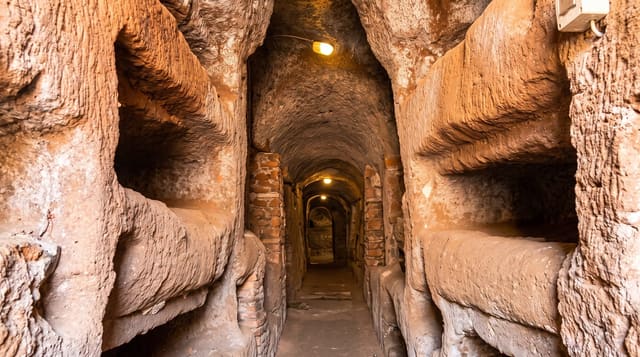
The Catacombs of San Callisto are on the road; central Rome lies north.
Key facts
Source: Wikidata, item Q189417, read on 18 October 2026.
What to pack for Appian Way
Chosen from what this place is for. Tap a kit for the full checklist.
- Padded shorts - The one thing that makes a full day in the saddle bearable. Find on Amazon
- Comfortable walking shoes - Sightseeing means kilometres of pavement and cobbles daily. Find on Amazon
- Helmet - Bring your own if you have a good one; rentals vary wildly. Find on Amazon
- A slim anti-theft daypack - Zips that close properly; keep it in front in crowds and on transit. Find on Amazon
Some links on this page are Amazon affiliate links - if you buy through them we may earn a small commission at no extra cost to you.
All packing kitsPlan your trip
Where to start if Appian Way is going on the list.
Booking links on this page are affiliate links - if you book through them we may earn a small commission at no extra cost to you. It never changes what we write about a place.
Opening times, ticket prices and seasonal closures change - check the official source before you go: official site.