Aci Trezza
Basalt stacks off a fishing village, which Homer's story says the blinded Cyclops threw after Odysseus.
Updated 4 September 2026
AI illustration
The Faraglioni dei Ciclopi are a group of basalt stacks standing just offshore, the largest around seventy metres, formed from an ancient submarine lava flow that predates the present Etna; their columnar structure is visible where the rock is broken. The Odyssey has Polyphemus, blinded by Odysseus, hurling rocks after the escaping ship, and these have been identified with them since antiquity. Lachea, the largest island, holds a small biological research station and a lizard subspecies found only there. Giovanni Verga set his novel I Malavoglia in the village, and the stacks and marine area are a protected reserve.
The landscape
- The Cyclops stacks - basalt columns rising offshore, up to about 70 metres.
- Lachea island - a research station and an endemic lizard subspecies.
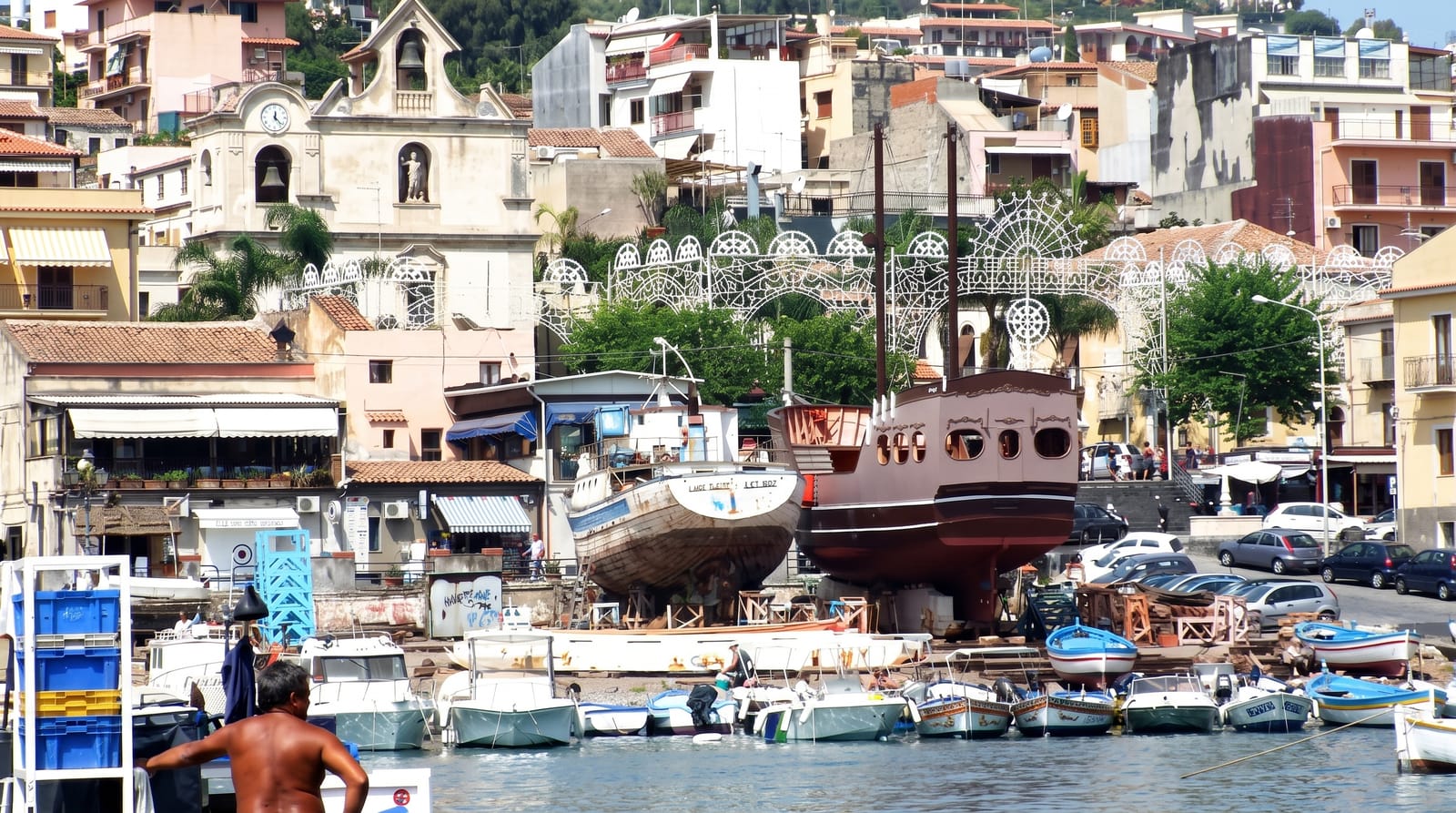
- The village harbour - a working fishing port below the stacks.
- The marine reserve - protected water around the stacks with regulated diving.
When to go
May to September for boat trips and swimming; the sea is exposed here and trips are cancelled in wind. Winter storms make the shore dramatic but inaccessible.
Things to know
Landing on the islands is restricted and requires permission. There is no sand, only rock platforms. Summer weekends fill the small waterfront.
Nearby
Catania lies south; Etna rises inland.
Key facts
Source: Wikidata, item Q341300, read on 18 October 2026.
What to pack for Aci Trezza
Chosen from what this place is for. Tap a kit for the full checklist.
- Broken-in walking shoes or boots - Grip and ankle support matter more than looks; never hike in brand-new boots. Find on Amazon
- Travel rod + reel - A packable multi-piece rod fits in a case and covers most holiday fishing. Find on Amazon
- Reef-safe sunscreen - High SPF that will not bleach the coral you are swimming over. Find on Amazon
- Your own mask + snorkel - A well-fitting mask is the single biggest comfort upgrade underwater. Find on Amazon
Some links on this page are Amazon affiliate links - if you buy through them we may earn a small commission at no extra cost to you.
All packing kitsPlan your trip
Where to start if Aci Trezza is going on the list.
Booking links on this page are affiliate links - if you book through them we may earn a small commission at no extra cost to you. It never changes what we write about a place.
Opening times, ticket prices and seasonal closures change - check the official source before you go: official site.