The Sea of Galilee
A freshwater lake more than two hundred metres below sea level, ringed by basalt hills, ancient synagogues and hot springs.
Updated 22 October 2026
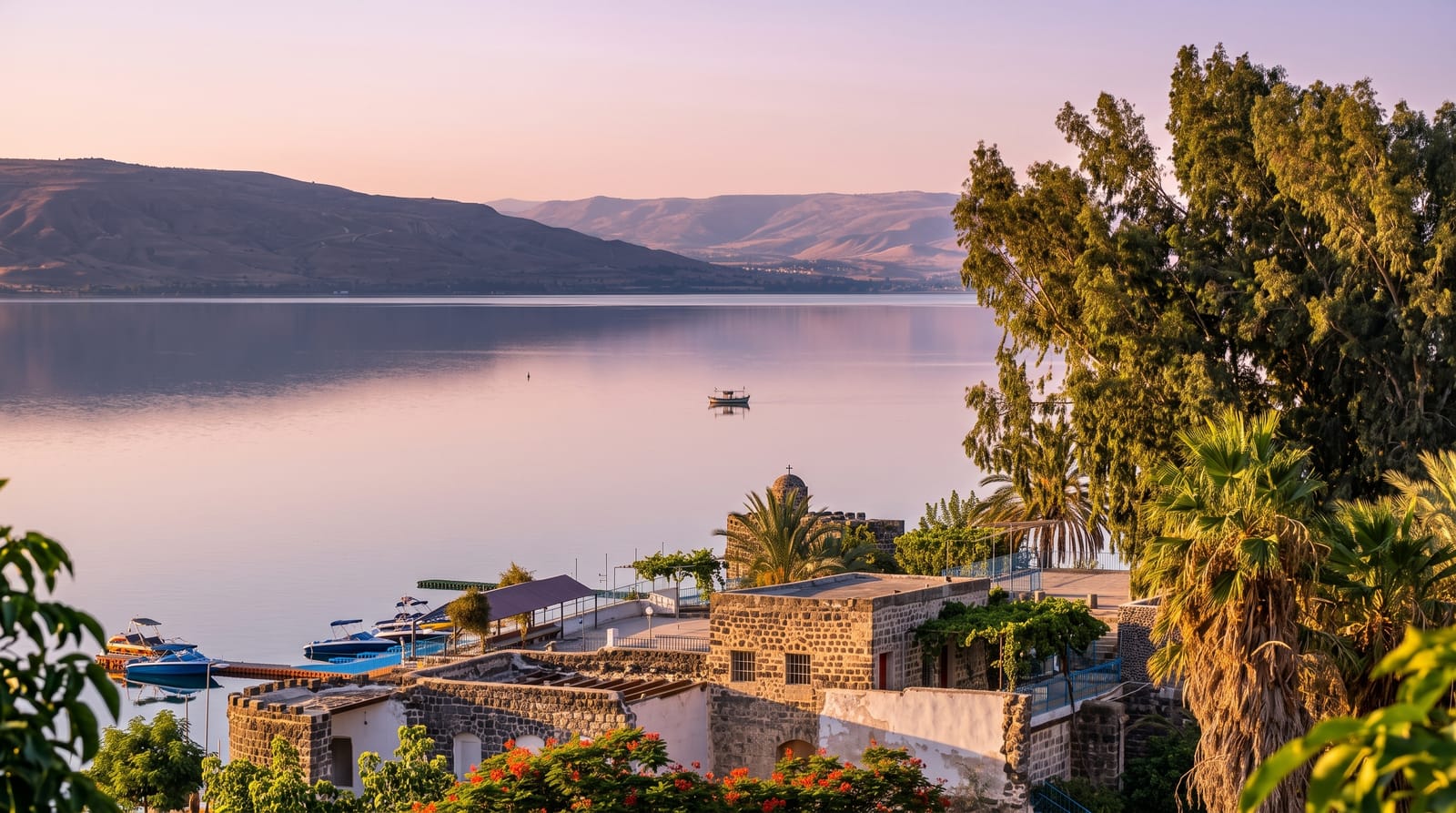
AI illustration
The Sea of Galilee, called Kinneret in Hebrew, is a freshwater lake sitting more than two hundred metres below sea level in a basalt basin, which gives it a warm microclimate and a dark stone shoreline. A circuit of the shore takes in an unusual density of sites: Capernaum with its white limestone synagogue built over an earlier basalt one, the ruins of Magdala with a first-century synagogue found during hotel construction, Hamat Tiberias with Roman-era hot springs and a mosaic floor, and the black basalt remains at Korazim. There is a marked footpath, the Kinneret Trail, running most of the way round, and the lake itself is used for swimming, kayaking and the fried tilapia that every restaurant on the shore serves.
History
In 1989 the remains of a hunter-gatherer site with mud huts were found under the water at Ohalo, at the southern end of the lake, and Iron Age cities of 1150-1000 BCE on the north-eastern shore probably reflect the Kingdom of Geshur mentioned in the Bible (Wikipedia, Sea of Galilee).
What's there
- Capernaum - the white synagogue on black basalt foundations by the shore.
- Magdala - a first-century synagogue and town excavated in recent decades.
- Hamat Tiberias - Roman hot springs and an elaborate ancient mosaic floor.
- The Kinneret Trail - the marked footpath circling most of the lake.
When to go
Spring and autumn; the basin is very hot in summer. Spring brings green hills and wildflowers in the Galilee. Israeli holiday weekends fill the beaches and campsites around the shore.
What to expect
Tiberias itself is a workaday town rather than a resort and divides opinion sharply. Many shoreline beaches charge entry and get crowded. Lake levels have swung dramatically over the decades, which is visible in the shoreline and is a live local subject. Several sites are religious pilgrimage destinations, so modest dress and quiet are expected.
Nearby
Nazareth and the Galilee hills lie west.
Key facts
Source: Wikidata, item Q126982, read on 18 October 2026.
What to pack for The Sea of Galilee
Chosen from what this place is for. Tap a kit for the full checklist.
- Broken-in walking shoes or boots - Grip and ankle support matter more than looks; never hike in brand-new boots. Find on Amazon
- Reef-safe sunscreen - High SPF that will not bleach the coral you are swimming over. Find on Amazon
- Quick-dry clothing - Board shorts or synthetics that shrug off spray and dry fast. Find on Amazon
- Modest clothing - Shoulders and knees covered - the single most common requirement. Find on Amazon
Some links on this page are Amazon affiliate links - if you buy through them we may earn a small commission at no extra cost to you.
All packing kitsPlan your trip
Where to start if The Sea of Galilee is going on the list.
Booking links on this page are affiliate links - if you book through them we may earn a small commission at no extra cost to you. It never changes what we write about a place.