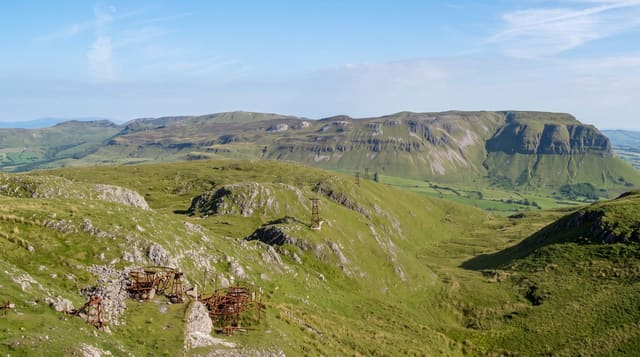
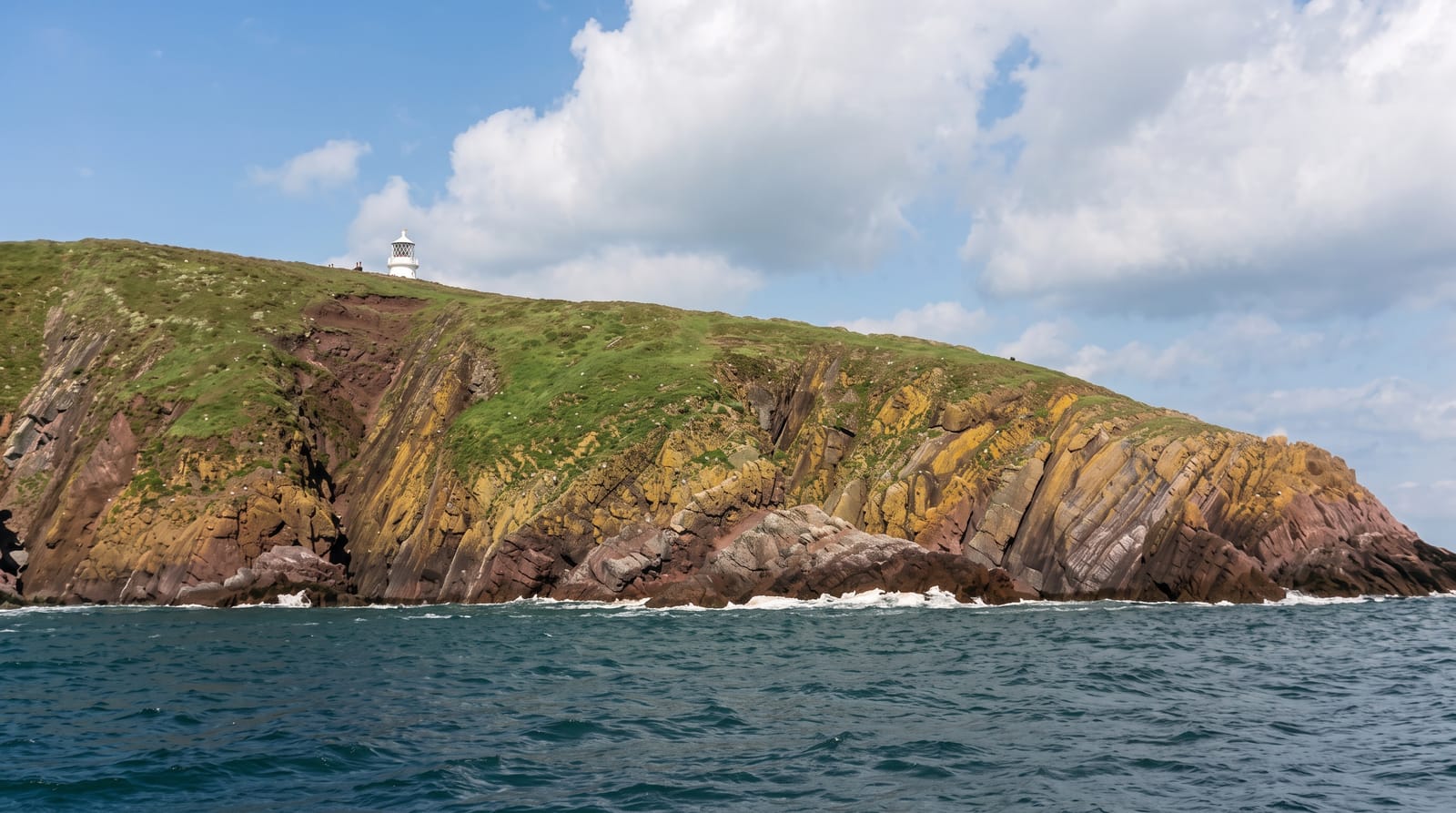
Inishmurray
An abandoned island off Sligo whose sixth-century monastic enclosure survives almost intact, with cursing stones inside it.
Updated 19 October 2026
Inishmurray lies about seven kilometres off the Sligo coast and has been uninhabited since 1948, when the last families - around sixty people - left. What makes it exceptional is the monastic site: a massive drystone cashel wall up to four metres thick enclosing beehive cells, three churches, altars and a schoolhouse, founded in the sixth century and left substantially undisturbed because nobody built over it. Inside are the Clocha Breaca, the cursing stones - a set of rounded stones on an altar which, by tradition, were turned anticlockwise while cursing an enemy, a practice reported into the twentieth century. Around the island are stations of pilgrimage marked by leachta and cross-slabs. There is no pier; boats put passengers onto rock and the landing cancels in any swell. Nothing is provided on the island - no water, shelter or facilities.
History
Saint Molaise reputedly founded a monastery here in the 6th century. The settlement was raided by the Vikings in 795 and again in 807, the monks eventually left, and the island stayed empty until the first secular settlement, probably in the 12th century; in 1948 its 60 remaining inhabitants moved to the mainland of County Sligo (Wikipedia, Inishmurray).
Highlights
- The cashel - a drystone wall up to four metres thick around the monastery.
- The beehive cells and churches - largely intact within the enclosure.
- The cursing stones - the Clocha Breaca on their altar.
- The abandoned village - houses left when the island emptied in 1948.
When to go
May to August. Landings depend entirely on sea state and cancel frequently - charter with an operator who knows the rock and expect the trip to be called off at short notice.
Practical notes
No pier - landing is onto rock from a small boat and is impossible in swell. No facilities, water or shelter on the island. Bring everything. The monastic remains are unfenced and fragile; do not climb on the cashel or move the stones.
Nearby
Mullaghmore and Streedagh are on the mainland opposite; Sligo is south.
Key facts
Source: Wikidata, item Q1663541, read on 18 October 2026.
What to pack for Inishmurray
Chosen from what this place is for. Tap a kit for the full checklist.
- Comfortable walking shoes - Sightseeing means kilometres of pavement and cobbles daily. Find on Amazon
- Modest clothing - Shoulders and knees covered - the single most common requirement. Find on Amazon
- A slim anti-theft daypack - Zips that close properly; keep it in front in crowds and on transit. Find on Amazon
- A scarf or shawl - To cover the head or shoulders on entry; women especially at mosques. Find on Amazon
Some links on this page are Amazon affiliate links - if you buy through them we may earn a small commission at no extra cost to you.
All packing kitsPlan your trip
Where to start if Inishmurray is going on the list.
Booking links on this page are affiliate links - if you book through them we may earn a small commission at no extra cost to you. It never changes what we write about a place.
Opening times, ticket prices and seasonal closures change - check the official source before you go: official site.