Altamont Gardens
A Carlow garden of about forty acres shaped by one woman over fifty years, with a hundred steps down to the Slaney.
Updated 12 October 2026
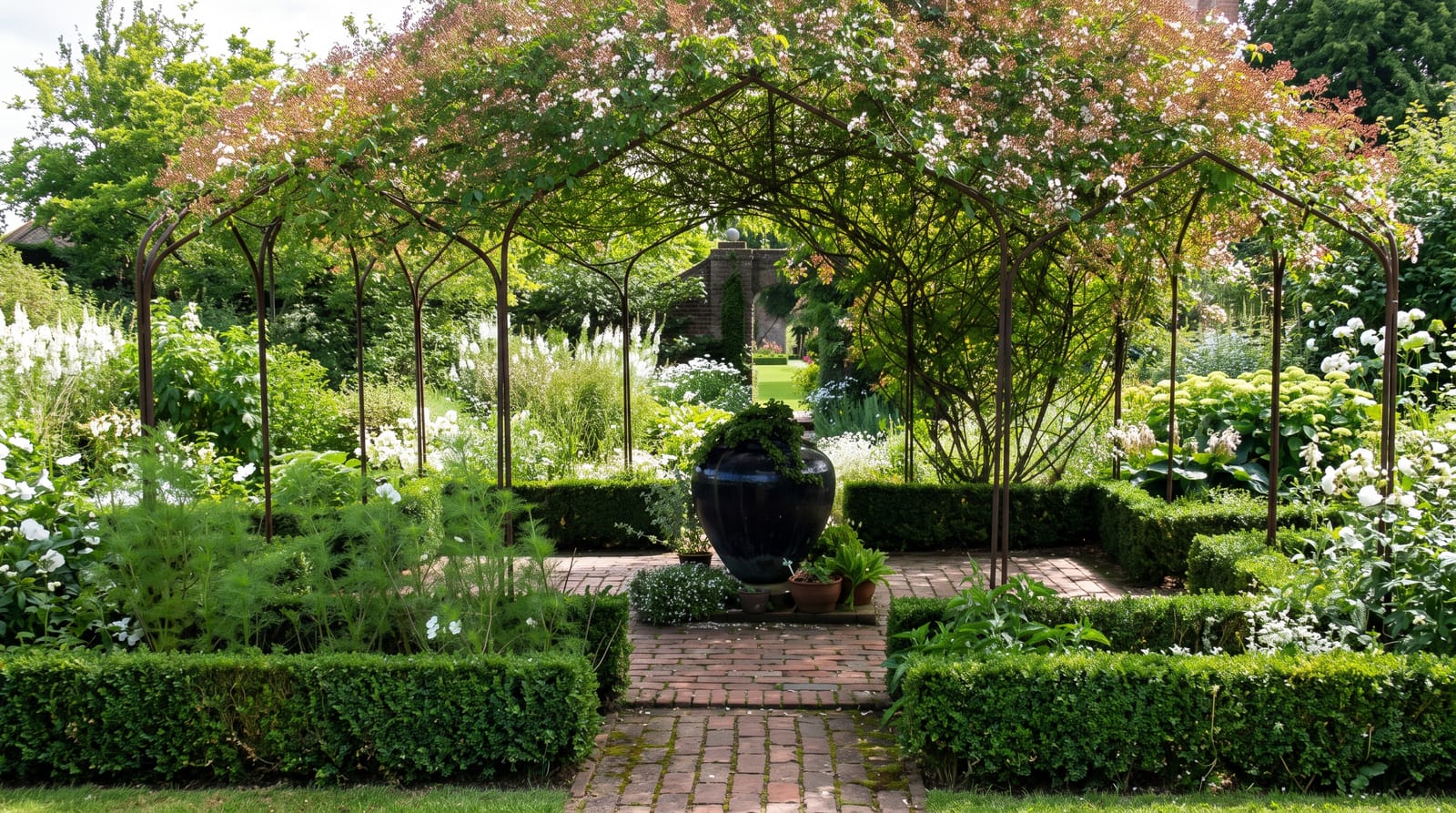
Corona North took on Altamont after her father's death in 1943 and spent the next half century working the garden herself, largely alone, before leaving it to the state in 1999. What she made is informal and unusually personal for a garden of this size: a lake dug by hand in the 1850s as famine relief work, a lawn of old roses, herbaceous borders, a bog garden and an arboretum, and the Ice Age Glen - a steep wooded ravine reached by the Hundred Steps down to the River Slaney, planted with rhododendrons and ferns among glacial boulders. Altamont holds a national collection of snowdrops and a substantial one of old roses; the snowdrop displays in February bring people who come for nothing else. The garden is free to enter, run by the OPW, with a plant nursery on site. Sections including the glen are steep and rough underfoot.
What you'll find
- The Ice Age Glen - a wooded ravine down the Hundred Steps to the Slaney.
- The snowdrop collection - a national collection, at its best in February.
- The famine lake - dug by hand in the 1850s as relief work.
- The old roses - the collection Corona North built over decades.
When to go
February for the snowdrops, which are the garden's speciality; May to September for the roses and borders. It is free and open year-round with reduced winter hours.
Practical notes
The glen is steep with a hundred steps and rough ground - not suitable for limited mobility. Free entry but the visitor facilities are modest. Wet underfoot for much of the year.
Nearby
Duckett's Grove is north; Browneshill Dolmen and Carlow town are west.
What to pack for Altamont Gardens
Chosen from what this place is for. Tap a kit for the full checklist.
- Comfortable walking shoes - Sightseeing means kilometres of pavement and cobbles daily. Find on Amazon
- A slim anti-theft daypack - Zips that close properly; keep it in front in crowds and on transit. Find on Amazon
- A refillable water bottle - Many cities have public fountains; save money and plastic. Find on Amazon
- A light layer + compact umbrella - For museum air-con and a sudden shower. Find on Amazon
Some links on this page are Amazon affiliate links - if you buy through them we may earn a small commission at no extra cost to you.
All packing kitsPlan your trip
Where to start if Altamont Gardens is going on the list.
Booking links on this page are affiliate links - if you book through them we may earn a small commission at no extra cost to you. It never changes what we write about a place.
Opening times, ticket prices and seasonal closures change - check the official source before you go: official site.