Shanidar Cave
A large cave in the Zagros where Neanderthal burials changed how the species was understood.
Updated 1 September 2026
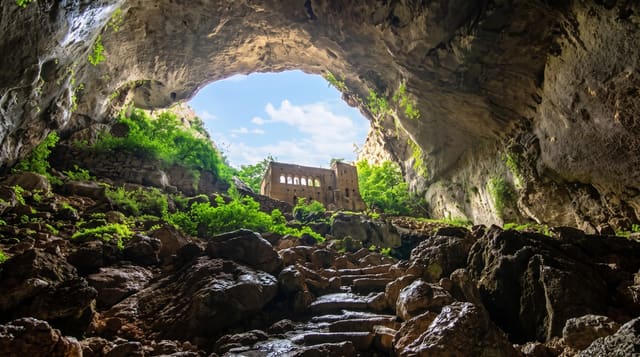
Shanidar is a wide cave mouth high on a mountainside in the Bradost range, and excavation there from the 1950s produced the remains of ten Neanderthal individuals, including one who had survived years with severe injuries and disability, which was taken as evidence that the group cared for its members, and another around whom clustered pollen was interpreted as flowers laid at burial, the flower burial that entered popular accounts of Neanderthals. Both interpretations have been argued over since, with the pollen possibly carried in by burrowing animals, but the site remains central to the debate about Neanderthal behaviour. New excavations from 2014 have found further remains. The cave itself is enormous, open and dry, and has been used by shepherds for millennia.
The landscape
- The great cave mouth - a wide high opening in the mountainside.
- Excavation trenches - the deep cuts left by successive campaigns.
- The dry interior - the sheltered floor used by people for millennia.
- The Zagros view - the mountains from the cave entrance.
When to go
April to June for green hills and wildflowers, September to November for clear weather. Winter can bring snow to the approach. The climb up to the cave takes twenty to thirty minutes.
Things to know
The walk up is steep. There is little interpretation on site and the famous finds are in Baghdad and the United States. Excavation seasons may restrict access. The flower-burial story is contested and the site does not explain that.
Nearby
Rawanduz lies south; Bekhal waterfall is on the same road.
Key facts
Source: Wikidata, item Q909799, read on 18 October 2026.
What to pack for Shanidar Cave
Chosen from what this place is for. Tap a kit for the full checklist.
- Head torch + spare batteries - Hands-free light is essential; caves are truly dark. Find on Amazon
- Warm base layers - Merino or synthetic against the skin - never cotton, which chills when damp. Find on Amazon
- Grippy closed shoes - Cave floors are wet, muddy and slick with formations. Find on Amazon
- An insulated + windproof jacket - A down or synthetic layer under a hard shell handles most cold. Find on Amazon
Some links on this page are Amazon affiliate links - if you buy through them we may earn a small commission at no extra cost to you.
All packing kitsPlan your trip
Where to start if Shanidar Cave is going on the list.
Booking links on this page are affiliate links - if you book through them we may earn a small commission at no extra cost to you. It never changes what we write about a place.
Opening times, ticket prices and seasonal closures change - check the official source before you go: official site.