Persepolis
The ceremonial heart of an ancient empire - the majestic ruins of the Achaemenid Persian capital, with soaring columns, monumental stairways and carved processions of the nations who once paid tribute.
Updated 18 October 2026
AI illustration
UNESCO World Heritage
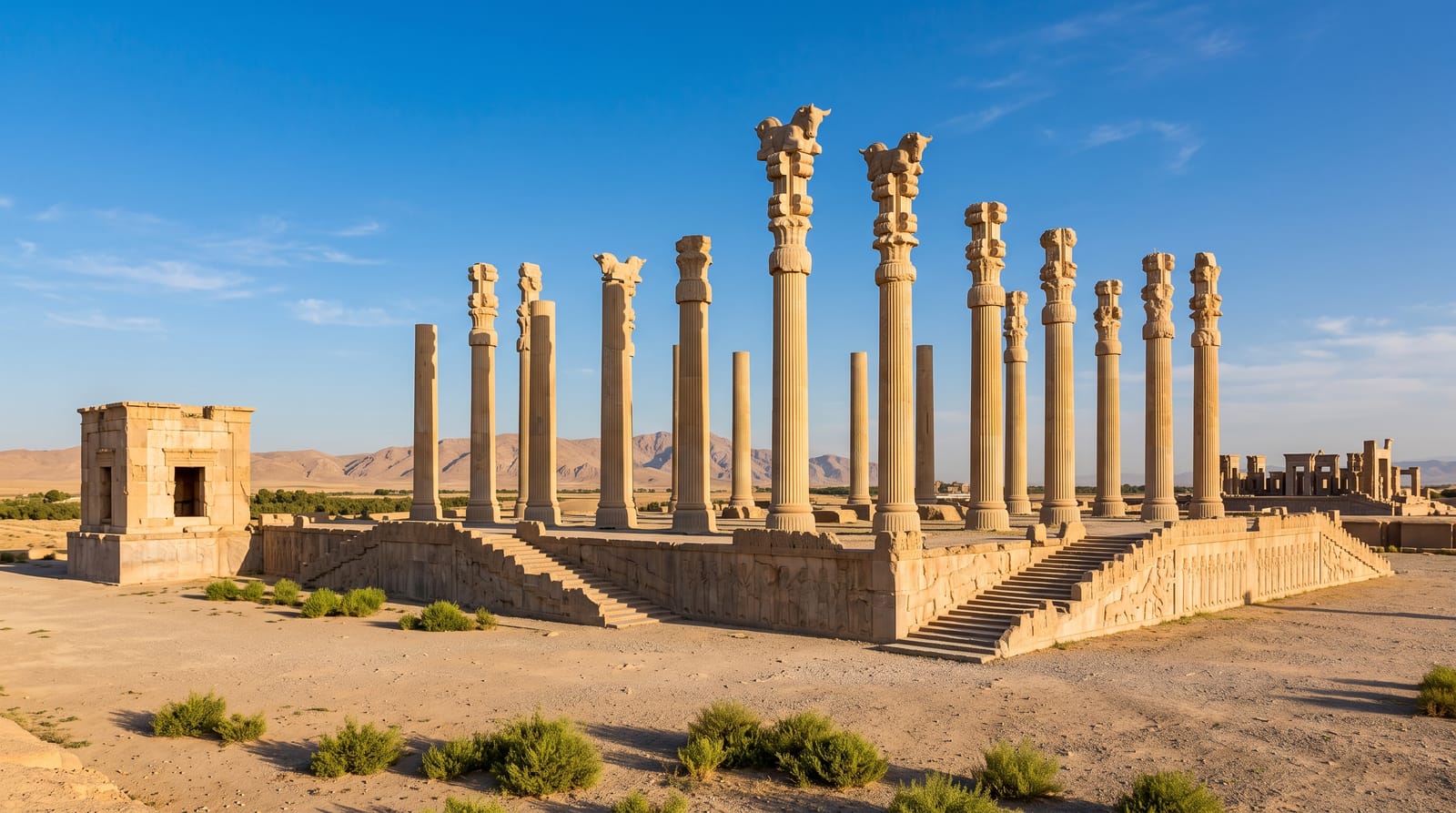
Persepolis, a UNESCO World Heritage Site near Shiraz, is the magnificent ceremonial capital of the ancient Achaemenid Persian Empire, founded by Darius the Great around 518 BCE. Though burned by Alexander the Great, its ruins remain awe-inspiring, spread across a vast stone terrace, with soaring fluted columns, the grand Gate of All Nations, and, most remarkably, superbly preserved bas-reliefs carving long processions of delegates from the empire's twenty-three subject nations bringing tribute, a vivid window into a lost civilisation.
History
There are signs that the site was already a seat of government under Cyrus the Great and Cambyses II, but it was Darius I who created Persepolis as the ceremonial seat of the empire: the earliest remains date to 515 BC, and inscriptions show that he built the terrace and the first palaces, ordering the Apadana, the Council Hall and the Treasury, which were finished under his son Xerxes I. Building continued under Artaxerxes I and into the 4th century BC, by workers who, as the Elamite tablets found on the site record, were paid in silver and food and came from across the empire. After defeating Darius III at Gaugamela in 331 BC, Alexander the Great forced the Persian Gates and took Persepolis in the winter of 331-330 BC, and soon after its palaces went up in flames, by one account set alight on purpose in revenge for the Persian sack of Athens. It has been a World Heritage Site since 1979 (Wikipedia, Persepolis).
Highlights
- The Apadana staircase - the reliefs of the tribute-bearing nations.
- The Gate of All Nations - the monumental entrance with winged bulls.
- The columns - the soaring remnants of the great halls.
- Naqsh-e Rostam - the rock-cut royal tombs nearby.
When to go
Spring, March to May, and autumn, September to November, for the most pleasant temperatures, as summers on the plain are fiercely hot; early morning or late afternoon light is best for the reliefs and cooler for walking the exposed site.
Things to know
It is a ruin on an exposed, shadeless terrace that gets extremely hot in summer, and a guide greatly enriches the reliefs' meaning; independent travel in Iran also involves practical planning around visas, dress codes and payment, as international cards do not work. The scale, artistry and history of Persepolis, though, are extraordinary, one of the great archaeological sites of the ancient world.
Nearby
The royal tombs of Naqsh-e Rostam and the city of Shiraz are close by.
Key facts
Source: Wikidata, item Q129072, read on 18 October 2026.
What to pack for Persepolis
Chosen from what this place is for. Tap a kit for the full checklist.
- Comfortable walking shoes - Sightseeing means kilometres of pavement and cobbles daily. Find on Amazon
- A slim anti-theft daypack - Zips that close properly; keep it in front in crowds and on transit. Find on Amazon
- A refillable water bottle - Many cities have public fountains; save money and plastic. Find on Amazon
- A light layer + compact umbrella - For museum air-con and a sudden shower. Find on Amazon
Some links on this page are Amazon affiliate links - if you buy through them we may earn a small commission at no extra cost to you.
All packing kitsPlan your trip
Where to start if Persepolis is going on the list.
Booking links on this page are affiliate links - if you book through them we may earn a small commission at no extra cost to you. It never changes what we write about a place.
Opening times, ticket prices and seasonal closures change - check the official source before you go: official site.