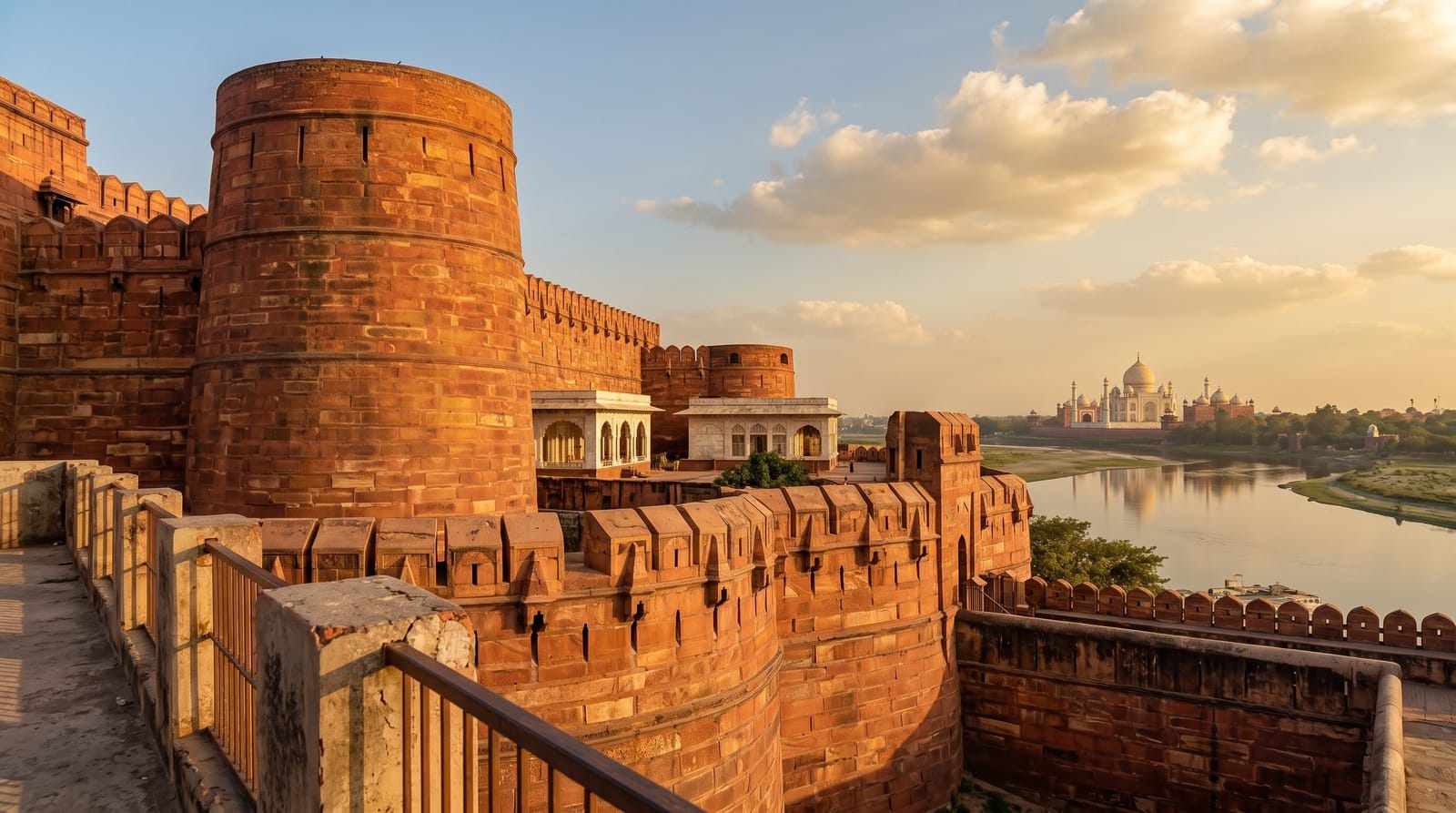
Tughlaqabad Fort
A vast fortified city abandoned within about fifteen years of being built, now a ruin of massive stone walls.
Saved in this browser only - no account, nothing sent anywhere. See your map
Ghiyath al-Din Tughlaq built this city from about 1321, throwing up walls of enormous rubble stone blocks with sloping faces, bastions and gates around a circuit of some six kilometres enclosing a citadel, palaces and a grid of streets. It was abandoned within roughly fifteen years, and legend attributes this to a curse by the Sufi saint Nizamuddin Auliya, whose stepwell workers the sultan had conscripted. What remains is one of the largest and least visited ruins in Delhi: broken walls, cisterns, underground chambers and rubble streets, overgrown and roamed by monkeys, with the sultan's own tomb across the road.
What you actually see
- The massive walls - sloping rubble-stone fortifications on a huge circuit.
- The citadel ruins - collapsed palaces, cisterns and underground rooms.
- The tomb of Ghiyath al-Din - the fortified mausoleum across the road.
- The emptiness - a vast ruin with very few visitors.
When to go
October to March; there is almost no shade and Delhi summers make the site dangerous. Mornings are best. Weekdays are extremely quiet, which is part of the appeal and part of the caution.
Honest expectations
The ruin is rough, overgrown and unlit, with monkeys that can be aggressive, and visitors are advised not to explore isolated corners alone. Interpretation is minimal and paths uneven.
Nearby
Mehrauli and Qutb Minar lie west; the Tughlaq tomb is across the road.
What to pack for Tughlaqabad Fort
Chosen from what this place is for. Tap a kit for the full checklist.
Opening times, ticket prices and seasonal closures change - check the official source before you go: official site.