Sultanpur National Park
A shallow wetland on Delhi's edge where thousands of migrating birds stop each winter.
Updated 19 October 2026
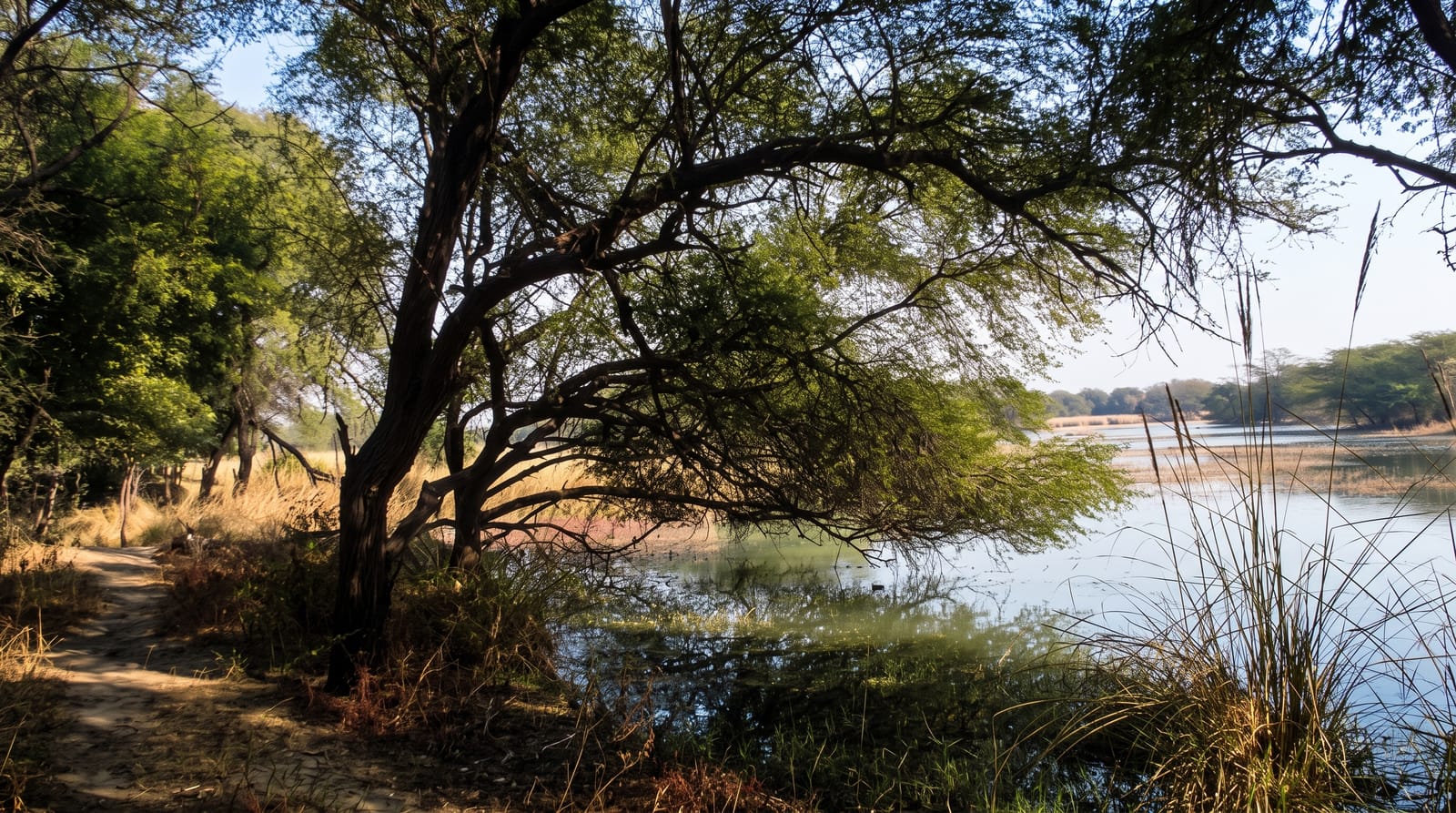
AI illustration
Sultanpur is small, around a square and a half kilometre of shallow lake, marsh and scrub within reach of Delhi, and its importance is as a stopover on the Central Asian flyway: through the winter, painted storks, greater flamingos, pelicans, cranes, geese, ducks and waders arrive in numbers well out of proportion to the site's size, with over two hundred and fifty species recorded. Nilgai, large antelope, wander the scrub alongside the resident birds. A path circles the water with hides at intervals. The lake depends on pumped water, and its condition varies year to year.
History
In 1970 Peter Jackson wrote to the Prime Minister, Indira Gandhi, about the need to make the Sultanpur jheel near Delhi a bird sanctuary; she planned to visit, cancelled at the last minute, and later asked the state government of Haryana to protect the wetland. The area was declared a bird sanctuary in 1972 and upgraded to a national park in July 1991 (Wikipedia, Sultanpur National Park).
What you'll find
- The winter migrants - storks, flamingos, pelicans and waterfowl in numbers.
- The circuit path - a walk around the lake with hides at intervals.
- The nilgai - large antelope grazing the surrounding scrub.
- The proximity to Delhi - serious birding within an hour of the city.
When to go
November to February for migrants, with December and January the peak; birds thin out from March. The park closes on Tuesdays. Early morning is best for activity and light.
Things to know
The lake is small and dries or shrinks in poor years, sometimes with few birds. Delhi's winter smog can spoil visibility. Weekends bring crowds and noise that push birds away from the path.
Nearby
Gurugram lies northeast; Delhi is further northeast.
Key facts
Source: Wikidata, item Q2985097, read on 18 October 2026.
What to pack for Sultanpur National Park
Chosen from what this place is for. Tap a kit for the full checklist.
- Broken-in walking shoes or boots - Grip and ankle support matter more than looks; never hike in brand-new boots. Find on Amazon
- Layers + a waterproof shell - Mountain weather turns fast; a packable rain jacket saves the day. Find on Amazon
- Daypack with rain cover - 20-30 litres holds water, snacks, layers and a first-aid kit. Find on Amazon
- Offline maps + a power bank - Download the trail before you lose signal; carry backup charge. Find on Amazon
Some links on this page are Amazon affiliate links - if you buy through them we may earn a small commission at no extra cost to you.
All packing kitsPlan your trip
Where to start if Sultanpur National Park is going on the list.
Booking links on this page are affiliate links - if you book through them we may earn a small commission at no extra cost to you. It never changes what we write about a place.
Opening times, ticket prices and seasonal closures change - check the official source before you go: official site.