St Mary's Islands
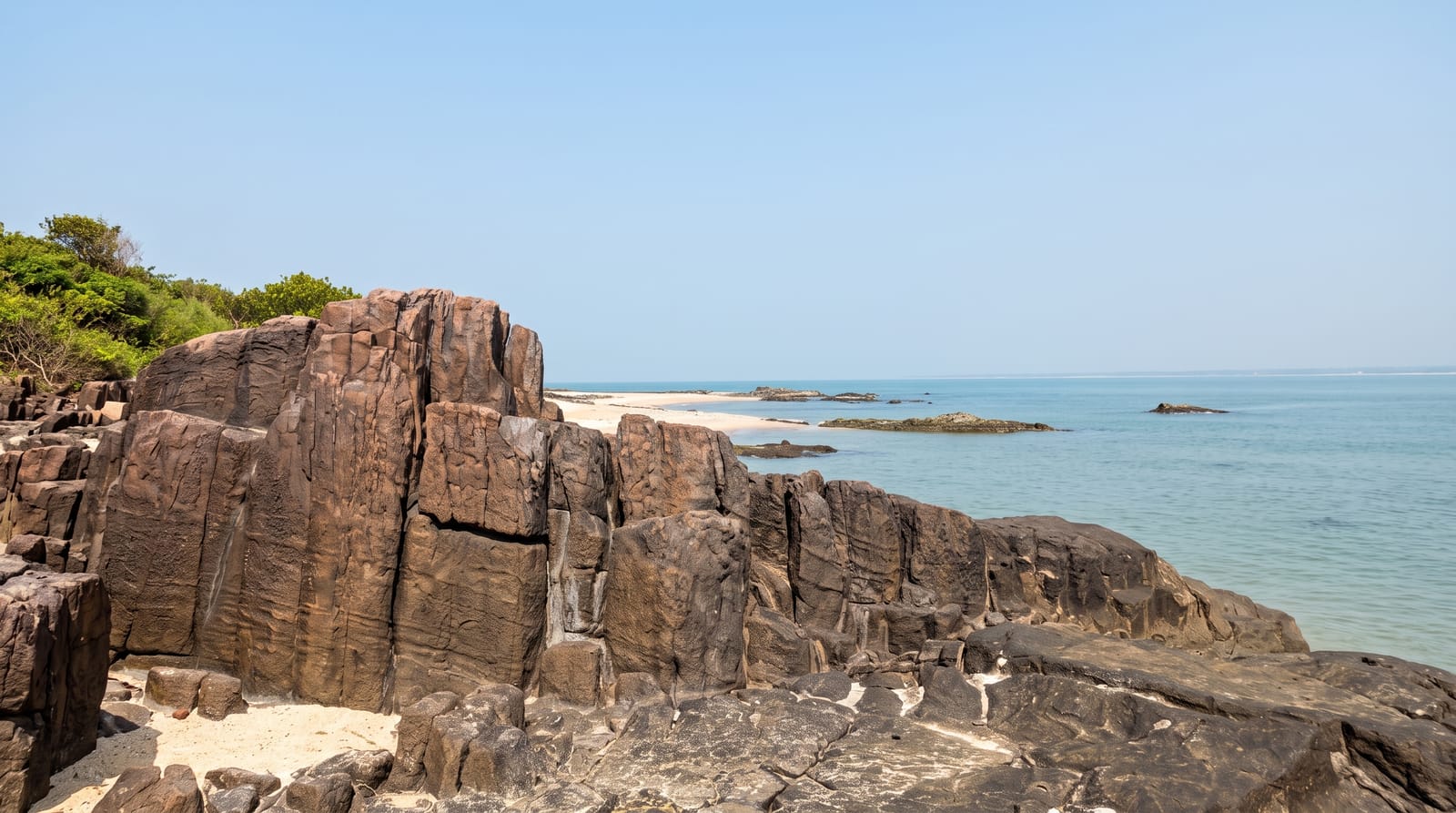
Columns of hexagonal basalt on a small island, formed from lava that erupted when India lay beside Madagascar.
Updated 19 October 2026
AI illustration
The islands off Malpe carry columnar basalt, lava that cooled slowly enough to crack into vertical hexagonal columns, the same process that produced the Giant's Causeway. The rock here is more than ninety million years old and is associated with volcanism from the period when the Indian plate was separating from Madagascar, which makes the site geologically significant to plate tectonics as well as visually striking. Coconut Island is the one open to visitors, with the columns exposed along the shore, sand between them and shells piled on the beach. Boats run from Malpe when the sea allows.
History
During the Portuguese discovery of the sea route to India in 1498, Vasco da Gama landed on the islands, set up a cross and named one of them O Padrão de Santa Maria, "the pillar of St. Mary", before sailing on to Calicut. Locally they are known as Thonsepar, the "coconut islands", and in 1975 the Geological Survey of India declared them a National Geological Monument for their columnar lava (Wikipedia, St. Mary's Islands).
What's there
- The basalt columns - vertical hexagonal formations along the shore.
- The shell beach - sand thick with broken shell between the rocks.
- The boat crossing - a short run from Malpe harbour.
- The Madagascar link - rock formed as the plates separated.
When to go
October to May; boats do not run in the monsoon from June to September when the sea is rough. Mornings are calmer. Time on the island is limited by the boat schedule.
What to expect
Boats are cancelled at short notice in rough seas. There is no shade or facilities on the island and visits are capped at an hour or two. Litter has been a problem despite restrictions.
Nearby
Udupi lies east; Malpe beach is at the jetty.
Key facts
Source: Wikidata, item Q4254076, read on 18 October 2026.
What to pack for St Mary's Islands
Chosen from what this place is for. Tap a kit for the full checklist.
- Broken-in walking shoes or boots - Grip and ankle support matter more than looks; never hike in brand-new boots. Find on Amazon
- Strong insect repellent - DEET or picaridin; the jungle is where bites and disease risk are highest. Find on Amazon
- Layers + a waterproof shell - Mountain weather turns fast; a packable rain jacket saves the day. Find on Amazon
- Long, light, quick-dry clothing - Covers skin from insects and sun without cooking you in the humidity. Find on Amazon
Some links on this page are Amazon affiliate links - if you buy through them we may earn a small commission at no extra cost to you.
All packing kitsPlan your trip
Where to start if St Mary's Islands is going on the list.
Booking links on this page are affiliate links - if you book through them we may earn a small commission at no extra cost to you. It never changes what we write about a place.
Opening times, ticket prices and seasonal closures change - check the official source before you go: official site.