Sonepur Cattle Fair
A month-long fair at a river confluence, once the largest livestock market in Asia, now much reduced.
Updated 19 October 2026
AI illustration
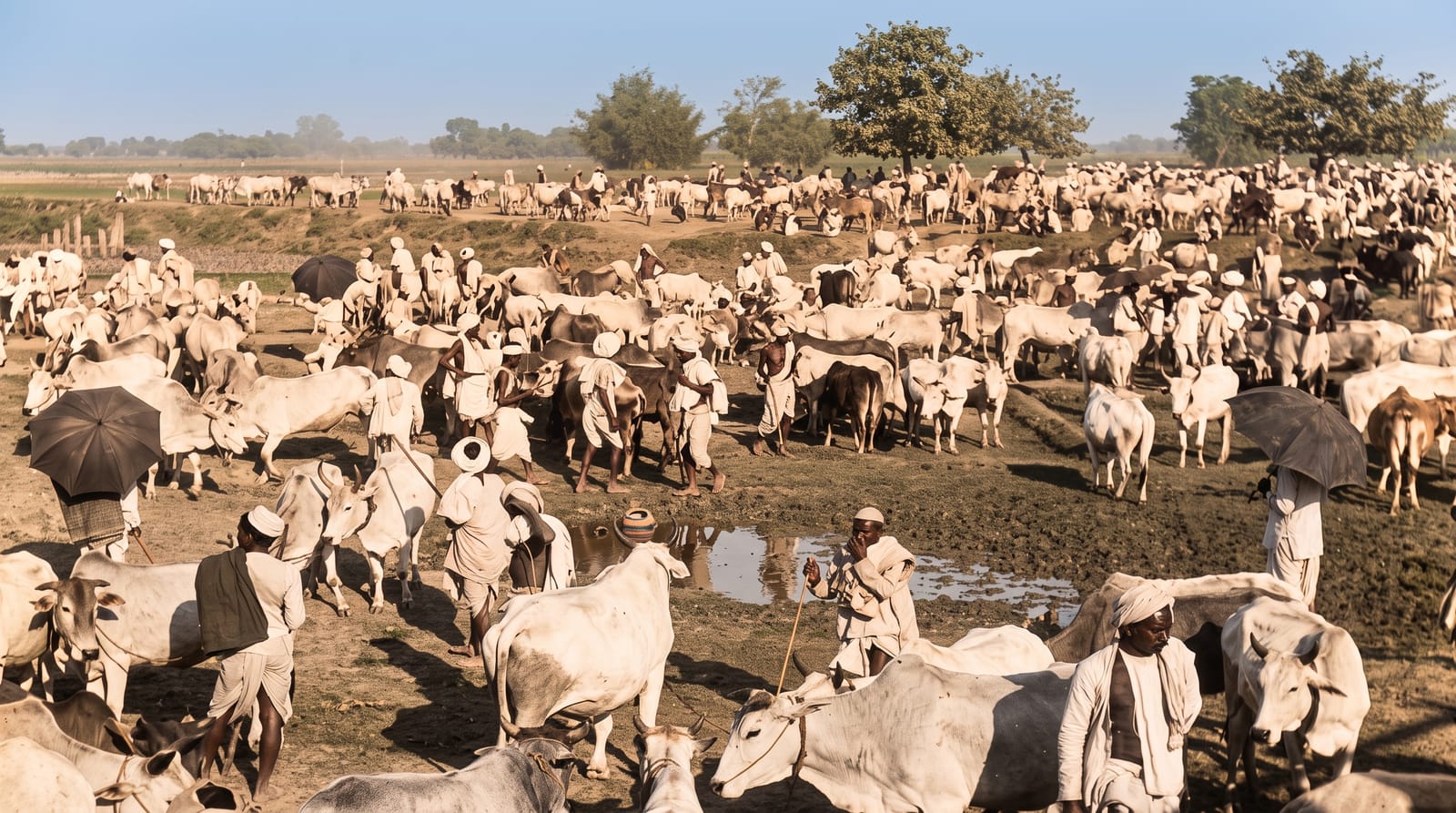
The fair at Sonepur begins on Kartik Purnima, in November or December, when pilgrims bathe at the confluence of the Ganges and Gandak, and it runs for around a month, historically as the largest livestock market in Asia: horses, cattle, buffalo, camels, birds and, until they were banned, elephants traded on a scale that drew buyers from across northern India. Its elephant market was the emblem of the fair and ended with wildlife protection law. What remains is a large fair of horses and cattle, bird and craft stalls, theatre tents, wrestling and a wide temporary town on the sands, considerably smaller than it once was.
History
The fair was first held at Hajipur, with only the puja performed at the Harihar Nath temple of Sonpur, but under the Mughal emperor Aurangzeb its venue moved to Sonpur. The temple is believed to have been built by Rama on his way to the court of King Janak, and the place is linked with the legend of Gajendra Moksha, the long fight between an elephant and a crocodile (Wikipedia, Sonepur Cattle Fair).
What's there
- The horse and cattle lines - the surviving core of the livestock trade.
- The confluence bathing - pilgrims at the Ganges and Gandak on Kartik Purnima.
- The stall town - a temporary fair of crafts, food and entertainment.
- The Hariharnath temple - the shrine at the fair site.
When to go
November to December, starting on Kartik Purnima; the first days around the bathing are the busiest and most photographed. The fair thins considerably over the following weeks.
Things to know
The elephant trade that made the fair famous has been illegal for years and is gone. Animal welfare conditions at the fair draw sustained criticism. Facilities are basic and crowds dense on the opening days.
Nearby
Patna lies south across the river; Vaishali is north.
Key facts
Source: Wikidata, item Q7560931, read on 18 October 2026.
What to pack for Sonepur Cattle Fair
Chosen from what this place is for. Tap a kit for the full checklist.
- Binoculars - The single best wildlife tool - even a compact pair transforms a sighting. Find on Amazon
- Comfortable walking shoes - Sightseeing means kilometres of pavement and cobbles daily. Find on Amazon
- Modest clothing - Shoulders and knees covered - the single most common requirement. Find on Amazon
- A zoom camera or long lens - Animals rarely come close; reach beats megapixels. Find on Amazon
Some links on this page are Amazon affiliate links - if you buy through them we may earn a small commission at no extra cost to you.
All packing kitsPlan your trip
Where to start if Sonepur Cattle Fair is going on the list.
Booking links on this page are affiliate links - if you book through them we may earn a small commission at no extra cost to you. It never changes what we write about a place.
Opening times, ticket prices and seasonal closures change - check the official source before you go: official site.