Sariska Tiger Reserve
The reserve that lost every tiger to poaching in 2004, and was restocked by moving them in by helicopter.
Updated 4 September 2026
AI illustration
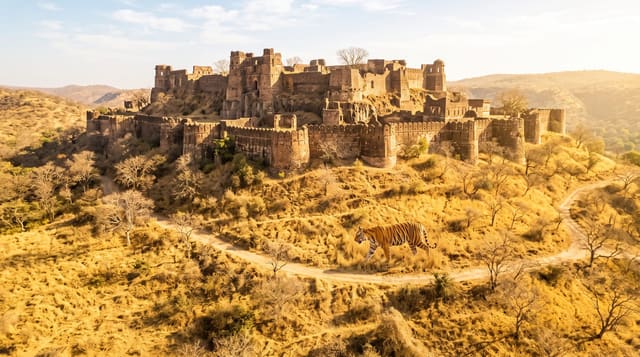
Sariska covers around eight hundred and eighty square kilometres of dry deciduous forest and scrub in the Aravallis, and it became notorious in 2004 when a survey confirmed that poaching had removed every last tiger from the reserve. From 2008 tigers were translocated from Ranthambhore, some flown in by helicopter, in the first relocation of its kind in India, and a population has re-established since with mixed results. The forest also holds leopard, hyena, jackal, sambar and nilgai. Within the reserve stand the Kankwari fort, where Aurangzeb is said to have held his brother, and the tenth-century Neelkanth temple ruins.
What's there
- The reintroduced tigers - a population rebuilt after the 2004 loss.
- Kankwari fort - an isolated fort deep inside the reserve.
- Neelkanth temples - tenth-century ruins in the forest.
- The Aravalli scrub - dry deciduous forest with sambar and nilgai.
When to go
October to March for comfortable conditions; March to June gives better sightings as water concentrates but is punishingly hot. The park closes in the monsoon, with some zones open.
Practical notes
Tiger sightings remain considerably less likely than at Ranthambhore. Zone allocation is by lottery and cannot be chosen. Village relocation inside the reserve remains unresolved and disturbance is visible.
Nearby
Bhangarh lies south; Alwar is northeast.
Key facts
Source: Wikidata, item Q2572177, read on 18 October 2026.
What to pack for Sariska Tiger Reserve
Chosen from what this place is for. Tap a kit for the full checklist.
- Broken-in walking shoes or boots - Grip and ankle support matter more than looks; never hike in brand-new boots. Find on Amazon
- Strong insect repellent - DEET or picaridin; the jungle is where bites and disease risk are highest. Find on Amazon
- Modest clothing - Shoulders and knees covered - the single most common requirement. Find on Amazon
- Layers + a waterproof shell - Mountain weather turns fast; a packable rain jacket saves the day. Find on Amazon
Some links on this page are Amazon affiliate links - if you buy through them we may earn a small commission at no extra cost to you.
All packing kitsPlan your trip
Where to start if Sariska Tiger Reserve is going on the list.
Booking links on this page are affiliate links - if you book through them we may earn a small commission at no extra cost to you. It never changes what we write about a place.
Opening times, ticket prices and seasonal closures change - check the official source before you go: official site.