Sambhar Salt Lake
India's largest inland salt lake, worked for a thousand years and filled with flamingos after good rains.
Updated 19 October 2026
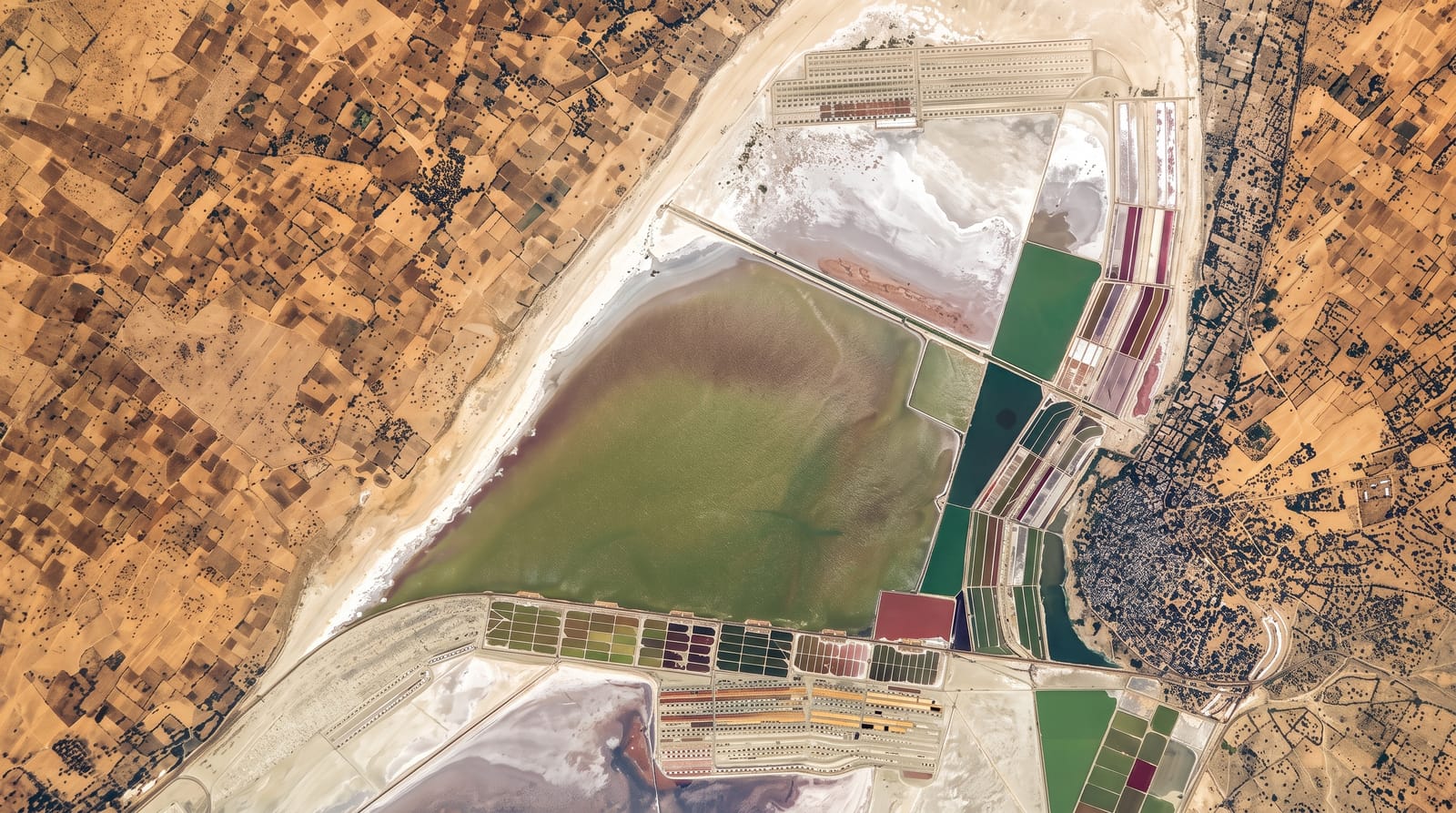
AI illustration
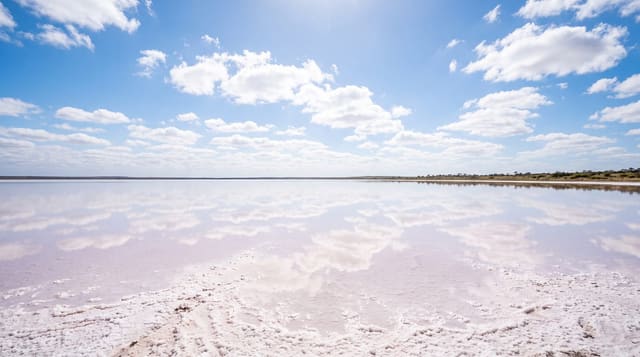
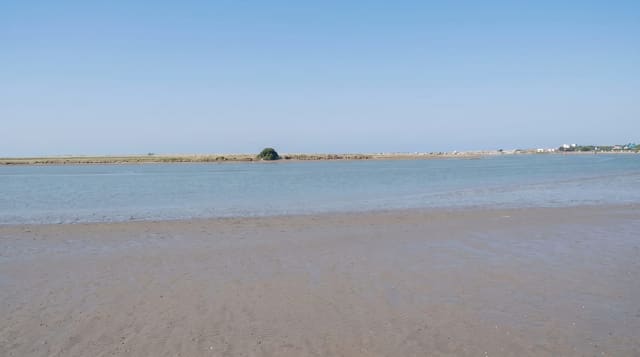
Sambhar is a shallow depression of around two hundred square kilometres that fills after the monsoon and evaporates through the dry season, leaving salt that has been harvested since at least the medieval period and industrially since the nineteenth century, with a narrow-gauge railway laid across the bed to move it. When water is present, greater and lesser flamingos arrive in thousands along with pelicans, waders and ducks, making it a Ramsar wetland. When it dries, the surface becomes a white plain crossed by salt pans, dykes and the old railway, and the whole basin can be walked on.
History
The lake is named after the goddess Shakambhari, a form of Durga and the tutelary goddess of the Chauhan Rajputs. A small excavation in 1884 found terracotta structures, coins, seals and a clay stupa, and a larger one around 1934 turned up many terracotta figurines; the lake's salt production was managed by the Mughals, and afterwards its ownership was shared between the princely states of Jaipur and Jodhpur (Wikipedia, Sambhar Salt Lake).
Highlights
- The flamingos - thousands present when water levels allow, mainly in winter.
- The salt pans - worked evaporation beds and stacked salt.
- The bed railway - narrow-gauge track laid across the lake for salt trains.
- The white plain - the dried surface stretching to the horizon.
When to go
November to March; birds depend entirely on whether the monsoon filled the lake, and in poor years there are few or none. The dry white surface is at its most striking later in the season.
Good to know
Bird numbers vary hugely year to year and can be zero. Parts of the works are restricted industrial areas. There is no visitor infrastructure and no shade on the bed.
Nearby
Jaipur lies east; Ajmer is southwest.
Key facts
Source: Wikidata, item Q1141317, read on 18 October 2026.
What to pack for Sambhar Salt Lake
Chosen from what this place is for. Tap a kit for the full checklist.
- Broken-in walking shoes or boots - Grip and ankle support matter more than looks; never hike in brand-new boots. Find on Amazon
- Strong insect repellent - DEET or picaridin; the jungle is where bites and disease risk are highest. Find on Amazon
- Layers + a waterproof shell - Mountain weather turns fast; a packable rain jacket saves the day. Find on Amazon
- Long, light, quick-dry clothing - Covers skin from insects and sun without cooking you in the humidity. Find on Amazon
Some links on this page are Amazon affiliate links - if you buy through them we may earn a small commission at no extra cost to you.
All packing kitsPlan your trip
Where to start if Sambhar Salt Lake is going on the list.
Booking links on this page are affiliate links - if you book through them we may earn a small commission at no extra cost to you. It never changes what we write about a place.
Opening times, ticket prices and seasonal closures change - check the official source before you go: official site.