Osian Temples
Hindu and Jain temples of the eighth to eleventh centuries standing in sand on the edge of the Thar.
Updated 4 September 2026
AI illustration
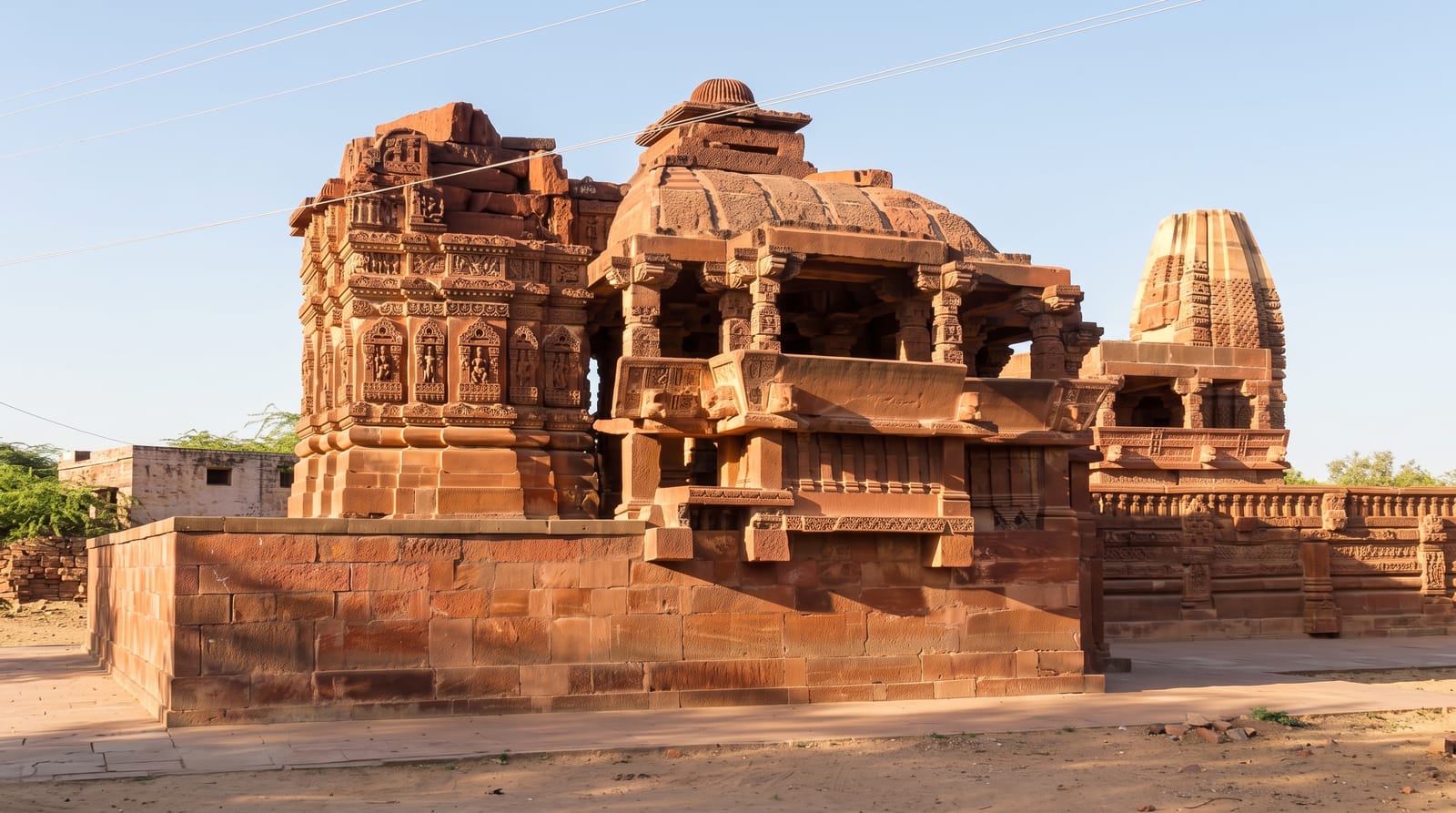
Osian was a prosperous trading town on the desert routes between the eighth and twelfth centuries, and around sixteen temples survive from that period, among the oldest standing temples in Rajasthan. The Mahavira Jain temple, of the eighth century with later additions, is the best preserved and still in worship, with carved doorways, a sculpted torana and an image of Mahavira said to be made of sand and milk. Hindu temples to Surya, Harihara and others stand in a group on a low ridge, their walls carved with figures. Sachiya Mata temple, higher up, is reached by a covered stair of arches.
Highlights
- The Mahavira Jain temple - eighth-century core with carved doorways and torana.
- The Hindu temple group - Surya and Harihara shrines on the ridge.
- Sachiya Mata - the hilltop temple approached by an arched stair.
- The desert setting - sand and scrub at the edge of the Thar.
When to go
October to March; the desert is severe from April to June. Mornings give the best light on the carving. Camel safaris and desert camps operate from the village.
Practical notes
Several temples are weathered or ruined and unlabelled. The village is small with limited facilities. Desert camps here are heavily commercialised.
Nearby
Jodhpur lies south; Jaisalmer is west.
What to pack for Osian Temples
Chosen from what this place is for. Tap a kit for the full checklist.
- Binoculars - The single best wildlife tool - even a compact pair transforms a sighting. Find on Amazon
- Loose, light, long clothing - Covering up beats bare skin in the desert - and locals dress this way for a reason. Find on Amazon
- Comfortable walking shoes - Sightseeing means kilometres of pavement and cobbles daily. Find on Amazon
- Modest clothing - Shoulders and knees covered - the single most common requirement. Find on Amazon
Some links on this page are Amazon affiliate links - if you buy through them we may earn a small commission at no extra cost to you.
All packing kitsPlan your trip
Where to start if Osian Temples is going on the list.
Booking links on this page are affiliate links - if you book through them we may earn a small commission at no extra cost to you. It never changes what we write about a place.
Opening times, ticket prices and seasonal closures change - check the official source before you go: official site.