Lothal
A Harappan town whose brick basin is argued to be the earliest known dock, begun around 2300 BC.
Updated 19 October 2026
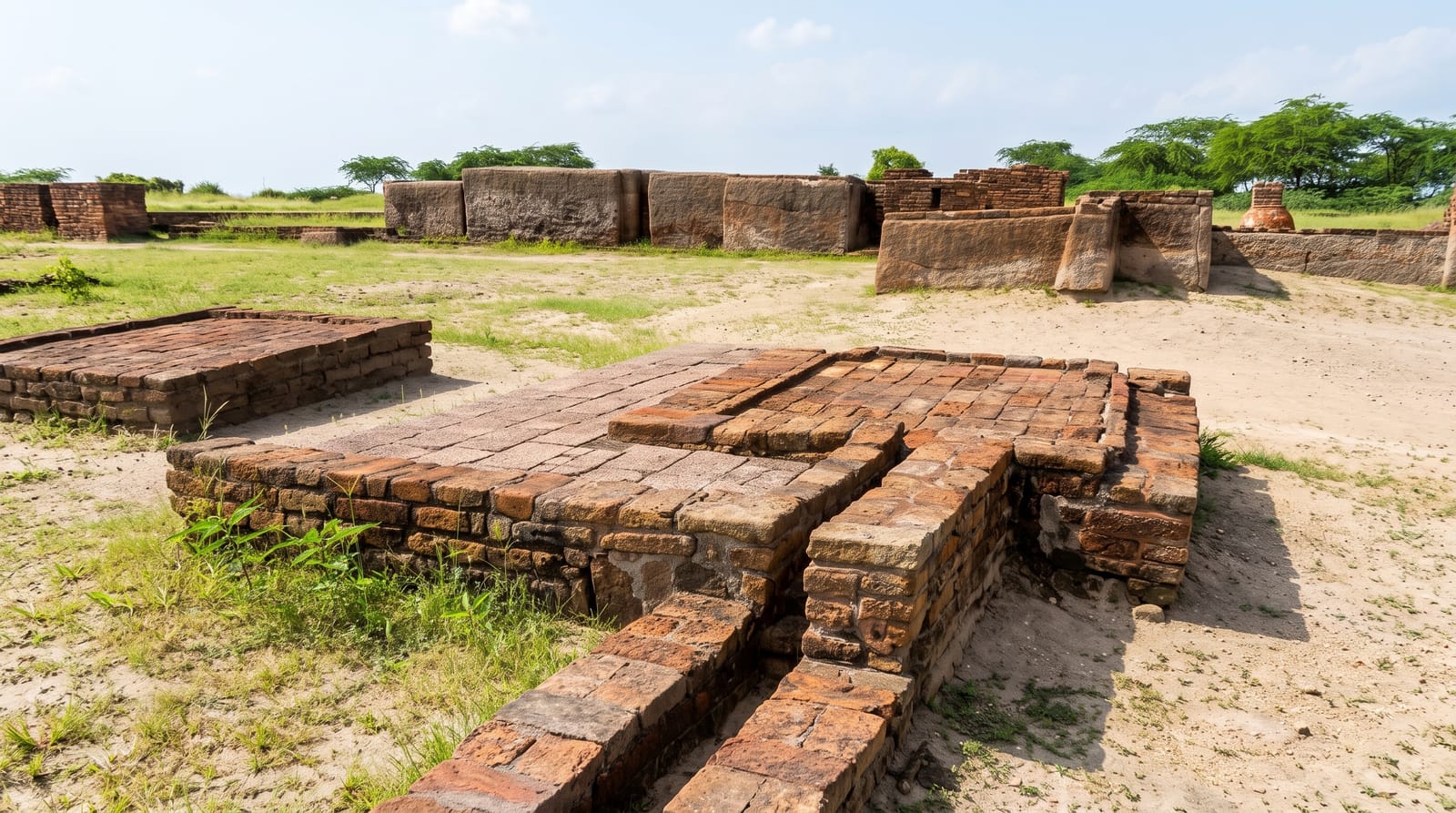
AI illustration
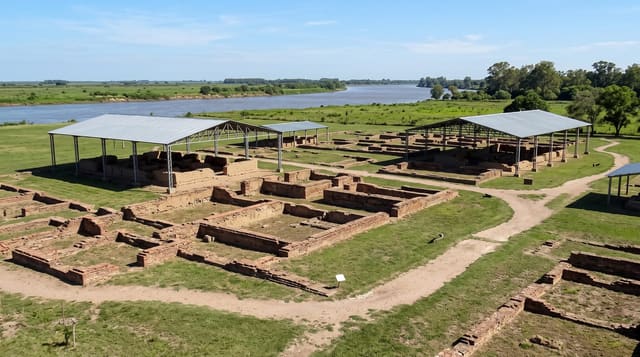
Lothal was excavated from 1955 and revealed a planned Harappan settlement whose building began around 2300 BC with a citadel, lower town, drains, a bead-making workshop and warehouse platforms. Its most discussed feature is a large trapezoidal basin lined with baked brick with an inlet channel and what appears to be a sluice, interpreted by the excavator as a tidal dock connected to a river and used for seagoing trade with Mesopotamia; other archaeologists have argued it was a reservoir. The site museum holds beads, seals, weights, tools and pottery. Little is signposted beyond the museum and the outlines are low and eroded.
History
Before the Harappans arrived, about 3000 BCE, Lothal was a small village by a river with access to the Gulf of Khambhat, and building of the Harappan city is believed to have begun around 2300 BCE. Its name means "mound of the dead" in Gujarati, and as late as 1850 boats could still sail up to the mound; after the Indus heartland at Mohenjo-daro and Harappa declined, Lothal seems to have survived and thrived for many years, until storms and floods destroyed it (Wikipedia, Lothal).
What you'll find
- The brick basin - the structure interpreted as an early dock.
- The town plan - streets, drains and house foundations of a Harappan settlement.
- The bead workshop - the area where carnelian beads were made.
- The site museum - seals, weights, beads and pottery from the excavation.
When to go
November to February; the site is flat, exposed and brutally hot from March. Mornings are best. Weekdays are quiet with few visitors.
Practical notes
The remains are low brick outlines needing interpretation, and the dock function is still debated. Signage is minimal outside the museum. There is almost no shade.
Nearby
Ahmedabad lies northeast; Nalsarovar is north.
Key facts
Source: Wikidata, item Q9443, read on 18 October 2026.
What to pack for Lothal
Chosen from what this place is for. Tap a kit for the full checklist.
- Comfortable walking shoes - Sightseeing means kilometres of pavement and cobbles daily. Find on Amazon
- A slim anti-theft daypack - Zips that close properly; keep it in front in crowds and on transit. Find on Amazon
- A refillable water bottle - Many cities have public fountains; save money and plastic. Find on Amazon
- A light layer + compact umbrella - For museum air-con and a sudden shower. Find on Amazon
Some links on this page are Amazon affiliate links - if you buy through them we may earn a small commission at no extra cost to you.
All packing kitsPlan your trip
Where to start if Lothal is going on the list.
Booking links on this page are affiliate links - if you book through them we may earn a small commission at no extra cost to you. It never changes what we write about a place.
Opening times, ticket prices and seasonal closures change - check the official source before you go: official site.