Little Rann of Kutch
A salt flat that floods and dries each year, holding the last wild population of the Indian wild ass.
Updated 4 September 2026
AI illustration
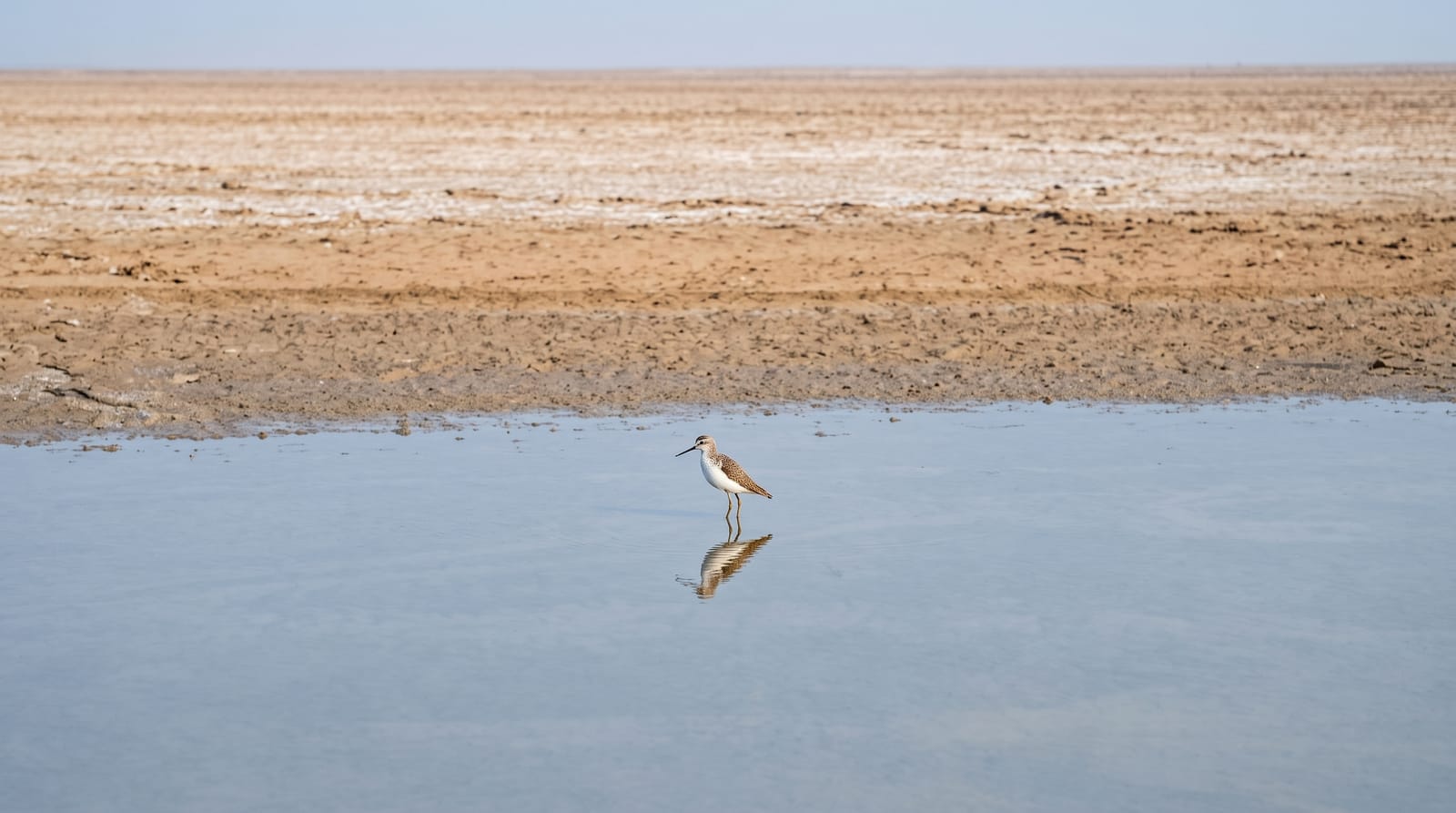
The Little Rann is a flat of around five thousand square kilometres that fills with seawater and rain in the monsoon and dries into a salt crust for the rest of the year, broken by raised islands of scrub called bets. It is the only place the Indian wild ass survives in the wild, a khur population that recovered from a few hundred in the 1960s to several thousand now, seen in herds on the flat. Agariya families work salt pans on the surface through the dry months, living out on the flat in temporary shelters. Flamingos, cranes and pelicans use the wet areas.
The landscape
- The wild asses - the world's only wild khur population, in herds on the flat.
- The salt workers - Agariya families working pans out on the crust.
- The bets - raised scrub islands rising from the flat.
- The waterbirds - flamingos, cranes and pelicans on the wet margins.
When to go
November to March; the flat is impassable in the monsoon and unbearably hot from April. Winter mornings are cold and produce mirages over the crust as the day warms.
Before you go
The landscape is bare and featureless, which some find monotonous. Vehicles need permits and local drivers who know the crust; getting bogged is a real risk. Accommodation is limited to a handful of camps.
Nearby
Ahmedabad lies southeast; Bhuj is northwest.
Key facts
Source: Wikidata, item Q1850393, read on 18 October 2026.
What to pack for Little Rann of Kutch
Chosen from what this place is for. Tap a kit for the full checklist.
- Broken-in walking shoes or boots - Grip and ankle support matter more than looks; never hike in brand-new boots. Find on Amazon
- Strong insect repellent - DEET or picaridin; the jungle is where bites and disease risk are highest. Find on Amazon
- Layers + a waterproof shell - Mountain weather turns fast; a packable rain jacket saves the day. Find on Amazon
- Long, light, quick-dry clothing - Covers skin from insects and sun without cooking you in the humidity. Find on Amazon
Some links on this page are Amazon affiliate links - if you buy through them we may earn a small commission at no extra cost to you.
All packing kitsPlan your trip
Where to start if Little Rann of Kutch is going on the list.
Booking links on this page are affiliate links - if you book through them we may earn a small commission at no extra cost to you. It never changes what we write about a place.
Opening times, ticket prices and seasonal closures change - check the official source before you go: official site.


