Kalaripayattu
A Kerala martial art trained in a sunken earth pit, combining weapons, unarmed combat and pressure-point knowledge.
Updated 4 September 2026
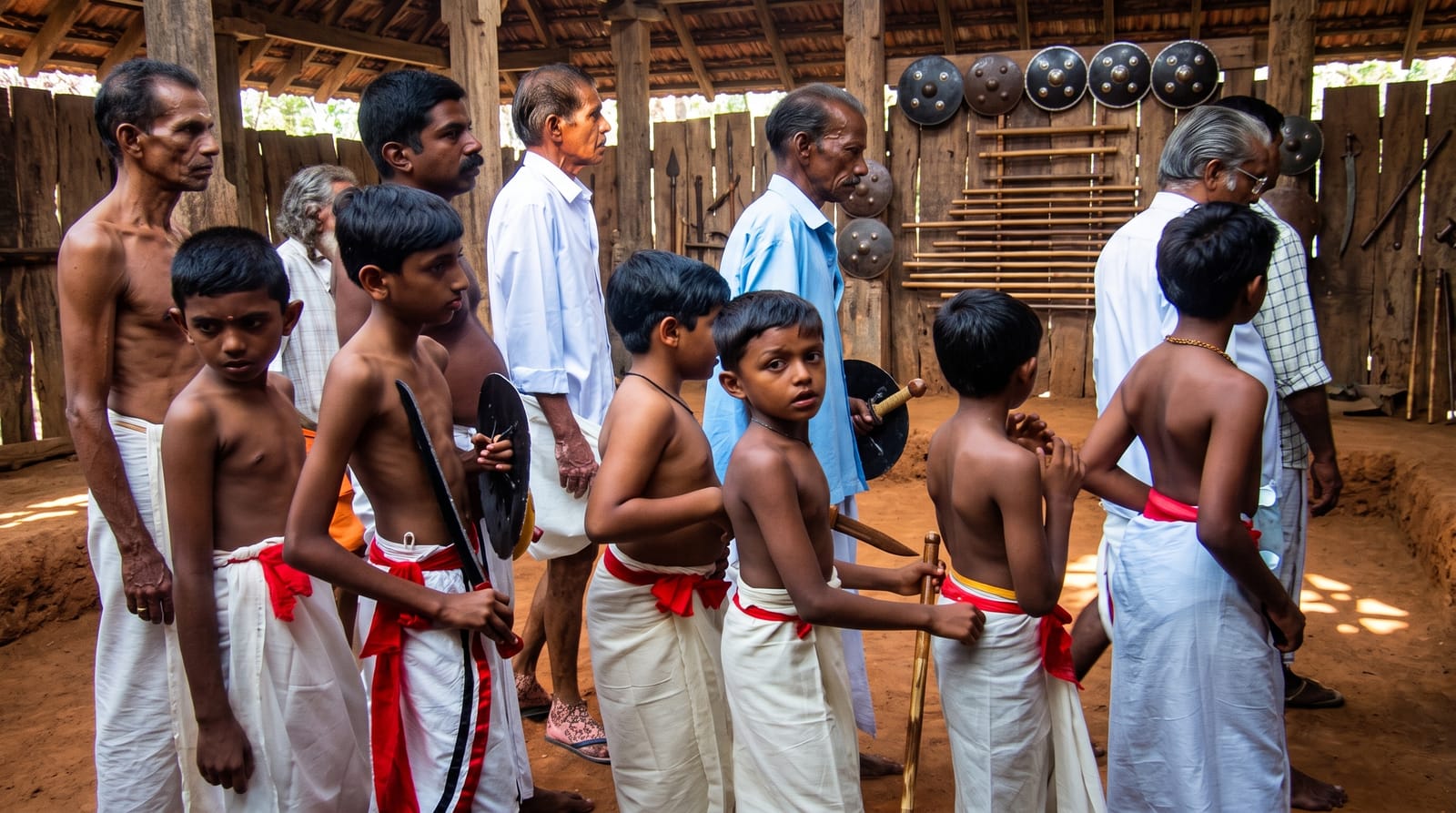
AI illustration
Kalaripayattu is trained in a kalari, a rectangular pit dug about a metre into the ground with a thatched roof and an earth floor, entered barefoot after touching the ground and the feet of the teacher. Training moves from body conditioning and animal-derived sequences through wooden weapons to metal: sword and shield, spear, dagger, and the urumi, a flexible whip-sword of several thin steel blades that is among the most difficult weapons in any tradition to handle. Masters also traditionally practise marma, knowledge of vital points, and a related system of massage and bone-setting. Demonstrations are staged for visitors in several cities.
The main sights
- The kalari pit - a sunken earth-floored training hall with a thatched roof.
- The weapon sequences - sword and shield, spear and the flexible urumi.
- The body work - low stances, kicks and animal-derived forms.
- The marma tradition - vital-point knowledge and associated massage.
When to go
October to March for comfortable weather; demonstrations run year-round in tourist centres, while serious training follows a monsoon-season emphasis for treatments and conditioning.
Things to know
Tourist demonstrations are short and showy, particularly the fire and urumi sequences, and differ considerably from actual training. Real instruction requires weeks at minimum. Injuries in training are common.
Nearby
Thrissur, Kozhikode and Kannur all have established kalaris.
What to pack for Kalaripayattu
Chosen from what this place is for. Tap a kit for the full checklist.
- Strong insect repellent - DEET or picaridin; the jungle is where bites and disease risk are highest. Find on Amazon
- Comfortable walking shoes - Sightseeing means kilometres of pavement and cobbles daily. Find on Amazon
- Long, light, quick-dry clothing - Covers skin from insects and sun without cooking you in the humidity. Find on Amazon
- A slim anti-theft daypack - Zips that close properly; keep it in front in crowds and on transit. Find on Amazon
Some links on this page are Amazon affiliate links - if you buy through them we may earn a small commission at no extra cost to you.
All packing kitsPlan your trip
Where to start if Kalaripayattu is going on the list.
Booking links on this page are affiliate links - if you book through them we may earn a small commission at no extra cost to you. It never changes what we write about a place.
Opening times, ticket prices and seasonal closures change - check the official source before you go: official site.

