Hornbill Festival
A week in December when all the major Naga tribes gather in one purpose-built village of traditional houses.
Updated 4 September 2026
AI illustration
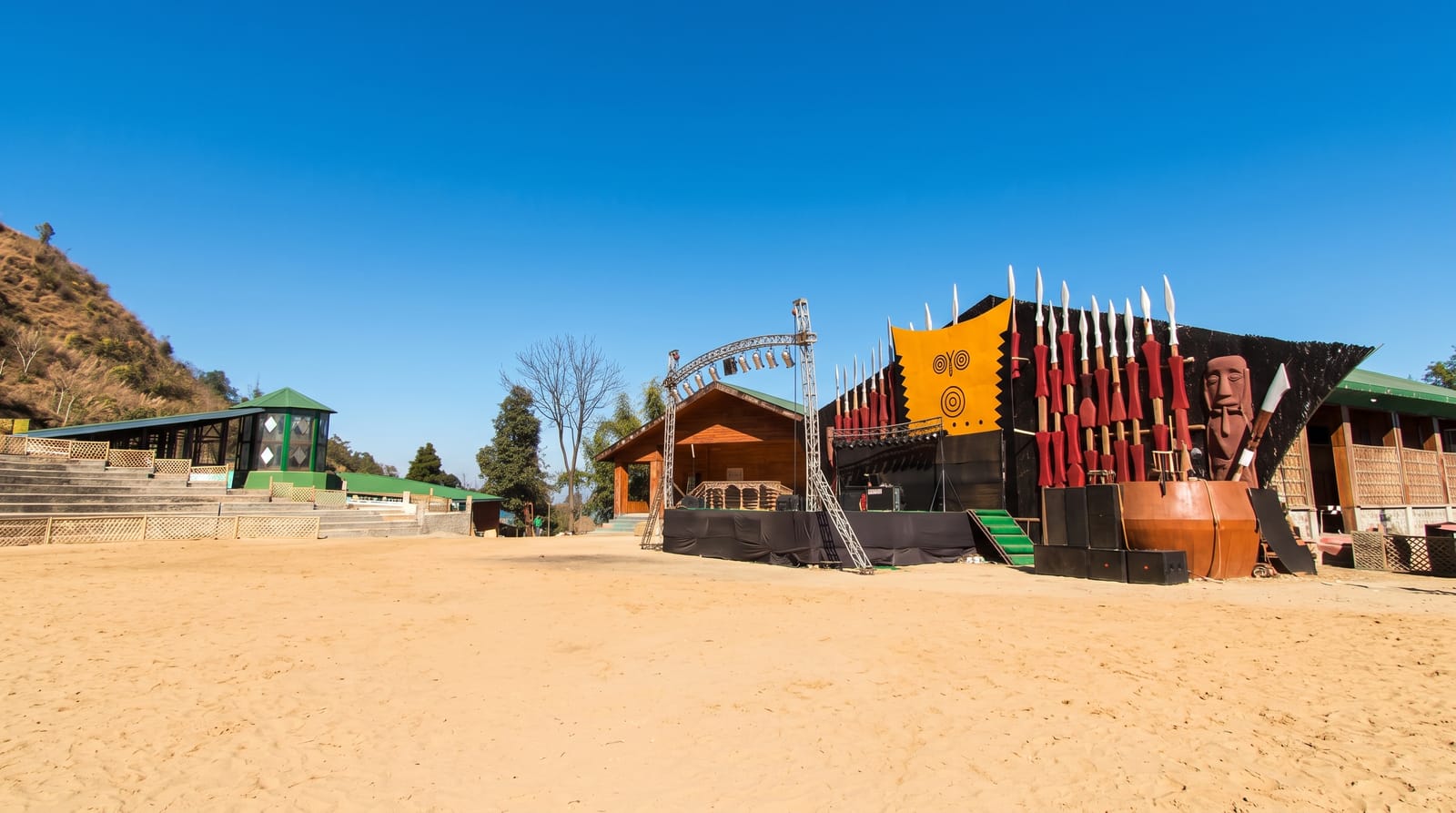
Nagaland's tribes each hold their own festivals through the year, and the state government created the Hornbill Festival in 2000 to bring them together in one place: at Kisama, a heritage village was built with a morung, a traditional bachelors' dormitory house, for each major tribe, in their own architectural style, and for the first week of December each tribe occupies its own and presents dance, song, wrestling, crafts, food and log drums. The festival is named for the bird whose feathers appear across Naga ceremonial dress. It has grown into the state's largest event, with a night market, music contest and motor rally alongside.
The main sights
- The tribal morungs - a traditional house for each tribe in its own style.
- The dance and song - each group performing in the central arena.
- The log drums - great hollowed drums beaten by teams.
- The night market - Naga food, crafts and music in Kohima through the week.
When to go
The first week of December, always; the festival runs to fixed dates. Kohima accommodation books out months ahead and prices rise sharply for the week.
Good to know
This is a curated government festival, not an organic tribal gathering, and some find it staged. Accommodation is scarce and expensive. All visitors, including Indian nationals, need an Inner Line Permit for Nagaland. December nights are cold.
Nearby
Kohima lies north; Khonoma is west.
What to pack for Hornbill Festival
Chosen from what this place is for. Tap a kit for the full checklist.
- Comfortable walking shoes - Sightseeing means kilometres of pavement and cobbles daily. Find on Amazon
- A slim anti-theft daypack - Zips that close properly; keep it in front in crowds and on transit. Find on Amazon
- A refillable water bottle - Many cities have public fountains; save money and plastic. Find on Amazon
- A light layer + compact umbrella - For museum air-con and a sudden shower. Find on Amazon
Some links on this page are Amazon affiliate links - if you buy through them we may earn a small commission at no extra cost to you.
All packing kitsPlan your trip
Where to start if Hornbill Festival is going on the list.
Booking links on this page are affiliate links - if you book through them we may earn a small commission at no extra cost to you. It never changes what we write about a place.
Opening times, ticket prices and seasonal closures change - check the official source before you go: official site.