Saxholl Crater
A red scoria cone climbed by a rust-coloured metal staircase that won a design award.
Saved in this browser only - no account, nothing sent anywhere. See your map
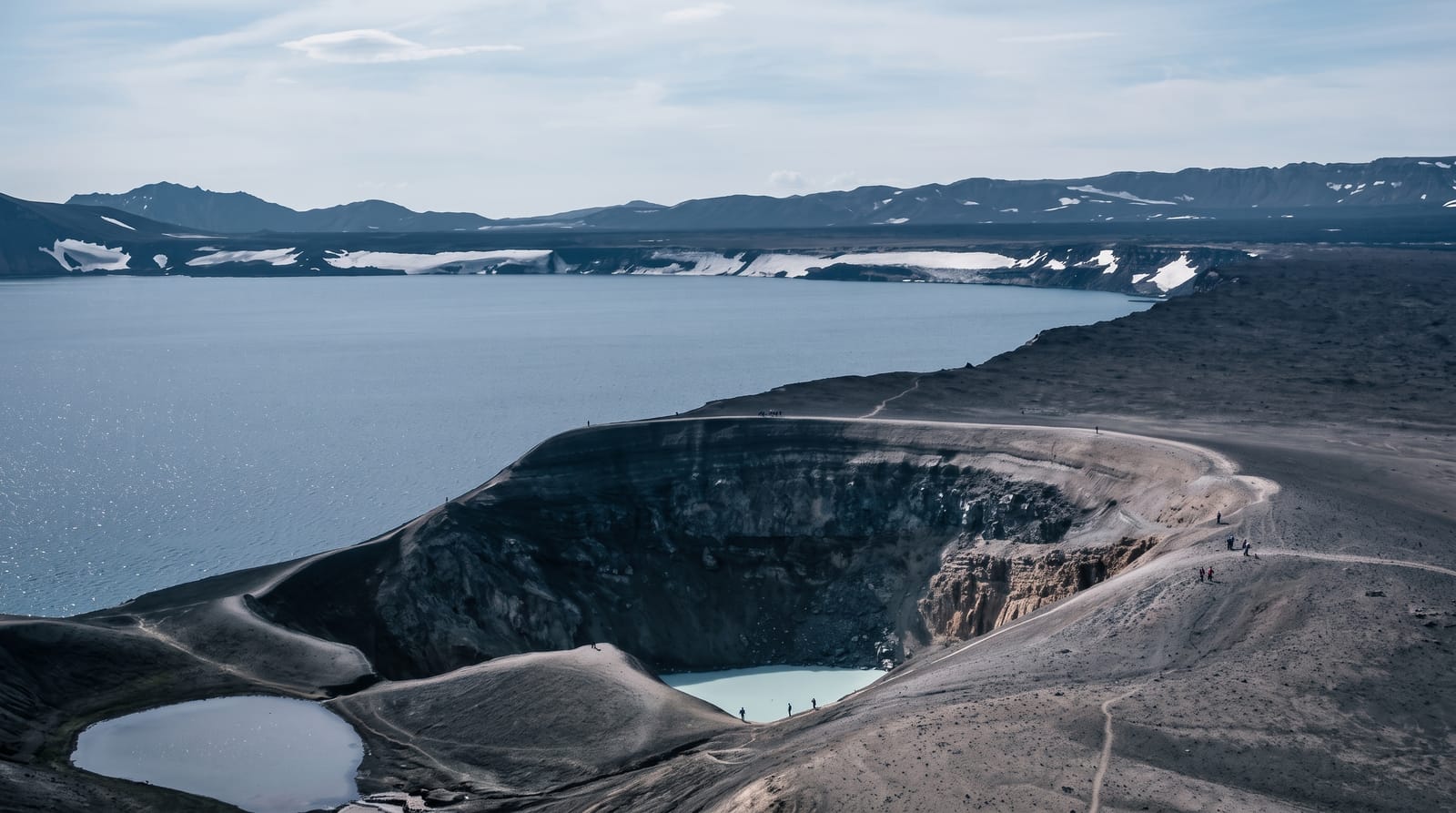
Saxholl is a scoria crater on the northern side of the Snaefellsnes tip, about 100 metres high, that erupted roughly three to four thousand years ago and produced the lava field spreading north from it. Walkers wore a scar up the loose side, and the response was a staircase of weathering steel laid on the slope in 2014, rust-coloured to match the scoria, which stopped the erosion and won a national design award. It takes five minutes to climb. From the rim the crater bowl sits below and the view runs over the lava to the sea on one side and Snaefellsjokull on the other.
What you actually see
- A scoria cone about 100 metres high - source of the lava field north of it.
- A weathering steel staircase - installed in 2014 to stop erosion, and awarded for it.
- The crater bowl from the rim - five minutes from the car park.
- Snaefellsjokull and the sea - the view from the top in both directions.
When to go
May to October; the steps are slippery when frozen. Half an hour.
Honest expectations
The stair is exposed and open-tread, which some people dislike. Wind at the rim is strong and there is no railing round the top path. It is a fifteen minute stop. Facilities are a car park only.
Nearby
Djupalonssandur is south; Hellissandur and Rif are east.
What to pack for Saxholl Crater
Chosen from what this place is for. Tap a kit for the full checklist.
Opening times, ticket prices and seasonal closures change - check the official source before you go: official site.