Kis-Balaton Wetland
A restored marsh and shallow reservoir at the western end of Balaton, working as a filter for the Zala river and a major bird site.
Updated 31 August 2026
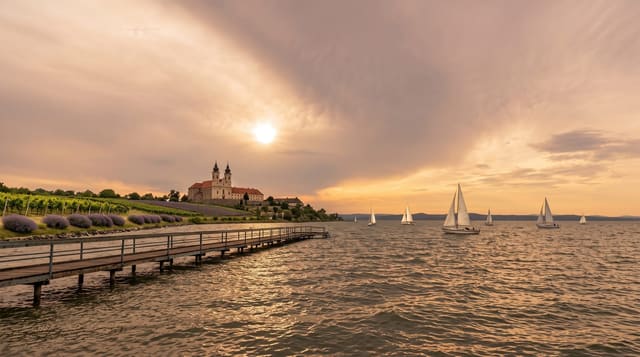
Kis-Balaton is what remains of the old marsh that once joined the Zala river to Lake Balaton. Drained and then partly reflooded from the 1980s onward, it now works as a settling and filtering basin that strips nutrients out of the Zala before the water reaches Balaton. The result is a mosaic of open shallow water, reed islands and wet meadow that holds one of the densest bird populations in Hungary: herons, egrets, spoonbills, geese in winter, and marsh harriers over the reeds most of the year. Most of the area is closed to protect nesting birds, so visits centre on one small island reached by a wooden bridge, plus guided boat and vehicle trips run by the national park.
Highlights
- Kanyavari island - the freely accessible island, reached by a wooden footbridge, with a short loop and hides.
- Observation towers - timber platforms over the reed edge for scanning open water at distance.
- The buffalo reserve at Kapolnapuszta - a herd of Hungarian water buffalo kept as grazing management.
- Reedbed birdlife - herons, egrets, spoonbills and harriers, best through binoculars rather than a camera phone.
When to go
April to early June covers arrival and breeding, with the most sound and movement. Late September and October bring migration and large goose numbers. Early morning is far better than midday, when birds sit low and heat haze blurs the far reeds. Guided trips into the closed sections run on set days in the warmer half of the year and need booking ahead.
Things to know
Most of Kis-Balaton is off limits, and the freely accessible part is small: an hour covers it. Without binoculars you will see reeds and little else. Mosquitoes are severe from May to September, especially at dusk. There is almost no shade, no cafe and thin public transport. Water levels change, so open water in the guidebook photo may be dry mud on the day.
Nearby
Keszthely and the western end of Balaton lie to the east, with the thermal town of Zalakaros to the west.
What to pack for Kis-Balaton Wetland
Chosen from what this place is for. Tap a kit for the full checklist.
- Reef-safe sunscreen - High SPF that will not bleach the coral you are swimming over. Find on Amazon
- Binoculars - The single best wildlife tool - even a compact pair transforms a sighting. Find on Amazon
- Quick-dry towel - A microfibre towel packs small and dries in minutes. Find on Amazon
- A zoom camera or long lens - Animals rarely come close; reach beats megapixels. Find on Amazon
Some links on this page are Amazon affiliate links - if you buy through them we may earn a small commission at no extra cost to you.
All packing kitsPlan your trip
Where to start if Kis-Balaton Wetland is going on the list.
Booking links on this page are affiliate links - if you book through them we may earn a small commission at no extra cost to you. It never changes what we write about a place.
Opening times, ticket prices and seasonal closures change - check the official source before you go: official site.