Gracias and Celaque
A colonial town beneath Honduras's highest peak - cloud forest above, hot springs below, and a fraction of the country's visitors.
Updated 7 August 2026
AI illustration
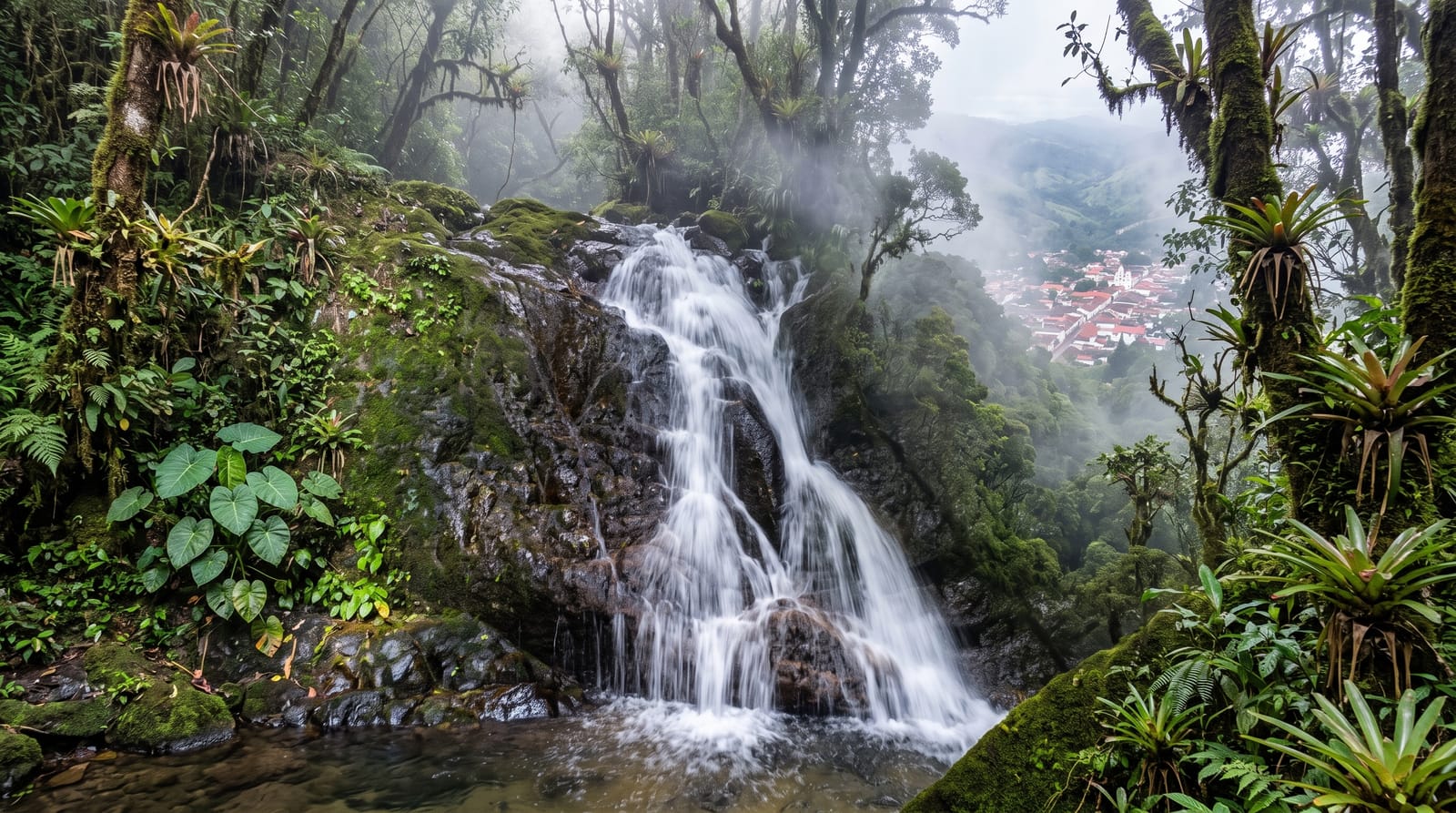
Gracias is a small colonial town in western Honduras with cobbled streets, three old churches and a hilltop fort, and it briefly served as the administrative capital of Spanish Central America in the sixteenth century. Above it rises Celaque, at nearly 2,900 metres the highest mountain in Honduras, protected as a national park of cloud forest where quetzals nest and the trees drip with moss and bromeliads. The summit hike is a demanding two-day trip with a basic hut partway. Below the mountain, thermal pools at Presidente hot springs make the standard evening reward.
Highlights
- Celaque summit trek - the two-day climb through cloud forest.
- The cloud forest - moss, bromeliads and quetzals on the lower trails.
- Gracias old town - colonial churches and the San Cristobal fort.
- Aguas Termales - thermal pools in forest outside town.
When to go
The dry season from November to April gives the best hiking conditions; the mountain generates its own weather and rain is possible year round. Quetzal breeding runs roughly March to June. Nights on the mountain are cold, which surprises visitors.
Good to know
The summit trek is genuinely hard - steep, muddy and long, with a basic hut and no facilities at altitude. Guides are strongly recommended and required for some routes. Day walks on the lower trails are far more accessible and still deliver the cloud forest. Western Honduras sees few visitors and English is limited. Roads from San Pedro Sula are slow.
Nearby
La Esperanza, the Lenca villages of the western highlands and Copan to the north-west.
What to pack for Gracias and Celaque
Chosen from what this place is for. Tap a kit for the full checklist.
- Broken-in walking shoes or boots - Grip and ankle support matter more than looks; never hike in brand-new boots. Find on Amazon
- Layers for big temperature swings - Warm sun by day, near-freezing at night, even near the equator. Find on Amazon
- Shelter suited to the place - Tent, tarp or hut booking - match it to the terrain and rules. Find on Amazon
- Swimwear - Needed at most public thermal pools; some traditional baths are nude and single-sex. Find on Amazon
Some links on this page are Amazon affiliate links - if you buy through them we may earn a small commission at no extra cost to you.
All packing kitsPlan your trip
Where to start if Gracias and Celaque is going on the list.
Booking links on this page are affiliate links - if you book through them we may earn a small commission at no extra cost to you. It never changes what we write about a place.
Opening times, ticket prices and seasonal closures change - check the official source before you go: official site.