Temple of Aphaia
A late archaic Doric temple on a pine ridge above the sea, the best preserved of its date in Greece.
Updated 21 October 2026
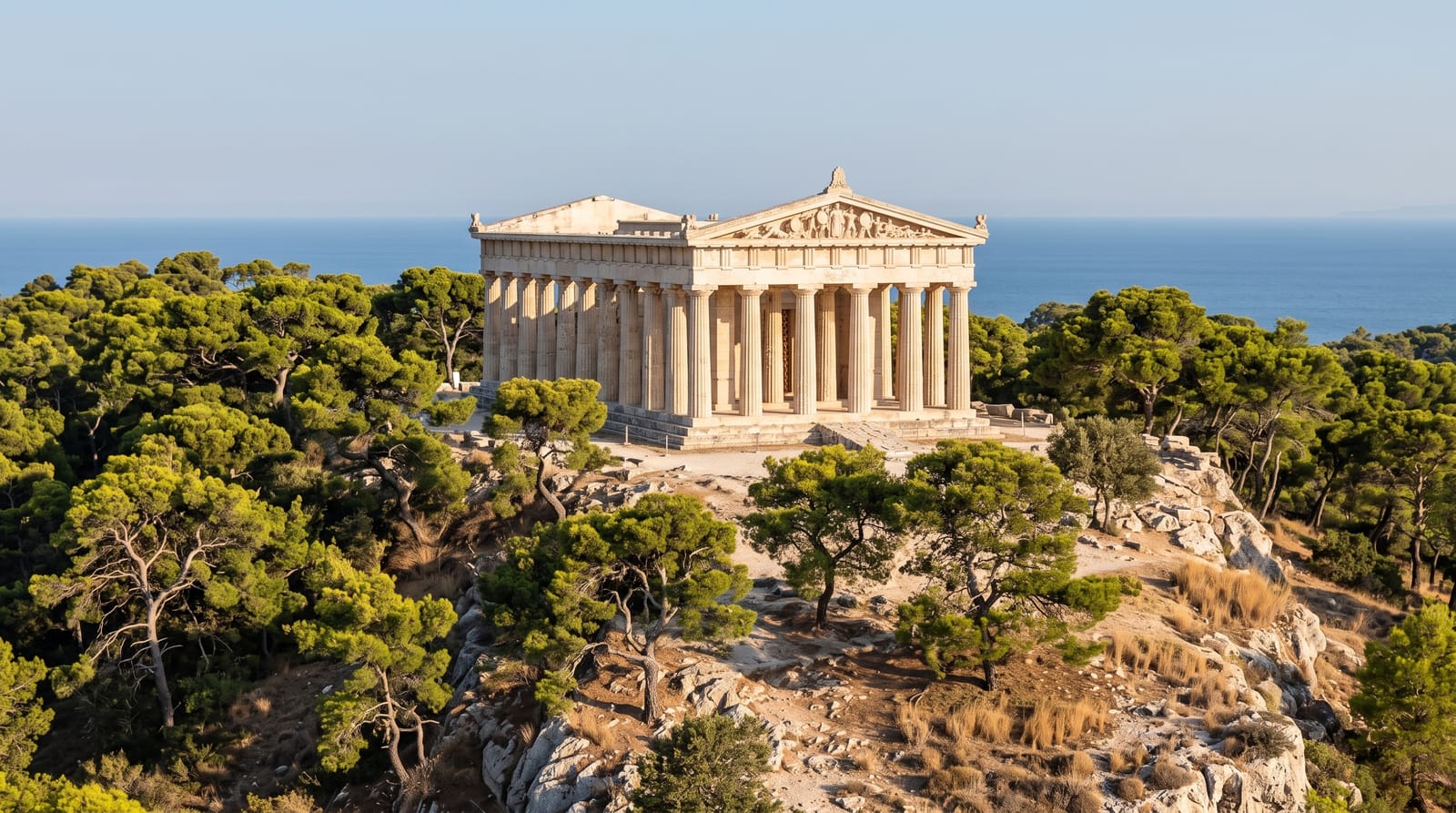
AI illustration
Built around 500 BC to a local goddess, Aphaia, absorbed later into the cult of Athena, the temple stands on a pine-covered hill 160 metres above the eastern coast of Aegina, with the sea below and Attica across the water. Most of its thirty-two outer columns still stand, several supporting their architrave, and the building is regarded as the finest surviving example of late archaic Doric architecture. Its pediments held celebrated marble battle groups that were carried off in 1811 and sold to Ludwig of Bavaria; they remain in Munich, and casts are shown in the site museum here. A popular modern idea links it with the Parthenon and the temple at Sounion in a sacred triangle, and on clear days Attica is in view across the water.
Highlights
- The colonnade - the standing outer columns, some still carrying their entablature.
- The hilltop setting - pines, sea views and Attica on the horizon.
- The site museum - casts of the pediment sculptures and finds from the sanctuary.
- The altar terrace - the ramp and altar east of the temple.
When to go
Late afternoon, when the light warms the stone and the day-trippers have gone back to the port. Spring adds wildflowers; midsummer midday is hot and shadeless on the terrace.
Before you go
The visit is short, under an hour for most, and the museum is small. Buses from the port are infrequent, so check return times or take a taxi. The famous sculptures are in Germany, not here.
Nearby
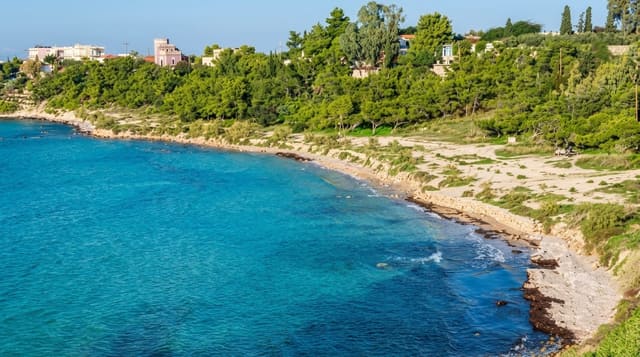
Agia Marina's beach lies below the hill; Aegina Town and the pistachio groves are west.
Key facts
Source: Wikidata, item Q596988, read on 18 October 2026.
What to pack for Temple of Aphaia
Chosen from what this place is for. Tap a kit for the full checklist.
- Comfortable walking shoes - Sightseeing means kilometres of pavement and cobbles daily. Find on Amazon
- Modest clothing - Shoulders and knees covered - the single most common requirement. Find on Amazon
- A slim anti-theft daypack - Zips that close properly; keep it in front in crowds and on transit. Find on Amazon
- A scarf or shawl - To cover the head or shoulders on entry; women especially at mosques. Find on Amazon
Some links on this page are Amazon affiliate links - if you buy through them we may earn a small commission at no extra cost to you.
All packing kitsPlan your trip
Where to start if Temple of Aphaia is going on the list.
Booking links on this page are affiliate links - if you book through them we may earn a small commission at no extra cost to you. It never changes what we write about a place.
Opening times, ticket prices and seasonal closures change - check the official source before you go: official site.