Paleochora of Aegina
A hillside scattered with more than thirty Byzantine chapels, all that remains of the island's abandoned medieval capital.
Updated 19 October 2026
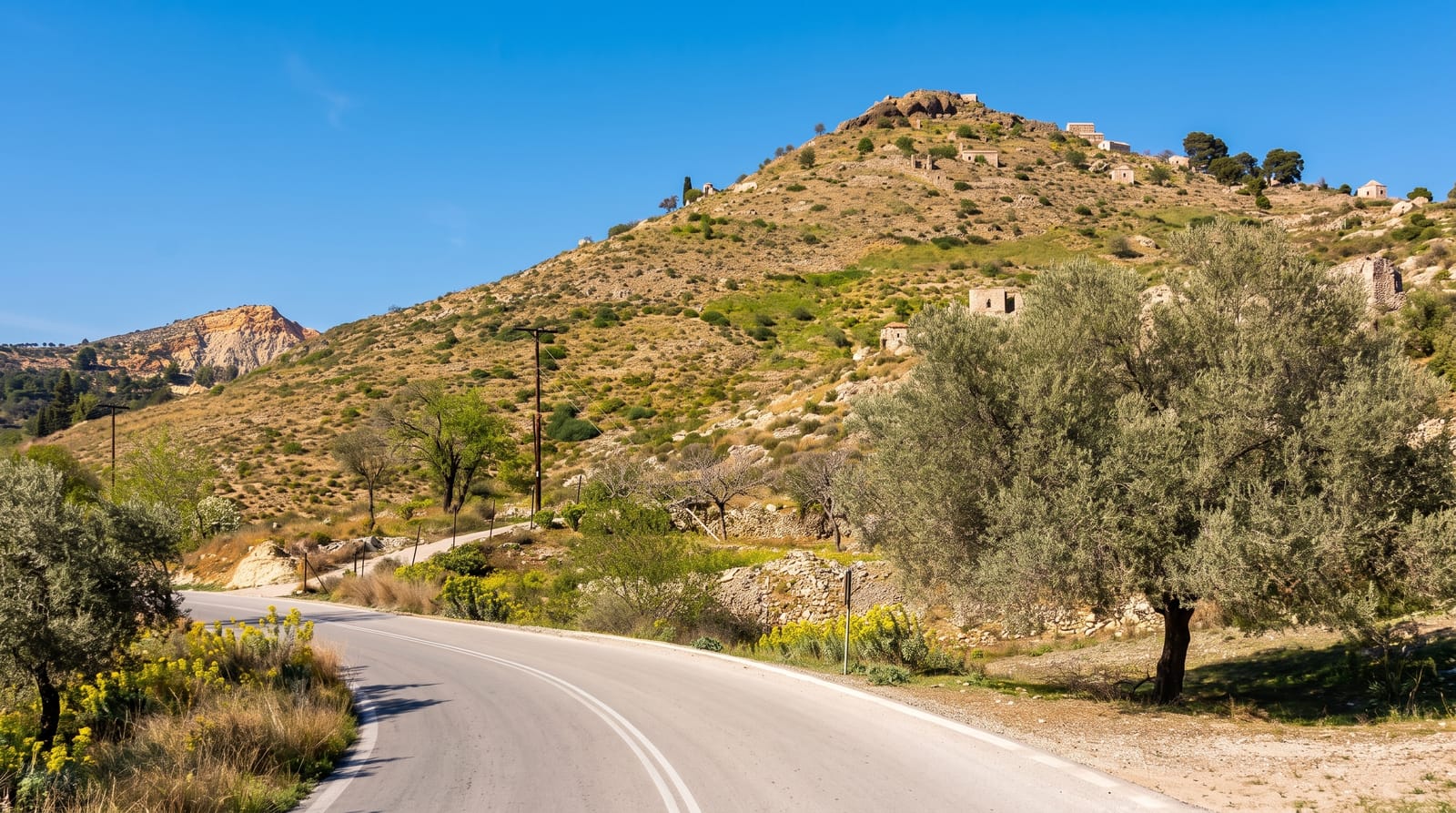
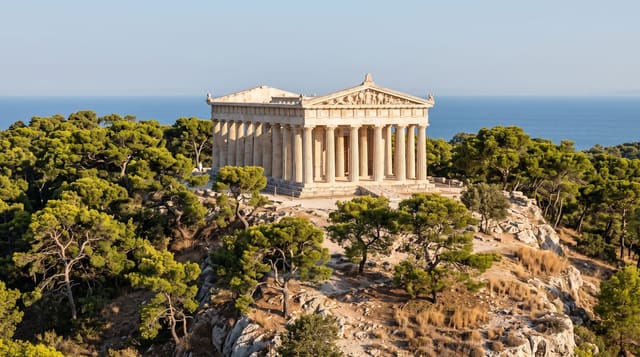
AI illustration
When coastal raiding made the shore unsafe in the ninth century, the people of Aegina moved inland to this hill and built a town that survived until the early nineteenth century, when the population returned to the port. The houses have gone, but the churches remain: at its height Paleochora reportedly held hundreds of chapels, and around thirty-three still stand on the slope, many with frescoes inside, some barely bigger than a room. Paths climb between them to the ruined castle on the summit, passing whitewashed walls, cypress trees and doorways left open. Several chapels are still used for their name-day services, so candles and icons appear on the stands. The scale is intimate and the silence complete, a few minutes from the busy Agios Nektarios monastery below.
History
The peak has been identified with the ancient city of Oie, mentioned by Herodotus and Pausanias, where the Aeginetans brought wooden statues of Auxesia and Damia from Epidaurus. Constant pirate raids in the Middle Ages drove the islanders from the coast to this strong point inland, probably in the 9th century AD; in 1537 Hayreddin Barbarossa took Aegina after four days and demolished the houses of Paliachora, and after 1540, under the Ottomans, it was resettled for the same fear of pirates. At the beginning of the 19th century, as piracy declined, its people gradually left for the modern town of Aegina on the west coast (Wikipedia, Paliachora).
The main sights
- The surviving chapels - some thirty-three churches spread across the hillside.
- The frescoes - painted interiors in many of the small chapels.
- The summit castle - ruined walls at the top of the hill.
- The view - across the island's centre toward the sea on both sides.
When to go
Autumn to spring, when the hill is green and the climb comfortable; summer is hot and there is no shade on the paths. Weekday mornings are entirely quiet.
Before you go
Paths are rough and steep in places, and locked chapels outnumber open ones on any given day. There are no facilities and no signs explaining what you are looking at. Sturdy shoes matter more than a guidebook here.
Nearby
Agios Nektarios monastery is immediately below; Aegina Town lies fifteen minutes away by road.
Key facts
Source: Wikidata, item Q38284638, read on 18 October 2026.
What to pack for Paleochora of Aegina
Chosen from what this place is for. Tap a kit for the full checklist.
- Comfortable walking shoes - Sightseeing means kilometres of pavement and cobbles daily. Find on Amazon
- Modest clothing - Shoulders and knees covered - the single most common requirement. Find on Amazon
- A slim anti-theft daypack - Zips that close properly; keep it in front in crowds and on transit. Find on Amazon
- A scarf or shawl - To cover the head or shoulders on entry; women especially at mosques. Find on Amazon
Some links on this page are Amazon affiliate links - if you buy through them we may earn a small commission at no extra cost to you.
All packing kitsPlan your trip
Where to start if Paleochora of Aegina is going on the list.
Booking links on this page are affiliate links - if you book through them we may earn a small commission at no extra cost to you. It never changes what we write about a place.
Opening times, ticket prices and seasonal closures change - check the official source before you go: official site.