Skiathos
A small green island with more than sixty beaches, including the pine-backed sweep of Koukounaries.
Updated 19 October 2026
AI illustration
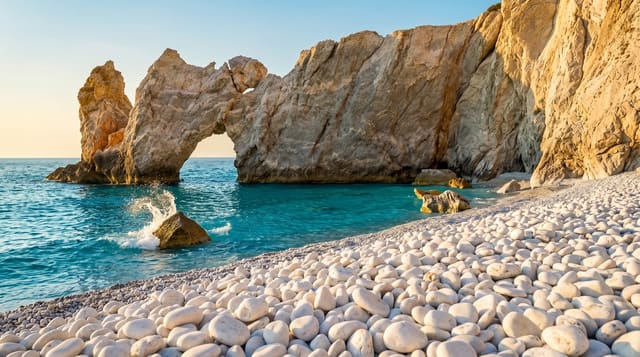
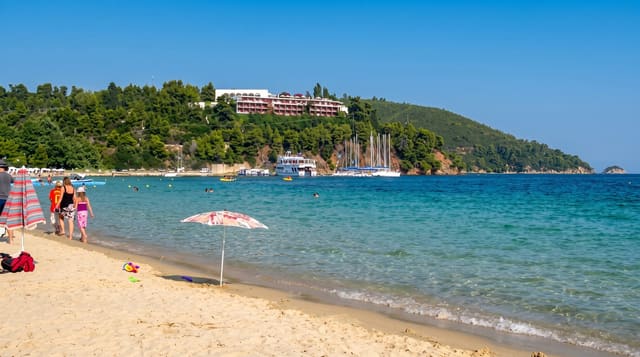
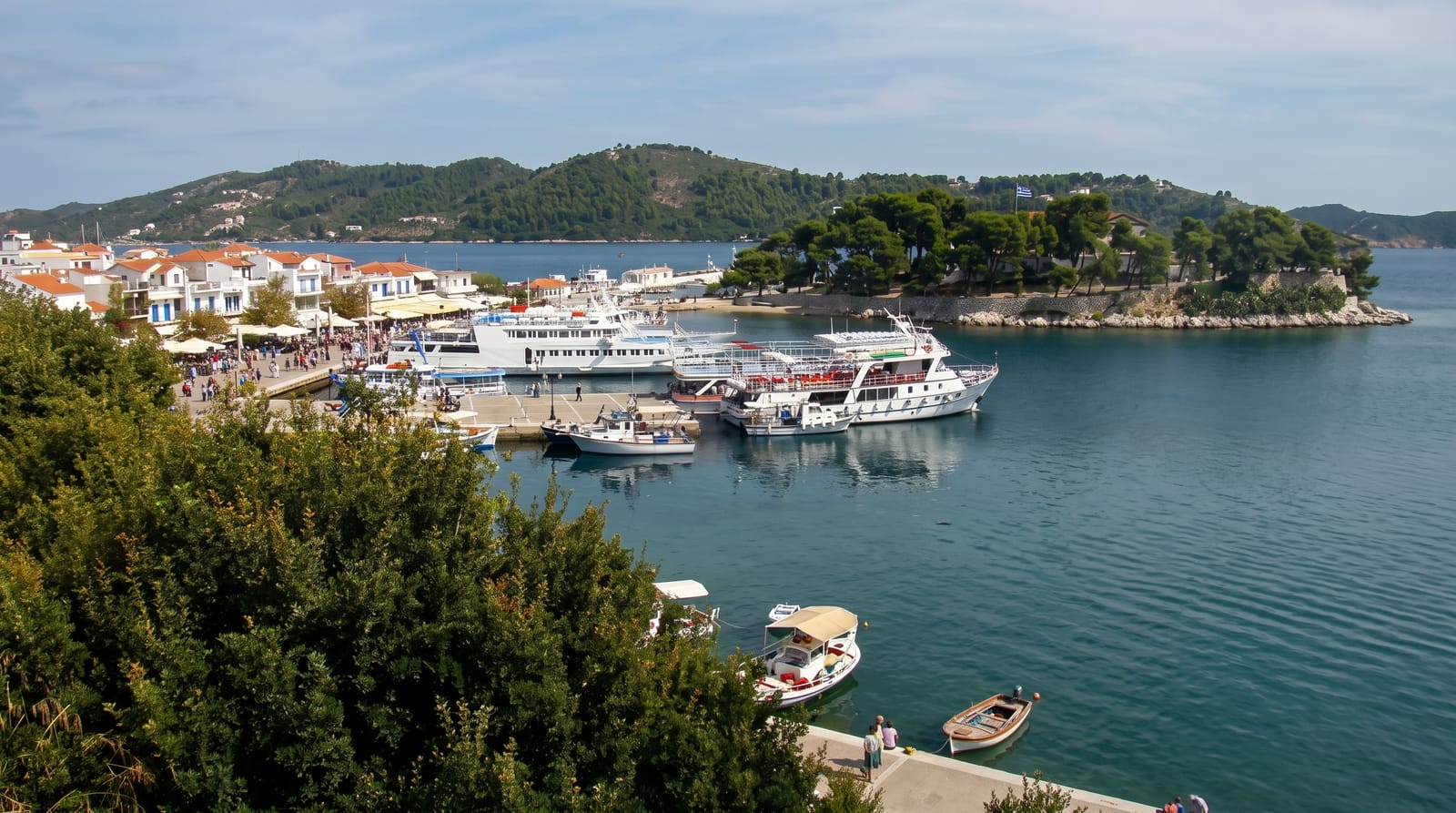
Skiathos is only about 48 square kilometres but claims over sixty beaches, and its interior is dense pine forest, which makes it greener than most Aegean islands. Koukounaries, at the western end, is the famous one: a curve of pale sand backed by a stone pine forest and the Strofilia lagoon behind, regularly listed among the best beaches in Greece. Lalaria on the north coast, reachable only by boat, has white pebbles and a natural rock arch. The town rises in tiers above two harbours with the Bourtzi peninsula between them, and the ruined medieval Kastro sits on a northern headland with churches surviving inside. The airport approach passes low over the road at the end of the runway, and plane-spotting on that beach has become an attraction in itself.
History
In 480 BC the Persian fleet of Xerxes was badly damaged in a storm on the rocks off Skiathos, after which the Greek fleet blockaded the surrounding seas. In 1207 the Ghisi brothers took the island and built the Bourtzi on an islet off the town against pirates, but it gave little protection, and in the mid-14th century the people moved to the Kastro on the north coast; in 1704 monks from Athos built the Evangelistria Monastery, where the first Greek flag was raised in 1807, and in the 1830s the capital returned to its original site (Wikipedia, Skiathos).
The landscape
- Koukounaries - sand backed by stone pines and a lagoon.
- Lalaria - a white pebble beach with a rock arch, boat access only.
- The Kastro - the ruined medieval town on a northern headland.
- The town harbours - tiered houses around the Bourtzi peninsula.
When to go
May, June and September for warm sea without the crush; July and August are very busy, with charter flights from northern Europe filling the island. Winter is quiet and many businesses close.
Before you go
Skiathos is the most developed of the Sporades and the nightlife-and-charter crowd defines the high season. Roads are narrow and busy, parking near beaches is difficult, and the best beaches need a boat or an early start.
Nearby
Skopelos is forty minutes away by ferry; Volos and Pelion lie on the mainland opposite.
Key facts
Source: Wikidata, item Q515085, read on 18 October 2026.
What to pack for Skiathos
Chosen from what this place is for. Tap a kit for the full checklist.
- Reef-safe sunscreen - High SPF that will not bleach the coral you are swimming over. Find on Amazon
- Modest clothing - Shoulders and knees covered - the single most common requirement. Find on Amazon
- Quick-dry towel - A microfibre towel packs small and dries in minutes. Find on Amazon
- A scarf or shawl - To cover the head or shoulders on entry; women especially at mosques. Find on Amazon
Some links on this page are Amazon affiliate links - if you buy through them we may earn a small commission at no extra cost to you.
All packing kitsPlan your trip
Where to start if Skiathos is going on the list.
Booking links on this page are affiliate links - if you book through them we may earn a small commission at no extra cost to you. It never changes what we write about a place.
Opening times, ticket prices and seasonal closures change - check the official source before you go: official site.