Sikinos
A terraced island with barely three hundred residents, whose main monument is a Roman mausoleum turned into a church.
Updated 4 September 2026

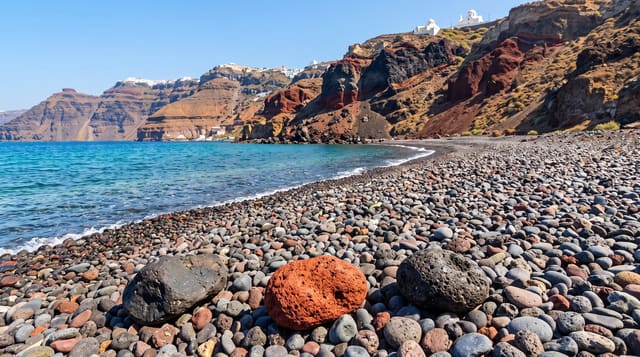
AI illustration
Sikinos lies between Folegandros and Ios and receives a fraction of their visitors: one port, Alopronia, one inland Chora made of two joined villages, Kastro and Chorio, and a landscape of dry-stone terraces that climb every slope, evidence of a farming past far more populous than the present few hundred residents. The island's monument is Episkopi, a well-preserved Roman mausoleum of the third century AD that was converted into a church in the Byzantine period and remodelled again later, so that a classical facade with columns stands inside a church complex, a rare survival anywhere in Greece. Wine has returned as a small industry, and a handful of beaches, Agios Georgios, Malta, are reached by track or boat. Paths cross the terraces between chapels and abandoned farms.
What you'll find
- Episkopi - a Roman mausoleum converted into a Byzantine church.
- The Chora - Kastro and Chorio joined on a ridge above the sea.
- The terraces - dry-stone walls covering the island's slopes.
- The quiet beaches - a few coves reached by track, boat or footpath.
When to go
May, June and September; the island has limited accommodation and ferries thin out sharply outside summer. Walking is best in spring, when the terraces are green.
Before you go
Sikinos is genuinely small and quiet, with a handful of rooms and tavernas and no nightlife or organised activities. Ferry connections are infrequent, and being weather-bound for a day is a real possibility. Bring cash.
Nearby
Folegandros and Ios are the nearest islands; Santorini is reachable on some sailings.
Key facts
Source: Wikidata, item Q747935, read on 18 October 2026.
What to pack for Sikinos
Chosen from what this place is for. Tap a kit for the full checklist.
- Reef-safe sunscreen - High SPF that will not bleach the coral you are swimming over. Find on Amazon
- Quick-dry towel - A microfibre towel packs small and dries in minutes. Find on Amazon
- Water shoes - Protect your feet on rocky entries, hot sand and sea-urchin spines. Find on Amazon
- Dry bag - Keeps phone, cash and keys safe while you are in the water. Find on Amazon
Some links on this page are Amazon affiliate links - if you buy through them we may earn a small commission at no extra cost to you.
All packing kitsPlan your trip
Where to start if Sikinos is going on the list.
Booking links on this page are affiliate links - if you book through them we may earn a small commission at no extra cost to you. It never changes what we write about a place.
Opening times, ticket prices and seasonal closures change - check the official source before you go: official site.