Petralona Cave
A cave of dense formations where a fossil human skull, one of the oldest in Europe, was found embedded in the wall.
Updated 21 October 2026
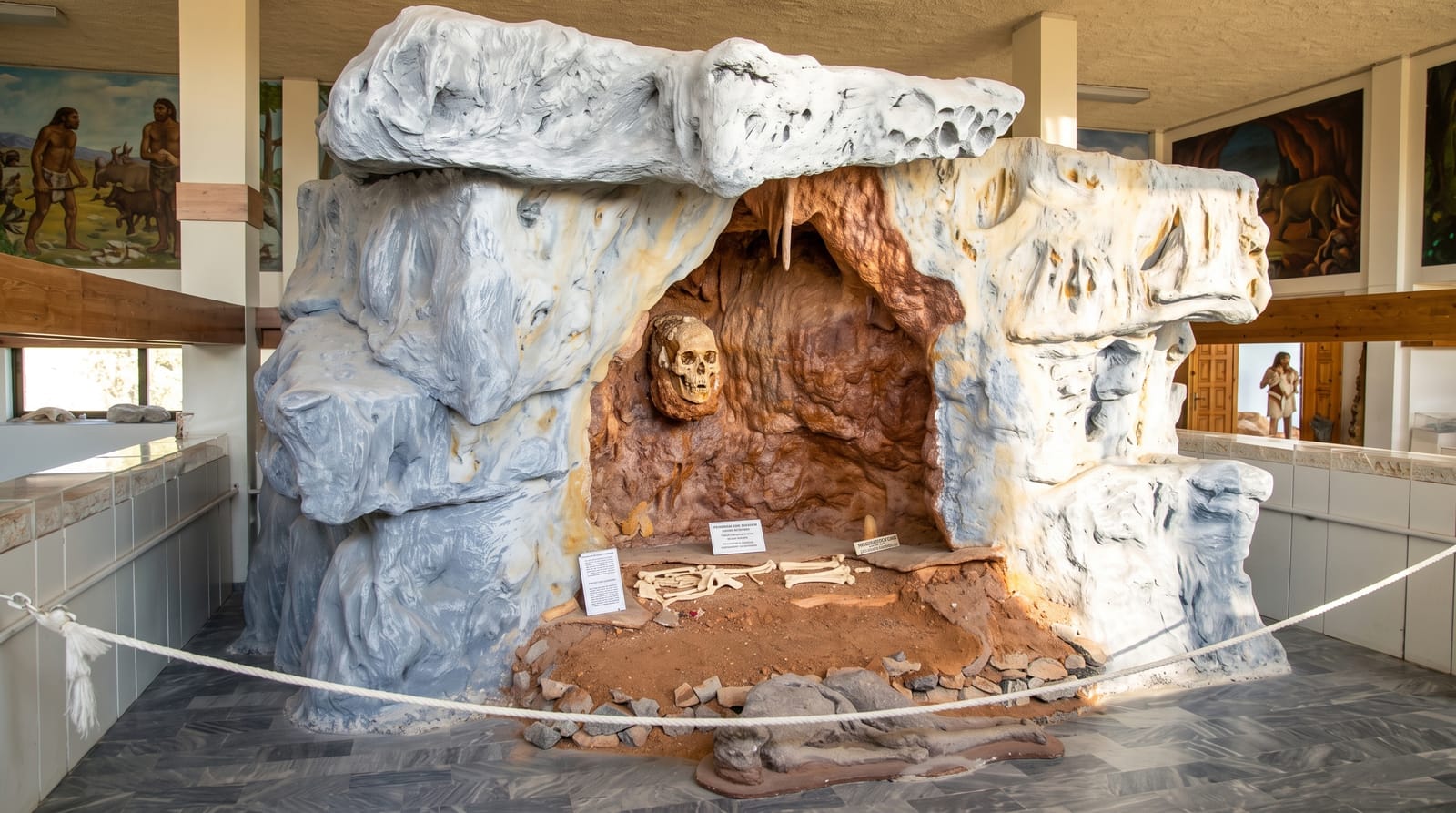
AI illustration
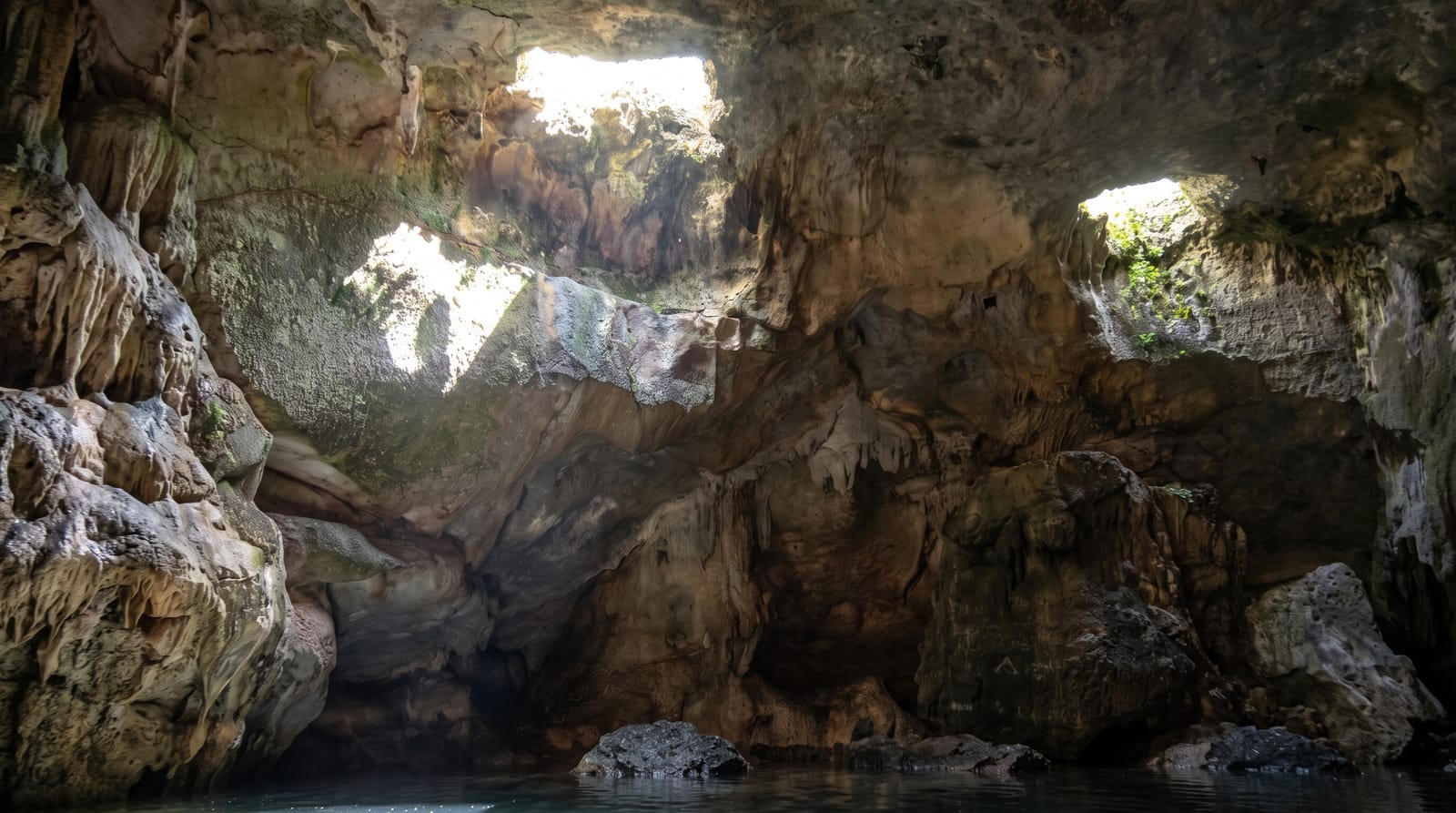
A local shepherd looking for a spring found the cave in 1959, and a year later a villager discovered a human skull cemented into the cave wall by calcite. The Petralona skull belongs to an archaic human, usually assigned to Homo heidelbergensis, and its age has been argued over for decades, with estimates ranging from roughly 160,000 to over 500,000 years, which would make it among the oldest human fossils found in Europe. The cave itself is densely packed with stalactites, stalagmites and columns, and animal bones of cave bears, hyenas and lions have been recovered along with traces of what may be very early controlled fire. A small museum beside the entrance displays casts and finds.
What you'll find
- The formation chambers - dense stalactites and columns along the route.
- The skull find spot - the location where the fossil was embedded.
- The animal bones - remains of cave bears and other Pleistocene fauna.
- The site museum - casts, tools and explanatory displays.
When to go
Year-round; the cave stays cool and the visit works well on a hot day. Tours run at set intervals and are shorter in winter.
Practical notes
Visits are guided and fixed in length, roughly forty-five minutes, with commentary mainly in Greek. The original skull is in Thessaloniki, not here, so the museum shows a cast. Dating of the fossil remains genuinely disputed among specialists.
Nearby
Afytos and the Kassandra peninsula lie south; Thessaloniki is under an hour north.
Key facts
Source: Wikidata, item Q2302464, read on 18 October 2026.
What to pack for Petralona Cave
Chosen from what this place is for. Tap a kit for the full checklist.
- Head torch + spare batteries - Hands-free light is essential; caves are truly dark. Find on Amazon
- Grippy closed shoes - Cave floors are wet, muddy and slick with formations. Find on Amazon
- A warm layer - Many caves sit near 10°C year-round, even in a hot country. Find on Amazon
- Gloves - Protect your hands on rough rock and cold metal handrails. Find on Amazon
Some links on this page are Amazon affiliate links - if you buy through them we may earn a small commission at no extra cost to you.
All packing kitsPlan your trip
Where to start if Petralona Cave is going on the list.
Booking links on this page are affiliate links - if you book through them we may earn a small commission at no extra cost to you. It never changes what we write about a place.
Opening times, ticket prices and seasonal closures change - check the official source before you go: official site.