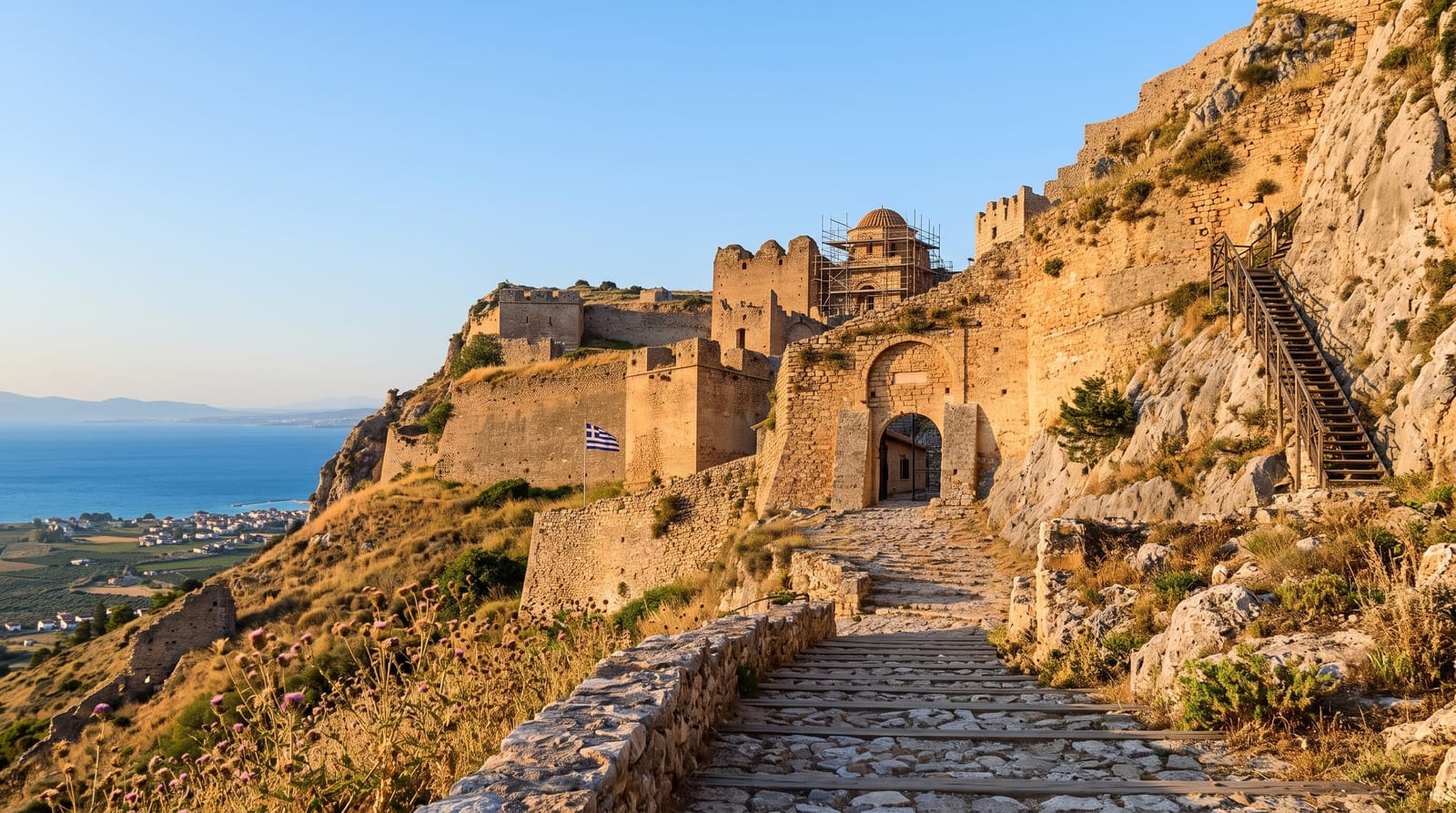
Nestor's Palace
The best-preserved Mycenaean palace in Greece, where the archive of clay tablets survived because the building burned.
Saved in this browser only - no account, nothing sent anywhere. See your map
Homer's Nestor ruled sandy Pylos, and the palace excavated on this ridge from 1939 is the fullest Mycenaean palace plan anywhere: a two-storey complex of around a hundred rooms with a throne room whose circular hearth and column bases are still visible, storerooms holding thousands of stacked cups, bathrooms with a terracotta tub in place, and workshops. It burned around 1200 BC, and the fire baked the unfired clay tablets in its archive room, preserving over a thousand Linear B documents that later helped decode the script and revealed the palace's inventories in an early form of Greek. A modern roof now covers the whole site with raised walkways, which makes the plan legible and the visit comfortable in any weather.
What you actually see
- The throne room - hearth, column bases and painted floor divisions.
- The archive room - where the Linear B tablets were found.
- The bathroom - the terracotta tub still set in its plaster surround.
- The storerooms - rows of magazines that held oil jars and cups.
When to go
Spring and autumn; the shelter makes summer heat and winter rain manageable, but the surrounding countryside is at its best in April and May. The Chora museum holds the finds and is worth the same trip.
Honest expectations
Walls survive only to knee height or lower, so the interest lies in the plan rather than in standing architecture. Walkways keep visitors off the floors, limiting close views. The site is remote and needs a car.
Nearby
The Chora archaeological museum is 4 km away; Pylos, Voidokilia and Methoni lie south.
What to pack for Nestor's Palace
Chosen from what this place is for. Tap a kit for the full checklist.
Opening times, ticket prices and seasonal closures change - check the official source before you go: official site.