Mycenae
The citadel of Agamemnon's legend - the Lion Gate, golden graves and cyclopean walls of the civilisation that ruled Greece before classical Greece existed.
Updated 18 October 2026
AI illustration
UNESCO World Heritage
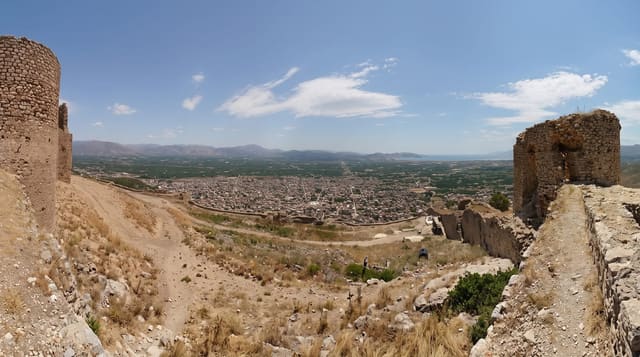
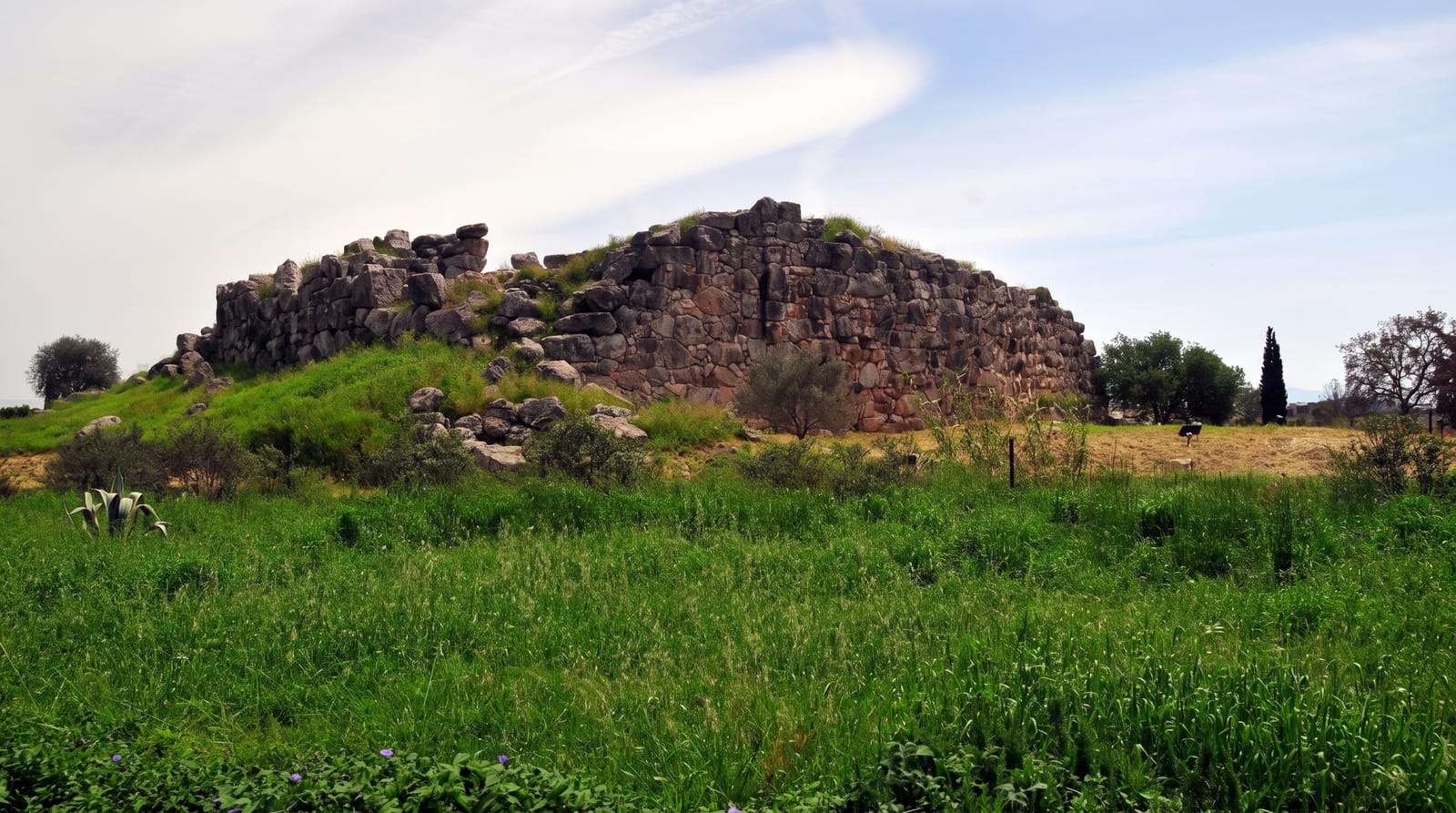
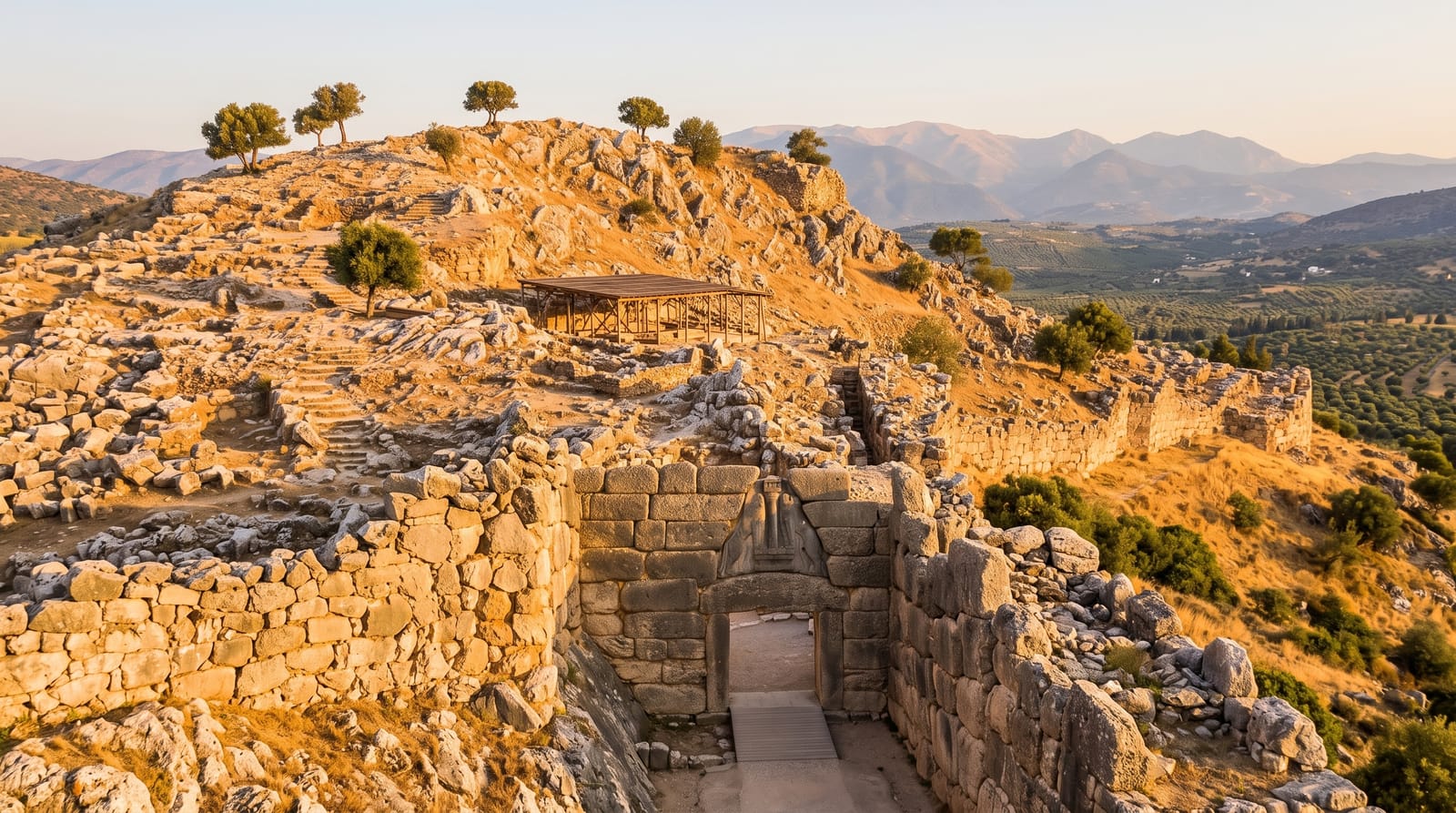
A thousand years before the Parthenon, Mycenae ruled: the hilltop citadel that gave its name to Greece's first great civilisation, remembered by Homer as rich in gold and the seat of Agamemnon, who led the Greeks to Troy. Its walls of stones so massive later Greeks credited them to the cyclopes still ring the site, entered through the Lion Gate - the largest surviving sculpture of the Bronze Age Aegean, two headless lionesses guarding the door for thirty-three centuries. Excavations here stunned the world with golden funeral masks and treasures from the grave circles, and just down the road the Treasury of Atreus, a beehive tomb with a dome unmatched for over a millennium, shows what Bronze Age engineering could do.
History
The hill was occupied from the Early Neolithic, around 5000-4000 BC, and through the Early Bronze Age, and its population grew considerably in the Middle Bronze Age, when the first burials appeared on the west slope inside the earliest circuit wall. Grave Circle B dates from about 1650-1550 BC, and the richer Grave Circle A, found by Heinrich Schliemann in 1876, from the 16th century BC, showing strong Minoan influence; from about 1550 BC Mycenae grew into a major power, and in the second millennium BC it dominated much of southern Greece, Crete, the Cyclades and parts of south-west Anatolia, giving its name to the Mycenaean period of about 1600-1100 BC. At its height around 1350 BC the citadel and lower town covered 32 hectares and held some 30,000 people (Wikipedia, Mycenae).
What's there
- The Lion Gate - walking through the citadel's monumental entrance.
- The grave circles and museum - where the golden masks and treasures emerged.
- The Treasury of Atreus - the great beehive tomb's soaring corbelled dome.
- The palace summit and cistern stair - the megaron floorplan and the eerie underground water passage.
When to go
Spring wraps the citadel in wildflowers and comfortable light; autumn is equally kind. Summer bakes the shadeless hill hard - the site opens early, and the first hour is the sane window. The museum's shade and gold repay the midday hours instead.
Good to know
Mycenae asks a little imagination: beyond the gate, walls and tombs, much is knee-high foundation, and Homer supplies the furnishings. The Agamemnon connection is legend layered on real splendour - the guides handle the difference honestly. Ground is rocky and shadeless; proper shoes and water are non-negotiable. Combine with Nafplio and Epidaurus - as a trio they make one of Greece's best days.
Nearby
Nafplio, Epidaurus and Argos sit within easy reach; Corinth's canal is on the road back to Athens.
Key facts
Source: Wikidata, item Q132564, read on 18 October 2026.
What to pack for Mycenae
Chosen from what this place is for. Tap a kit for the full checklist.
- Head torch + spare batteries - Hands-free light is essential; caves are truly dark. Find on Amazon
- Comfortable walking shoes - Sightseeing means kilometres of pavement and cobbles daily. Find on Amazon
- Grippy closed shoes - Cave floors are wet, muddy and slick with formations. Find on Amazon
- A slim anti-theft daypack - Zips that close properly; keep it in front in crowds and on transit. Find on Amazon
Some links on this page are Amazon affiliate links - if you buy through them we may earn a small commission at no extra cost to you.
All packing kitsPlan your trip
Where to start if Mycenae is going on the list.
Booking links on this page are affiliate links - if you book through them we may earn a small commission at no extra cost to you. It never changes what we write about a place.
Opening times, ticket prices and seasonal closures change - check the official source before you go: official site.