Heraklion Archaeological Museum
The definitive Minoan collection, holding the original frescoes from Knossos, the Phaistos Disc and four thousand years of Cretan material.
Updated 19 October 2026
AI illustration
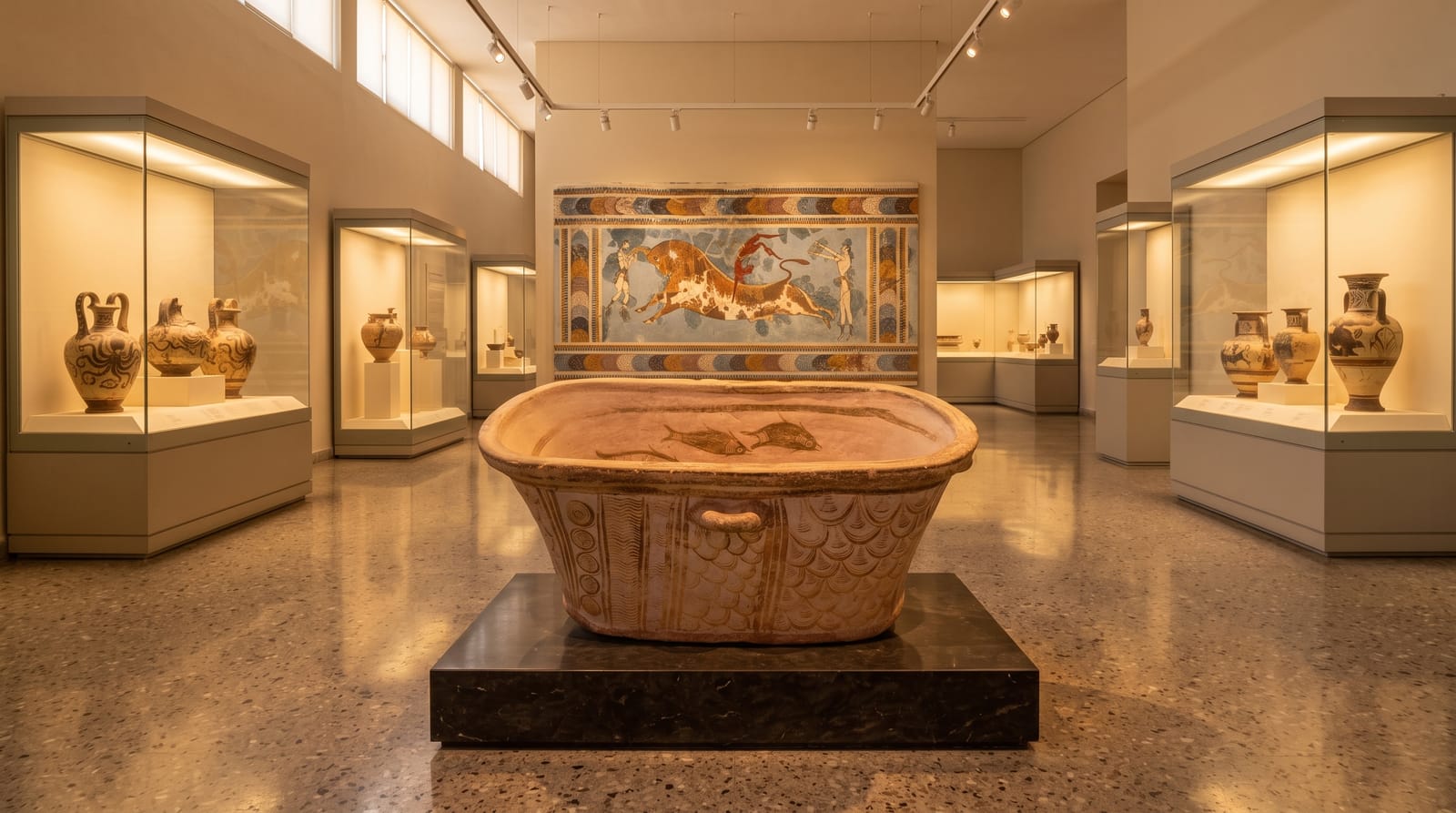
Almost everything moveable that came out of the Minoan palaces is here, which makes this the museum you visit either before or instead of arguing with the reconstructions at Knossos. The frescoes on the upper floor are the originals, with the bull-leaping panel, the dolphins and the processional figures; what stands at Knossos are copies. The Phaistos Disc sits in its own case, still unread. Beyond those, the collection runs from Neolithic tools through the faience snake handlers, the carved stone rhyta, the Kamares pottery with its thin walls and whipped-cream decoration, the gold bee pendant from Malia, and on into Greek and Roman Crete.
History
The museum began in 1883 as a simple collection of antiquities, just as Minoan civilisation was being rediscovered, when Crete was a largely autonomous part of the Ottoman Empire. A dedicated building was put up from 1904 to 1912 at the urging of the archaeologists Iosif Hatzidakis and Stefanos Xanthoudidis, and after earthquakes in 1926, 1930 and 1935 left it close to collapse, its director Spyridon Marinatos worked to raise funds for a new one; today it covers over 5,500 years of Cretan history, from the Neolithic to Roman times (Wikipedia, Heraklion Archaeological Museum).
What you'll find
- The Knossos frescoes - the originals, including the bull-leaping panel and the dolphin scene.
- The Phaistos Disc - a stamped clay disc in a script nobody has convincingly deciphered.
- The snake handlers - the faience figurines from the Knossos temple repositories.
- The gold work - the bee pendant from Malia and the jewellery from the palace burials.
When to go
Any time of year, and a good rainy-day option on an island short of them. Cruise arrivals push the crowds through between ten and one, so the first hour after opening or the last two before closing are noticeably calmer. Doing this before Knossos rather than after makes the palace far easier to read, though it means an extra trip into the centre.
Things to know
The frescoes are famously reconstructed, with large painted areas around small surviving fragments, and the museum is honest about it without flagging every case. Crowding around the star objects is real when ships are in. Seating is limited for a visit this long and the last rooms get skipped by most people. Labels are good but dense, and rushing it in an hour wastes the ticket.
Nearby
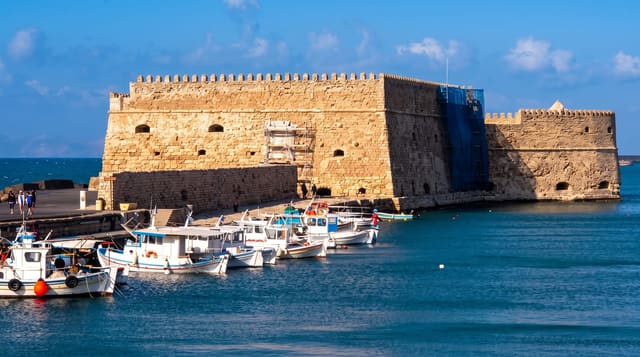
Knossos is twenty minutes out of town, and the Venetian harbour fort and market street are within walking distance.
Key facts
Source: Wikidata, item Q636972, read on 18 October 2026.
What to pack for Heraklion Archaeological Museum
Chosen from what this place is for. Tap a kit for the full checklist.
- Binoculars - The single best wildlife tool - even a compact pair transforms a sighting. Find on Amazon
- Comfortable walking shoes - Sightseeing means kilometres of pavement and cobbles daily. Find on Amazon
- Modest clothing - Shoulders and knees covered - the single most common requirement. Find on Amazon
- A zoom camera or long lens - Animals rarely come close; reach beats megapixels. Find on Amazon
Some links on this page are Amazon affiliate links - if you buy through them we may earn a small commission at no extra cost to you.
All packing kitsPlan your trip
Where to start if Heraklion Archaeological Museum is going on the list.
Booking links on this page are affiliate links - if you book through them we may earn a small commission at no extra cost to you. It never changes what we write about a place.
Opening times, ticket prices and seasonal closures change - check the official source before you go: official site.