Halki
A one-village island of restored captains' houses around a harbour, with no cars to speak of and water shipped in.
Updated 4 September 2026
AI illustration
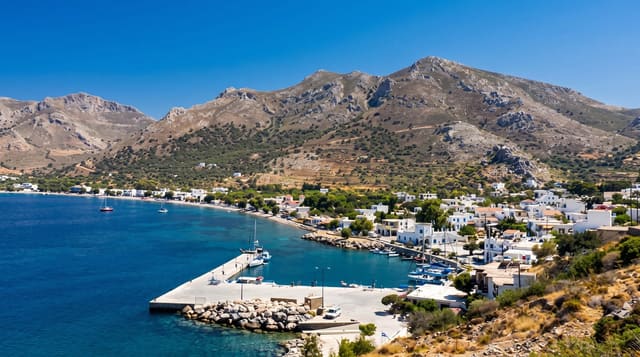
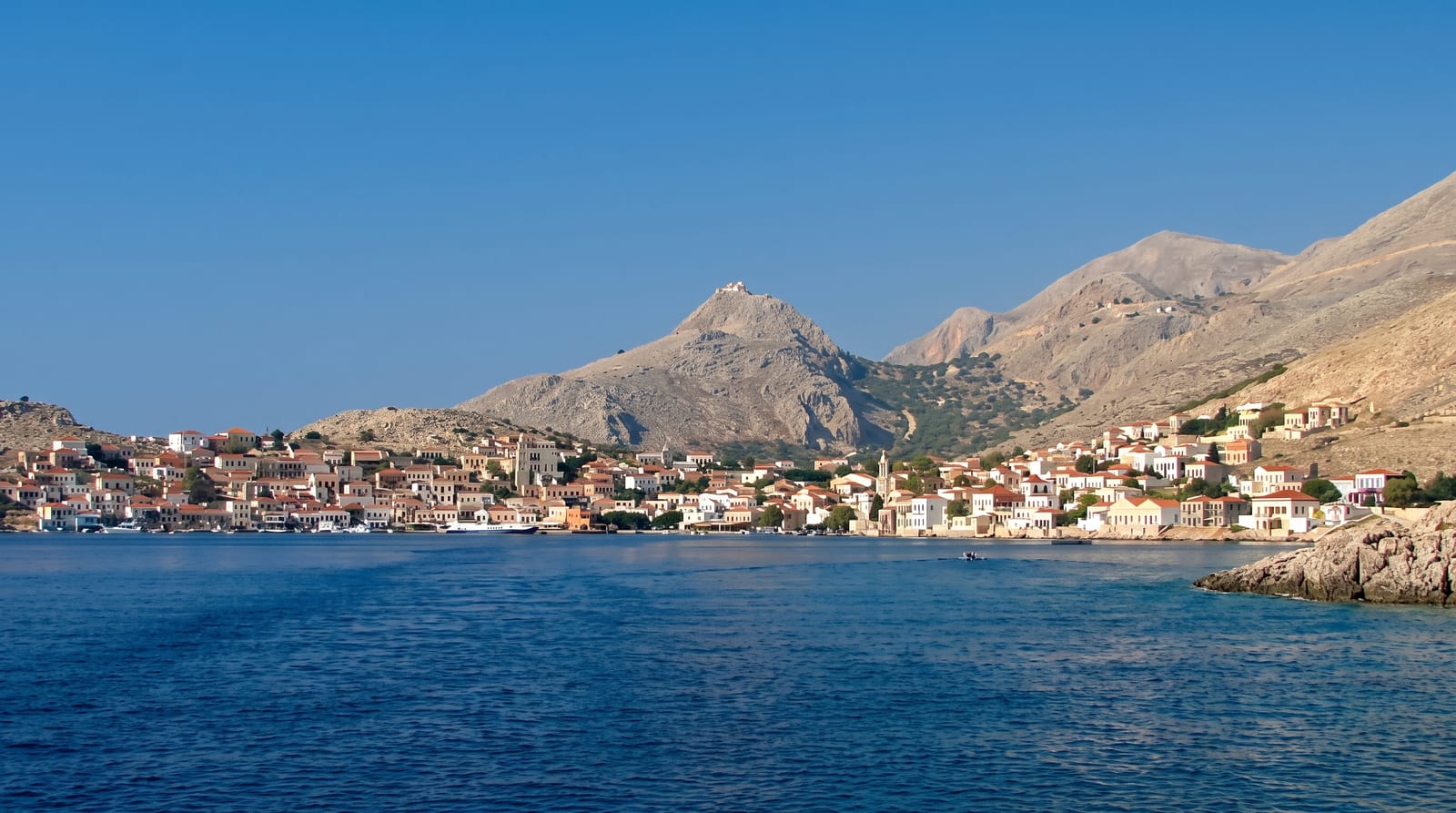
Halki has one settlement, Emborio, a harbour ringed by neoclassical houses built on nineteenth-century sponge-diving money and painted in ochre, cream and pale blue, with a tall clock tower and the church of Agios Nikolaos carrying the highest bell tower in the Dodecanese. The island's population fell to a few hundred, and a UNESCO-linked programme in the 1980s promoted restoration of the houses, which is why the harbour looks as coherent as it does. Above the village the abandoned old settlement of Chorio climbs to a Knights' castle with a chapel inside; the walk up takes about forty minutes and gives the island's best view. Beaches are pebble and small, Ftenagia, Pontamos, Kania, and boats run to Alimia, an uninhabited neighbouring island.
What's there
- The harbour houses - restored sponge-era mansions around Emborio.
- Chorio and the castle - the abandoned old village and its Knights' fortress.
- The bell tower - the tallest in the Dodecanese, above the main church.
- Alimia - an uninhabited island reached by boat trip.
When to go
May, June and September; the island is small and quiet at any time, with a modest August peak. Winter reduces the ferry and closes most tavernas.
Practical notes
Water is shipped to the island and used carefully, so long showers are discouraged. Beaches are small and pebble. There is no bank, no nightlife and little to do beyond swimming, walking and eating, which is the appeal.
Nearby
Rhodes lies an hour and a half east; Tilos and Symi are the neighbouring islands.
What to pack for Halki
Chosen from what this place is for. Tap a kit for the full checklist.
- Reef-safe sunscreen - High SPF that will not bleach the coral you are swimming over. Find on Amazon
- Your own mask + snorkel - A well-fitting mask is the single biggest comfort upgrade underwater. Find on Amazon
- Quick-dry towel - A microfibre towel packs small and dries in minutes. Find on Amazon
- Rash guard or thin wetsuit - Sun cover on the surface and warmth on longer or deeper dives. Find on Amazon
Some links on this page are Amazon affiliate links - if you buy through them we may earn a small commission at no extra cost to you.
All packing kitsPlan your trip
Where to start if Halki is going on the list.
Booking links on this page are affiliate links - if you book through them we may earn a small commission at no extra cost to you. It never changes what we write about a place.
Opening times, ticket prices and seasonal closures change - check the official source before you go: official site.