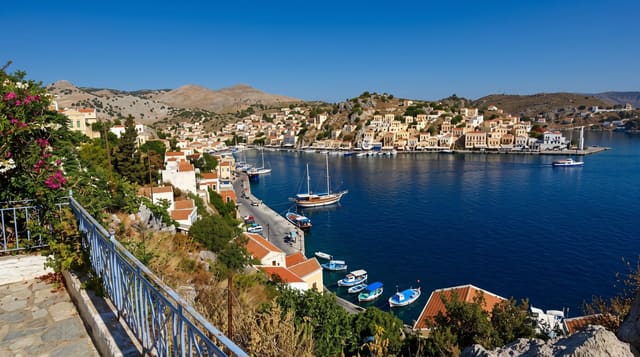
Tilos
A small Dodecanese island run on wind and sun, where hunting is banned, birds are protected and dwarf elephant bones were found in a cave.
Updated 19 October 2026
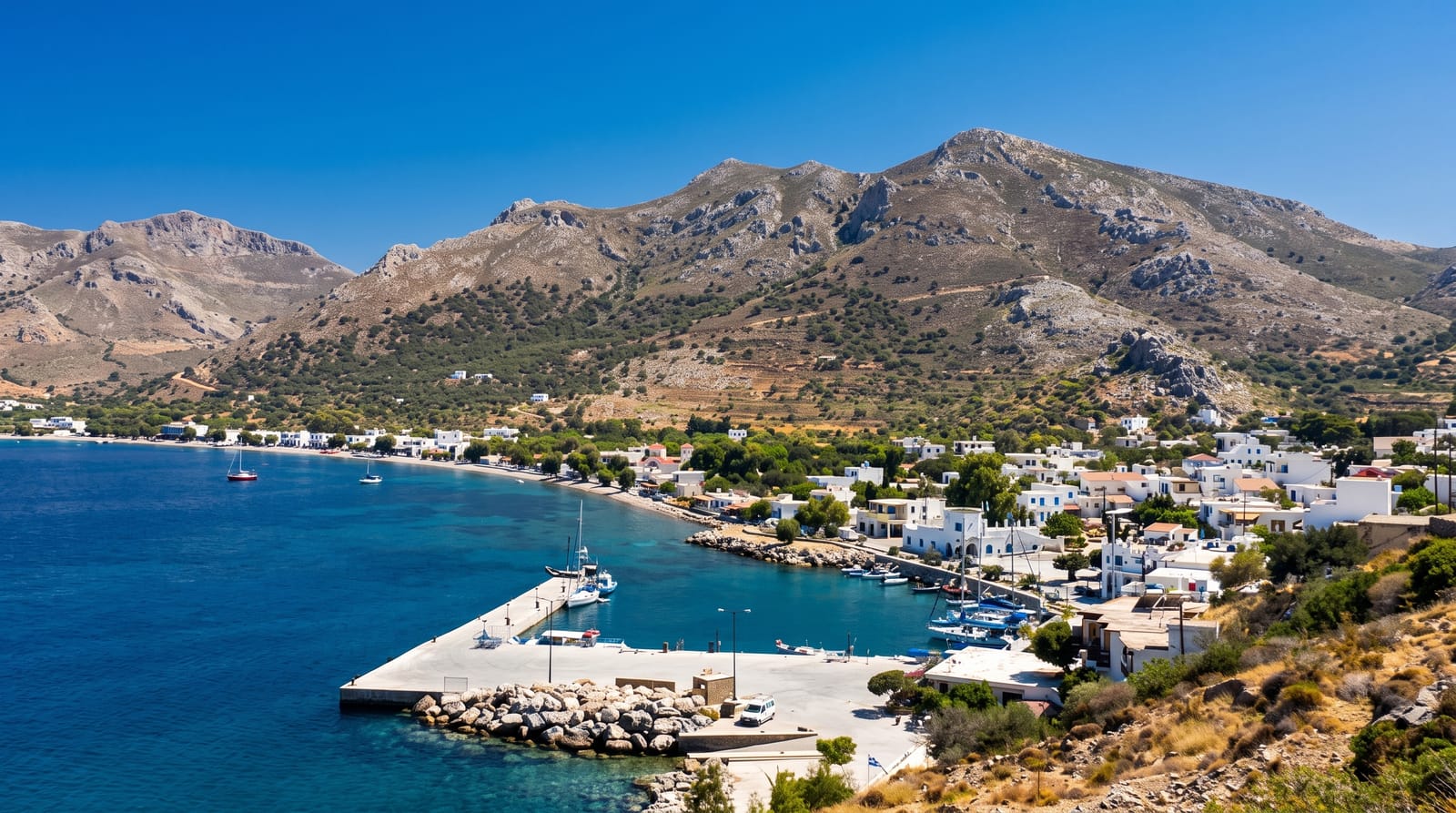
AI illustration
Tilos has around seven hundred and fifty permanent residents and has made a reputation out of doing things differently: hunting has been banned across the island since the 1990s, the whole territory is a protected area and Natura 2000 site with over 150 bird species recorded, and a wind turbine and solar park have at times covered most of the island's electricity, making it one of Europe's first energy-autonomous islands. The Charkadio cave in the interior produced bones of dwarf elephants, which some researchers think survived here until around 1500 BC, which would make them the last elephants to live in Europe, though others consider that date unconfirmed; the bones are now displayed in a small museum at Megalo Chorio. The medieval castle above that village and the abandoned settlement of Mikro Chorio, empty since the 1960s, are the other sights, and beaches such as Eristos and Plaka are long and quiet.
History
From about 45,000 years ago, in the Late Pleistocene, the island was home to a dwarf elephant, Palaeoloxodon tiliensis, whose remains were found in the Charkadio cave, and humans have lived on Tilos since at least the Final Neolithic, around the 4th millennium BC. In the 7th century BC colonists from Tilos and Lindos founded Gela in Sicily, and in the classical era the island, known in antiquity as Agathussa according to Pliny the Elder, minted its own coins and was famed for clothing and perfumes; Tilos also claims the poet Erinna, said to have been born here around 350 BC (Wikipedia, Tilos).
Highlights
- The dwarf elephant museum - bones from the Charkadio cave at Megalo Chorio.
- Mikro Chorio - an abandoned village on the hillside, empty since the 1960s.
- The castles - medieval fortifications above the villages.
- The empty beaches - Eristos, Plaka and coves reached on foot.
When to go
April to June for birds, wildflowers and walking; September and October for warm sea and quiet. High summer is hot and ferry connections thin. Winter is very quiet with limited boats.
What to expect
Facilities are basic: a few dozen rooms, a handful of tavernas, one small supermarket cluster and limited transport. Ferries are infrequent and weather-dependent. There is little to do beyond walking, swimming and birdwatching.
Nearby
Rhodes lies southeast, Nisyros and Kos north on the same ferry line.
Key facts
Source: Wikidata, item Q898718, read on 18 October 2026.
What to pack for Tilos
Chosen from what this place is for. Tap a kit for the full checklist.
- Reef-safe sunscreen - High SPF that will not bleach the coral you are swimming over. Find on Amazon
- Head torch + spare batteries - Hands-free light is essential; caves are truly dark. Find on Amazon
- Binoculars - The single best wildlife tool - even a compact pair transforms a sighting. Find on Amazon
- Quick-dry towel - A microfibre towel packs small and dries in minutes. Find on Amazon
Some links on this page are Amazon affiliate links - if you buy through them we may earn a small commission at no extra cost to you.
All packing kitsPlan your trip
Where to start if Tilos is going on the list.
Booking links on this page are affiliate links - if you book through them we may earn a small commission at no extra cost to you. It never changes what we write about a place.
Opening times, ticket prices and seasonal closures change - check the official source before you go: official site.