Falassarna Beach
A wide west-facing bay of pale pink-tinged sand in far western Crete, famous for its sunsets and its surf.
Updated 4 September 2026

AI illustration
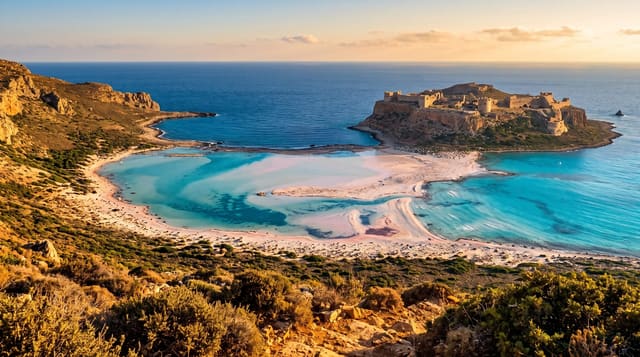
Falassarna faces due west across open sea, which gives it two of its characteristics: the sunsets, watched by crowds from the sand every evening in season, and the swell, which makes it one of Crete's better beaches for bodyboarding and occasional surfing when a westerly runs. The sand is fine and pale with a faint pink cast from crushed shell in places, and the bay is long enough, over a kilometre in several sections, to absorb crowds. At its northern end lie the remains of ancient Falasarna, a Hellenistic harbour town whose stone-cut harbour basin now sits well inland and above sea level, lifted by the earthquake of AD 365 that raised western Crete several metres.
What you'll find
- The long sandy bay - over a kilometre of fine pale sand facing west.
- The sunsets - the evening ritual, with open sea to the horizon.
- Ancient Falasarna - a Hellenistic harbour now stranded inland by uplift.
- The surf - west-facing swell on windy days.
When to go
May, June and September for warm sea and space; July and August fill the organised sections. Wind can pick up in the afternoon, which suits surfers and troubles sunbathers.
Practical notes
The beach is exposed and can be windy, with real waves and occasional undertow on rough days. Facilities cluster at the southern end while the north is empty. The drive from Chania takes about an hour.
Nearby
Balos lagoon lies north around the peninsula; Elafonisi is south down the west coast.
What to pack for Falassarna Beach
Chosen from what this place is for. Tap a kit for the full checklist.
- Reef-safe sunscreen - High SPF that will not bleach the coral you are swimming over. Find on Amazon
- Quick-dry clothing - Board shorts or synthetics that shrug off spray and dry fast. Find on Amazon
- Quick-dry towel - A microfibre towel packs small and dries in minutes. Find on Amazon
- Secure water shoes or reef boots - Grip on slippery launches and protection on rocky shores. Find on Amazon
Some links on this page are Amazon affiliate links - if you buy through them we may earn a small commission at no extra cost to you.
All packing kitsPlan your trip
Where to start if Falassarna Beach is going on the list.
Booking links on this page are affiliate links - if you book through them we may earn a small commission at no extra cost to you. It never changes what we write about a place.
Opening times, ticket prices and seasonal closures change - check the official source before you go: official site.