Cave of the Apocalypse
The grotto on Patmos where tradition holds John received the visions of Revelation, now a small chapel complex.
Updated 18 October 2026
AI illustration
UNESCO World Heritage
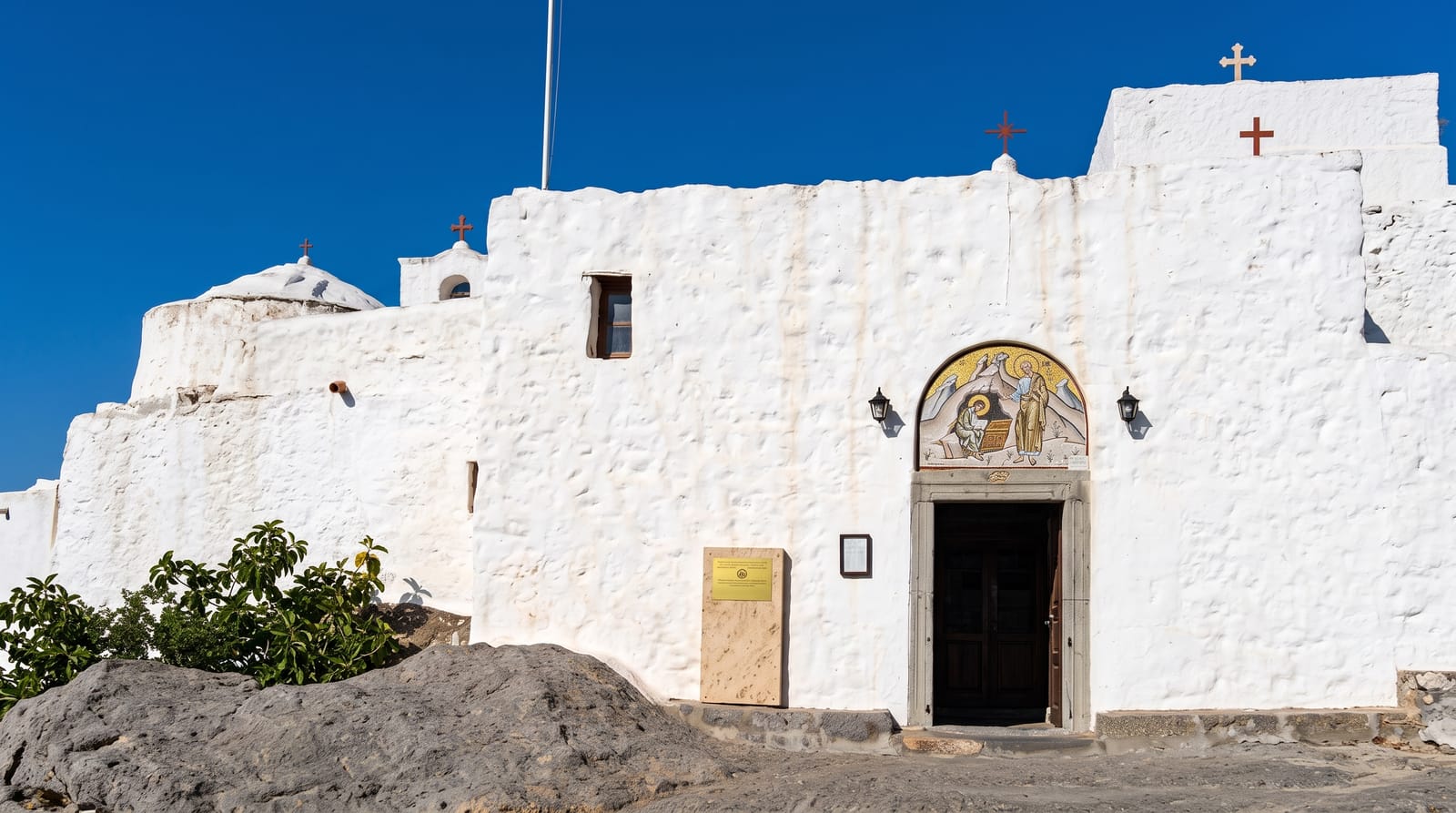
Christian tradition holds that John, exiled to Patmos, received and dictated the visions of the Book of Revelation in this cave, and since the eleventh century it has been enclosed within a monastic complex built into the hillside. The grotto itself is small, its rock ceiling showing a triple fissure that is interpreted as marking the voice of the Trinity, with a niche pointed out as where John rested his head and a ledge where his scribe wrote. Icons, lamps and silver cladding fill the space. Together with the monastery of St John above and the historic centre of Chora, the cave is inscribed on the UNESCO World Heritage list. The old cobbled path from Skala passes the entrance and continues up to Chora.
History
Under the Roman emperor Domitian in the 1st century, followers of Christ were exiled to Patmos, and Christian tradition holds that in this cave John of Patmos, with his disciple and scribe Prochorus, received the visions he recorded in the Book of Revelation, hearing a voice through three openings in the rock that symbolise the Trinity. In 1088 the Byzantine emperor Alexios Komnenos gave the island to the monk John Christodoulos, who built most of the fortified Monastery of St John the Theologian at its highest point within three years, and the town of Chora grew up around it. In 1999 UNESCO declared the cave and the monastery a joint World Heritage Site (Wikipedia, Cave of the Apocalypse).
What to look for
- The grotto - a small rock chamber enclosed within a chapel.
- The triple fissure - the crack in the ceiling given a Trinitarian reading.
- The rock niche and ledge - places identified with John and his scribe.
- The old path - the cobbled route between Skala and Chora past the door.
When to go
Spring and autumn; the site is busiest when cruise ships call, usually late morning, so early or late is quieter. Hours are split with a long midday closure, and it shuts on some afternoons entirely.
What to expect
The cave is very small and visits are brief, with photography forbidden inside and dress rules enforced. Cruise groups can fill it completely. The historical claims are religious tradition, not documented fact.
Nearby
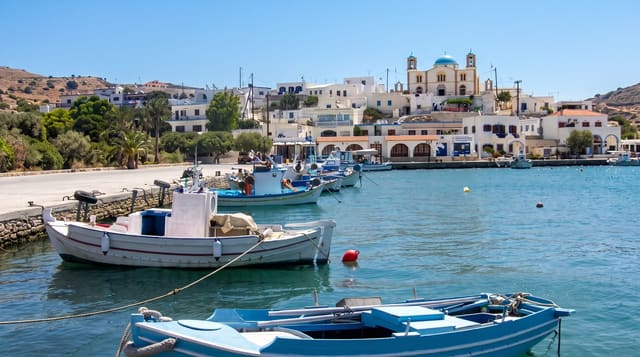
The monastery of St John and Chora are up the hill; Skala harbour lies below.
Key facts
Source: Wikidata, item Q1978886, read on 18 October 2026.
What to pack for Cave of the Apocalypse
Chosen from what this place is for. Tap a kit for the full checklist.
- Head torch + spare batteries - Hands-free light is essential; caves are truly dark. Find on Amazon
- Comfortable walking shoes - Sightseeing means kilometres of pavement and cobbles daily. Find on Amazon
- Modest clothing - Shoulders and knees covered - the single most common requirement. Find on Amazon
- Grippy closed shoes - Cave floors are wet, muddy and slick with formations. Find on Amazon
Some links on this page are Amazon affiliate links - if you buy through them we may earn a small commission at no extra cost to you.
All packing kitsPlan your trip
Where to start if Cave of the Apocalypse is going on the list.
Booking links on this page are affiliate links - if you book through them we may earn a small commission at no extra cost to you. It never changes what we write about a place.
Opening times, ticket prices and seasonal closures change - check the official source before you go: official site.