Avgotaracho of Messolongi
Grey mullet roe salted, pressed and sealed in beeswax in the lagoon town, a PDO delicacy made the same way for centuries.
Updated 14 October 2026
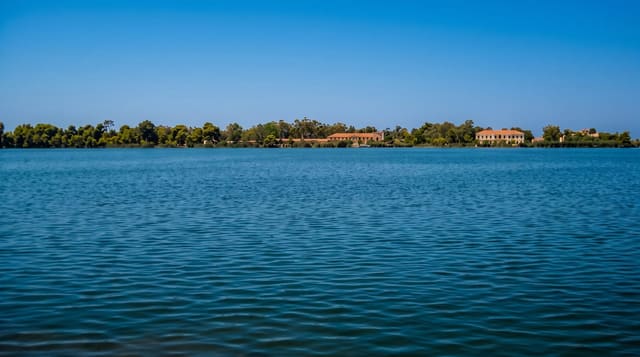
Avgotaracho is the roe sac of the grey mullet, taken whole, salted, pressed, dried and then coated in beeswax to seal it, and the version from the Messolongi lagoon holds Protected Designation of Origin status. Production is tied to the lagoon's fish traps, the ivaria, wooden enclosures that channel migrating mullet in late summer, a system in use since at least the Venetian period. The result is dense, amber-orange, intensely savoury, sliced thin and eaten plain or with bread; it is expensive, sold by the gram, and often compared to Sardinian bottarga. Around the lagoon stand the pelades, stilt huts on the water once used by fishing families, now the image of the place.
What's there
- The stilt huts - wooden fishing shelters standing over the lagoon.
- The fish traps - the ivaria enclosures used for the mullet migration.
- The waxed roe - finished avgotaracho sealed in beeswax at producers.
- The lagoon birdlife - flamingos, herons and waders on the shallows.
When to go
Late summer and early autumn for the fishing season and production; the product is sold year-round. Spring brings migrating birds to the lagoon, which is a Ramsar wetland.
Before you go
Producers are small businesses rather than visitor centres, so tours depend on asking in advance. The price is high, and the flavour is very strong and salty, not to everyone's taste. Messolongi town is plain and the lagoon edge industrial in places.
Nearby
The Klisova lagoon and its huts lie south; Nafpaktos and the Rio bridge are east along the coast.
What to pack for Avgotaracho of Messolongi
Chosen from what this place is for. Tap a kit for the full checklist.
- Travel rod + reel - A packable multi-piece rod fits in a case and covers most holiday fishing. Find on Amazon
- Reef-safe sunscreen - High SPF that will not bleach the coral you are swimming over. Find on Amazon
- Binoculars - The single best wildlife tool - even a compact pair transforms a sighting. Find on Amazon
- A reusable bag or container - For market produce and cutting down on packaging. Find on Amazon
Some links on this page are Amazon affiliate links - if you buy through them we may earn a small commission at no extra cost to you.
All packing kitsPlan your trip
Where to start if Avgotaracho of Messolongi is going on the list.
Booking links on this page are affiliate links - if you book through them we may earn a small commission at no extra cost to you. It never changes what we write about a place.
Opening times, ticket prices and seasonal closures change - check the official source before you go: official site.