Assos
A hamlet on a narrow isthmus below a huge Venetian fortress, reached by a road of hairpins down the cliff.
Updated 4 September 2026
AI illustration
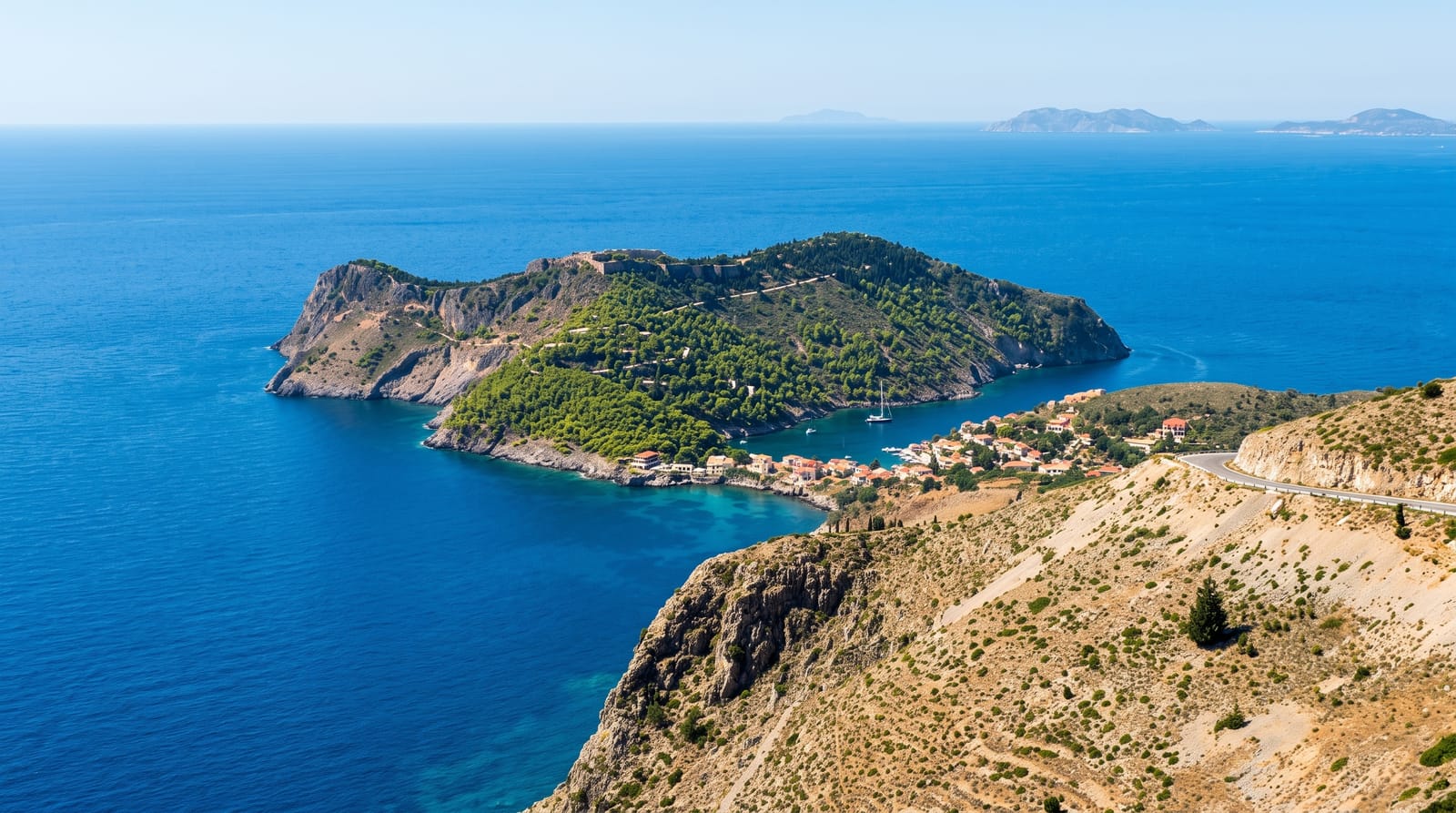
Assos occupies a strip of land joining a wooded peninsula to the main island, with a small harbour on one side, a pebble beach on the other, and a scatter of pastel houses rebuilt after the 1953 earthquake around a square of plane trees. Above it, the Venetian fortress built from 1593 encloses the whole peninsula behind two kilometres of wall, one of the largest castles in the Ionian; a cobbled path climbs to the gate in about twenty-five minutes, and inside are ruined barracks, a church and pine woods, with views down both coasts. The approach road descends the cliff in tight hairpins, and the classic photograph of Assos is taken from the layby halfway down.
What to look for
- The fortress walls - two kilometres of Venetian rampart around the peninsula.
- The isthmus village - pastel houses between harbour and beach.
- The hairpin road - the descent with the classic view over the village.
- The pine interior - woods and ruins inside the castle enclosure.
When to go
Late spring and September for the walk up to the castle in comfort and space in the village. August fills the tiny centre and parking becomes very difficult.
Before you go
Parking is severely limited, and in summer cars queue on the hairpins. The castle is a ruin with little interpretation and a steep, hot approach. The village has only a handful of tavernas.
Nearby
Myrtos beach lies south along the same coast; Fiskardo is at the island's northern tip.
What to pack for Assos
Chosen from what this place is for. Tap a kit for the full checklist.
- Comfortable walking shoes - Sightseeing means kilometres of pavement and cobbles daily. Find on Amazon
- A slim anti-theft daypack - Zips that close properly; keep it in front in crowds and on transit. Find on Amazon
- A refillable water bottle - Many cities have public fountains; save money and plastic. Find on Amazon
- A light layer + compact umbrella - For museum air-con and a sudden shower. Find on Amazon
Some links on this page are Amazon affiliate links - if you buy through them we may earn a small commission at no extra cost to you.
All packing kitsPlan your trip
Where to start if Assos is going on the list.
Booking links on this page are affiliate links - if you book through them we may earn a small commission at no extra cost to you. It never changes what we write about a place.
Opening times, ticket prices and seasonal closures change - check the official source before you go: official site.