Betws-y-Coed
A stone village where three rivers meet in Snowdonia, made a tourist centre by a Victorian artists' colony and the arrival of the railway.
Updated 4 September 2026
AI illustration
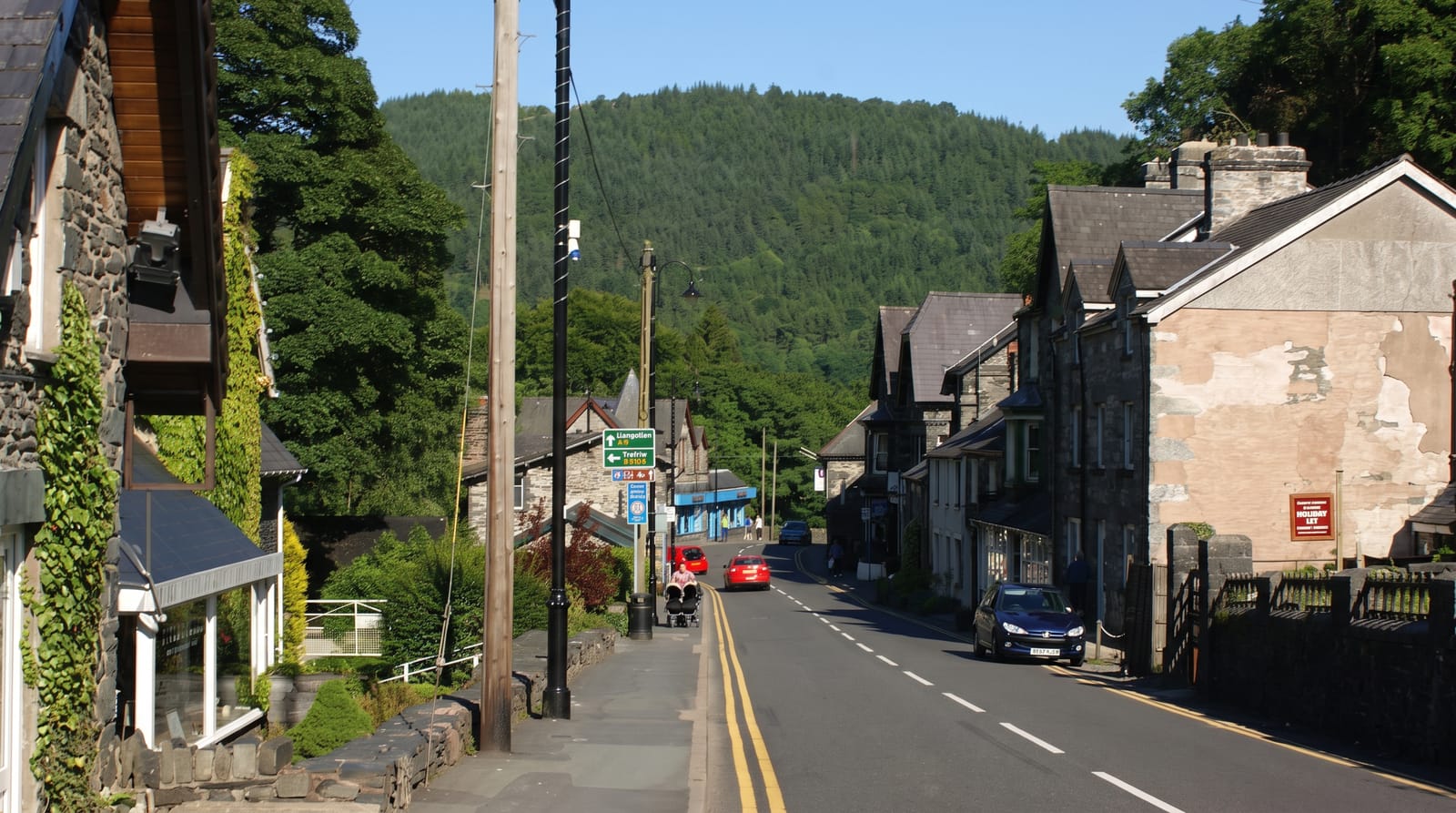
The village sits where the Llugwy and Lledr join the Conwy, surrounded by oak woods and conifer plantation in the Gwydir Forest. David Cox and other landscape painters worked here from the 1840s, forming one of Britain's first artists' colonies, and the railway arrived in 1868, turning the village into the main tourist base for Snowdonia, which it remains. Telford's Waterloo Bridge of 1815 carries the A5 across the Conwy in a single cast-iron span with an inscription cast into it recording the year of the battle. Swallow Falls, two kilometres west, is a stepped fall on the Llugwy, and the Fairy Glen is a narrow rocky gorge on the Conwy. The village is dense with outdoor shops, which is the main character of its high street now.
Highlights
- Waterloo Bridge - Telford's 1815 iron span with the date cast into it.
- Swallow Falls - a stepped fall on the Llugwy west of the village.
- The Fairy Glen - a narrow rock gorge on the Conwy south of the village.
- The artists' legacy - a village made a resort by painters and the 1868 railway.
When to go
April to October for walking and the falls, which run best after rain; autumn colour in the surrounding woods is strong. The village is very busy in summer and on bank holidays.
Things to know
The high street is dominated by outdoor equipment shops and can feel commercial. Parking is charged and limited, and the A5 through the village is heavy with traffic. Swallow Falls and the Fairy Glen both charge small access fees through turnstiles.
Nearby
Swallow Falls and the Gwydir Forest lie west; Snowdon and Llanberis are beyond.
Key facts
Source: Wikidata, item Q203387, read on 18 October 2026.
What to pack for Betws-y-Coed
Chosen from what this place is for. Tap a kit for the full checklist.
- Comfortable walking shoes - Sightseeing means kilometres of pavement and cobbles daily. Find on Amazon
- A slim anti-theft daypack - Zips that close properly; keep it in front in crowds and on transit. Find on Amazon
- A refillable water bottle - Many cities have public fountains; save money and plastic. Find on Amazon
- A light layer + compact umbrella - For museum air-con and a sudden shower. Find on Amazon
Some links on this page are Amazon affiliate links - if you buy through them we may earn a small commission at no extra cost to you.
All packing kitsPlan your trip
Where to start if Betws-y-Coed is going on the list.
Booking links on this page are affiliate links - if you book through them we may earn a small commission at no extra cost to you. It never changes what we write about a place.
Opening times, ticket prices and seasonal closures change - check the official source before you go: official site.