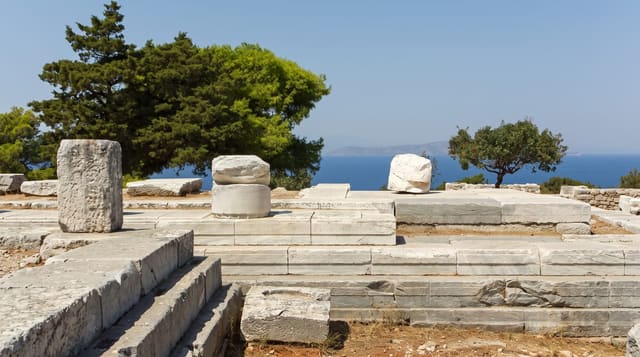
Amphiareion of Oropos
A healing sanctuary in a wooded ravine, where patients slept beside the altar and read their cures in dreams.
Updated 4 September 2026
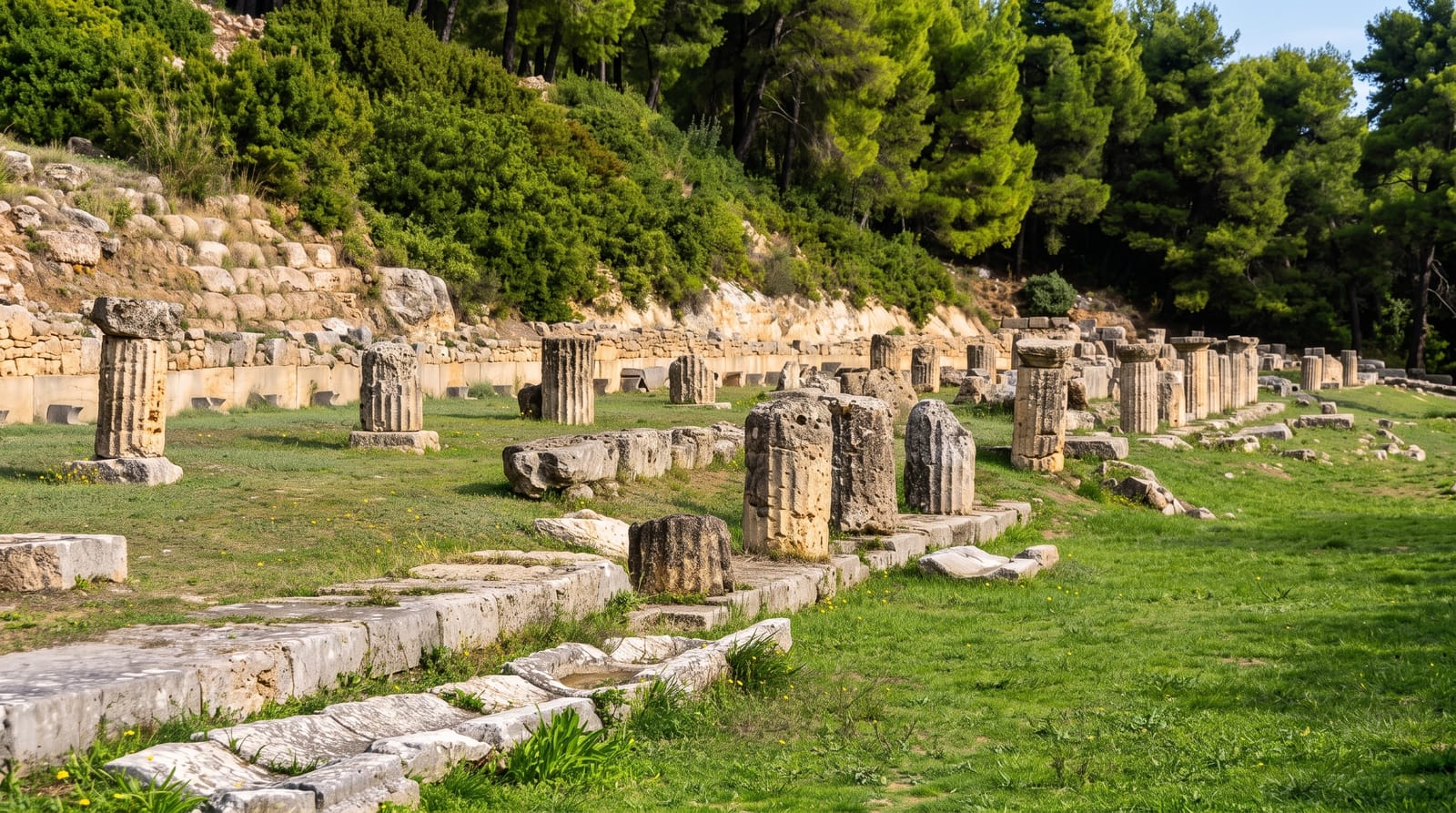
AI illustration
The sanctuary was dedicated to Amphiaraos, a seer swallowed by the earth in myth and worshipped afterwards as a healing hero, and it worked by incubation: the sick sacrificed a ram, lay down on its fleece in the long stoa, and told their dreams to the priests, who read the cure from them. Founded in the late fifth century BC, the site occupies a narrow ravine shaded by plane trees and pines beside a stream. The remains are unusually legible: a Doric temple with its altar, a stoa 110 metres long where patients slept, a small theatre with five surviving marble thrones for officials, rows of statue bases inscribed with the names of the grateful, and a bathing complex fed by the sacred spring, into which cured patients threw coins.
What you'll find
- The incubation stoa - the long hall where the sick slept for their dreams.
- The theatre - a small auditorium with marble seats of honour intact.
- The temple and altar - the Doric core of the sanctuary.
- The sacred spring - the water source and bath complex below.
When to go
Spring and autumn; the ravine holds shade and running water, which makes it bearable in early summer. Opening hours are limited and the gate can be closed outside the posted times.
Before you go
Reaching it needs a car, and the site sees so few people that facilities amount to a ticket booth. The layout is clear but explanatory signs are old. Bring water; there is nothing nearby.
Nearby
The Oropos coast and ferry to Eretria on Euboea lie north; Marathon is east.
Key facts
Source: Wikidata, item Q474656, read on 18 October 2026.
What to pack for Amphiareion of Oropos
Chosen from what this place is for. Tap a kit for the full checklist.
- Comfortable walking shoes - Sightseeing means kilometres of pavement and cobbles daily. Find on Amazon
- Modest clothing - Shoulders and knees covered - the single most common requirement. Find on Amazon
- A slim anti-theft daypack - Zips that close properly; keep it in front in crowds and on transit. Find on Amazon
- A scarf or shawl - To cover the head or shoulders on entry; women especially at mosques. Find on Amazon
Some links on this page are Amazon affiliate links - if you buy through them we may earn a small commission at no extra cost to you.
All packing kitsPlan your trip
Where to start if Amphiareion of Oropos is going on the list.
Booking links on this page are affiliate links - if you book through them we may earn a small commission at no extra cost to you. It never changes what we write about a place.
Opening times, ticket prices and seasonal closures change - check the official source before you go: official site.