Elmina Castle
The oldest European building in sub-Saharan Africa - a white fort above a fishing harbour, and a central site of the transatlantic slave trade.
Updated 18 October 2026
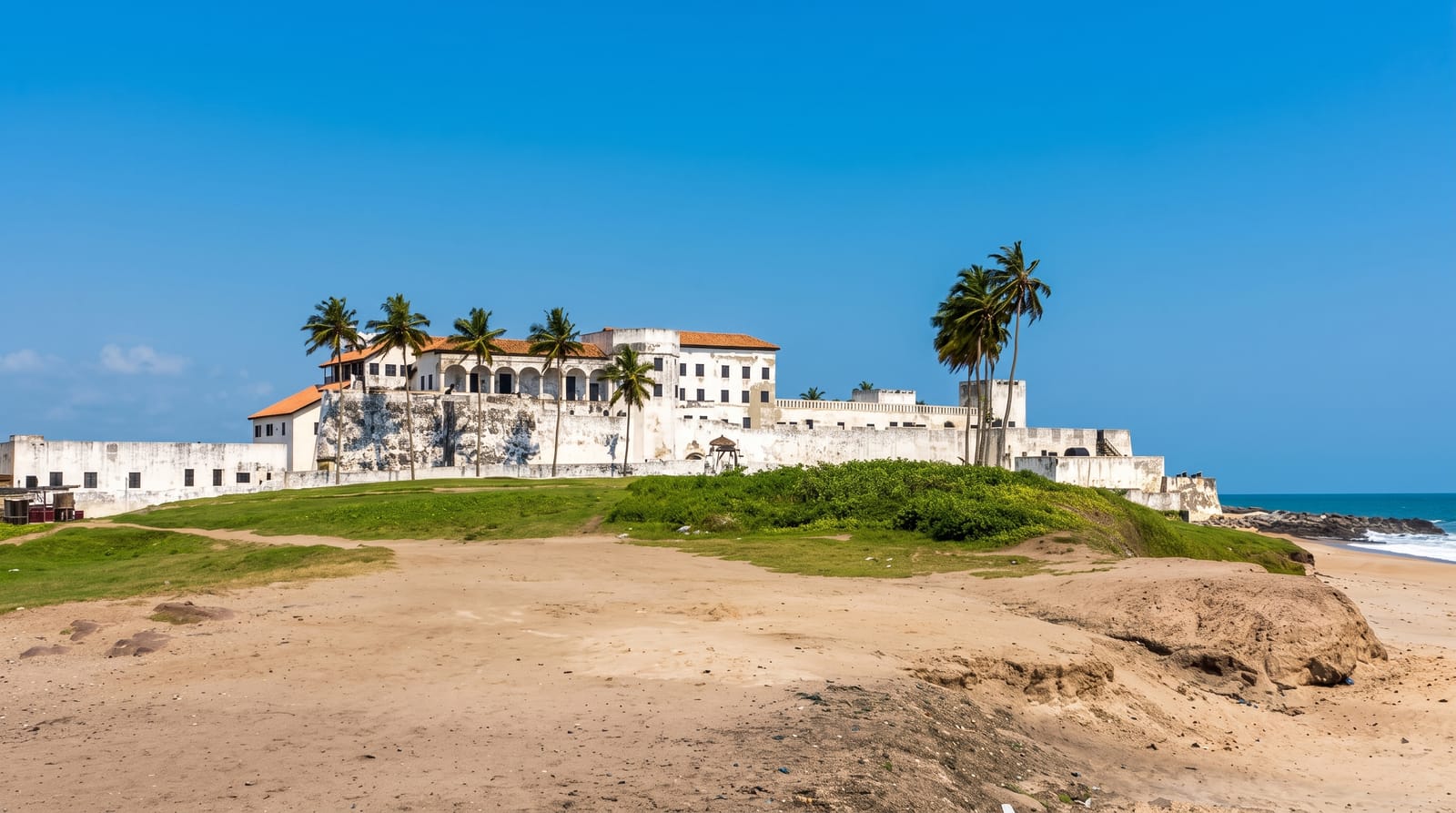
AI illustration
UNESCO World Heritage
Built by the Portuguese in 1482 and later held by the Dutch and British, Elmina is the oldest surviving European structure in sub-Saharan Africa, and for centuries it was a hinge of the transatlantic slave trade. Guided visits move through the courtyards to the dungeons where captives were held before being forced through the Door of No Return to waiting ships, and the guides do not soften what happened here. Above the dungeons sit the governor's rooms and a church, an arrangement that visitors find as disturbing as anything else on the tour. Outside, the fishing harbour below the walls is loud with boats and daily life, and the contrast is part of the experience.
History
The Portuguese first reached the Gold Coast in 1471, after fifty years of exploring down the African coast, and found at Elmina a thriving gold trade already run by local people and Arab and Berber traders, which gave the place its name A Mina, the mine; the trader Fernão Gomes set up a post there, and in 1482 the Portuguese built the castle of São Jorge da Mina, the first trading post on the Gulf of Guinea and now the oldest European building standing in sub-Saharan Africa. It became one of the most important stops of the Atlantic slave trade; the Dutch West India Company took it in 1637, after a failed attempt in 1596, and continued the trade until 1814, and in 1872 the Dutch Gold Coast, the castle included, passed to Britain (Wikipedia, Elmina Castle).
The main sights
- The dungeons - the holding cells beneath the courtyards.
- The Door of No Return - the sea gate through which captives were taken.
- The governor's quarters and chapel - the rooms directly above the cells.
- The fishing harbour - the working port and painted canoes below the fort.
When to go
The dry season from November to March is the most comfortable for coastal travel. Emancipation Day and the Year of Return commemorations bring significant gatherings, particularly meaningful for visitors of the African diaspora. Mornings are cooler and quieter.
What to expect
This is a place of profound suffering and should be approached as such - guides ask for respectful behaviour, and smiling group photographs in the dungeons are deeply out of place. The tour is emotionally heavy and many visitors find it difficult; that is appropriate. Guiding quality varies and a tip is customary. Combine with Cape Coast Castle nearby, though doing both in one day is a great deal to absorb.
Nearby
Cape Coast Castle, Kakum National Park and the coastal road east toward Accra.
Key facts
Source: Wikidata, item Q55264655, read on 18 October 2026.
What to pack for Elmina Castle
Chosen from what this place is for. Tap a kit for the full checklist.
- Travel rod + reel - A packable multi-piece rod fits in a case and covers most holiday fishing. Find on Amazon
- Quick-dry clothing - Board shorts or synthetics that shrug off spray and dry fast. Find on Amazon
- Loose, light, long clothing - Covering up beats bare skin in the desert - and locals dress this way for a reason. Find on Amazon
- Comfortable walking shoes - Sightseeing means kilometres of pavement and cobbles daily. Find on Amazon
Some links on this page are Amazon affiliate links - if you buy through them we may earn a small commission at no extra cost to you.
All packing kitsPlan your trip
Where to start if Elmina Castle is going on the list.
Booking links on this page are affiliate links - if you book through them we may earn a small commission at no extra cost to you. It never changes what we write about a place.
Opening times, ticket prices and seasonal closures change - check the official source before you go: official site.