Xanten Archaeological Park
A Roman colony never built over, so its full plan lies under fields with buildings reconstructed on the spots.
Updated 19 October 2026
AI illustration
UNESCO World Heritage
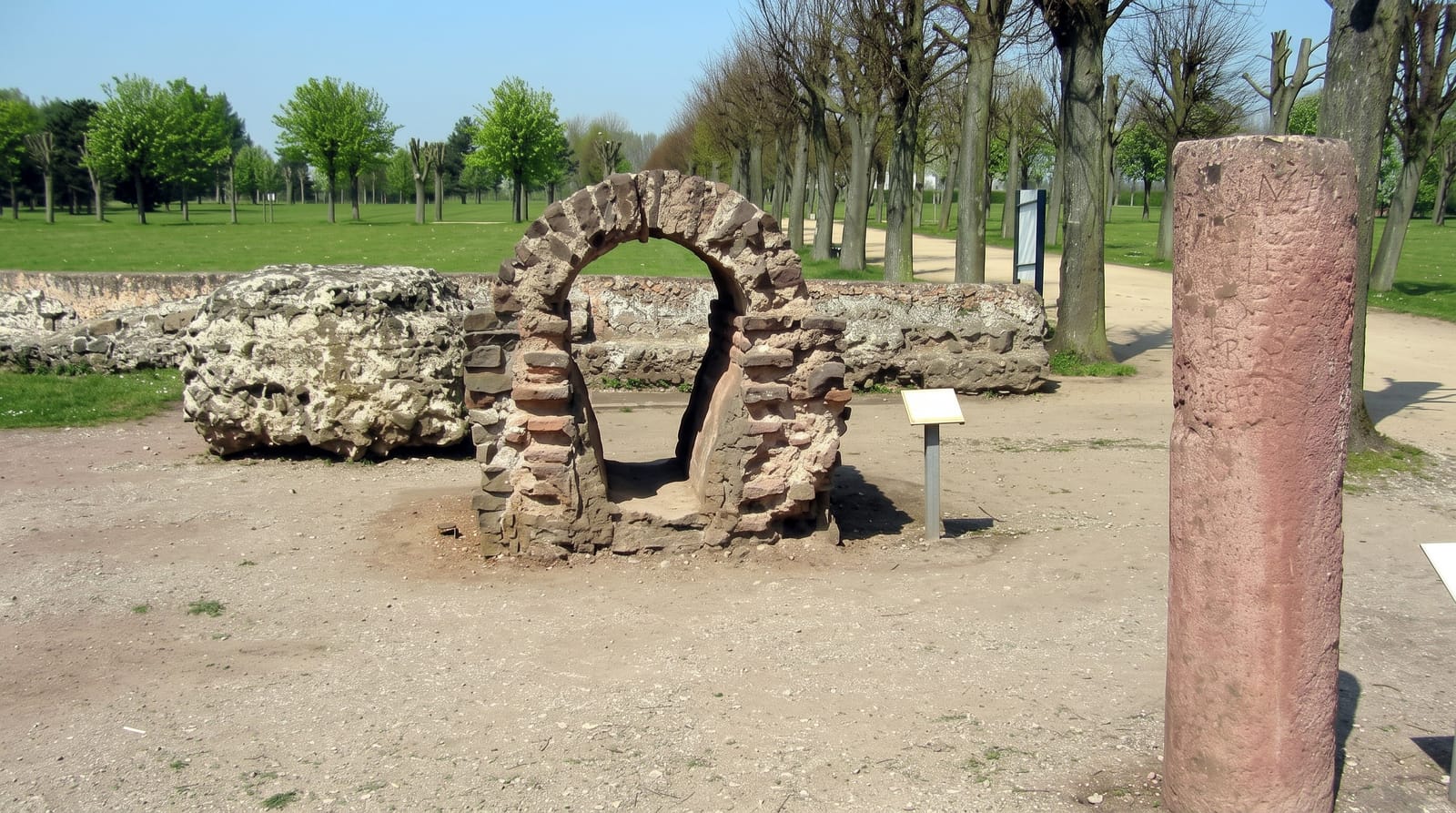
Colonia Ulpia Traiana was founded around AD 100 on the Lower Rhine and held perhaps ten thousand people. It was abandoned after the fourth century and the medieval town of Xanten grew a little to the north, so the Roman site was farmed rather than built on and its street grid, walls and buildings survive intact below ground. Since 1977 an archaeological park has covered the site, with reconstructions built on the original foundations using period methods where possible: a stretch of city wall, gates, an amphitheatre, a temple, a hostel and a bath house under a protective hall with the excavated remains visible beneath.
Highlights
- The untouched plan - a Roman colony never built over by a later town.
- The reconstructions - walls, gates and buildings raised on original foundations.
- The bath house hall - excavated remains under a protective modern shelter.
- The amphitheatre - a rebuilt arena used for events.
When to go
April to October; the park is open year-round with reduced winter hours. Roman festival weekends bring reenactors. The site is large and open with little shade.
Practical notes
Buildings are reconstructions, though on genuine foundations. The site is large with long walks. Winter closes some indoor sections.
Nearby
The Lower Rhine runs alongside; the Dutch border is northwest.
Key facts
Source: Wikidata, item Q316385, read on 18 October 2026.
What to pack for Xanten Archaeological Park
Chosen from what this place is for. Tap a kit for the full checklist.
- Comfortable walking shoes - Sightseeing means kilometres of pavement and cobbles daily. Find on Amazon
- Modest clothing - Shoulders and knees covered - the single most common requirement. Find on Amazon
- A slim anti-theft daypack - Zips that close properly; keep it in front in crowds and on transit. Find on Amazon
- A scarf or shawl - To cover the head or shoulders on entry; women especially at mosques. Find on Amazon
Some links on this page are Amazon affiliate links - if you buy through them we may earn a small commission at no extra cost to you.
All packing kitsPlan your trip
Where to start if Xanten Archaeological Park is going on the list.
Booking links on this page are affiliate links - if you book through them we may earn a small commission at no extra cost to you. It never changes what we write about a place.
Opening times, ticket prices and seasonal closures change - check the official source before you go: official site.