Thuringian Rostbratwurst
A sausage documented since 1404, protected by name, and traditionally eaten with a specific local mustard.
Updated 4 September 2026
AI illustration
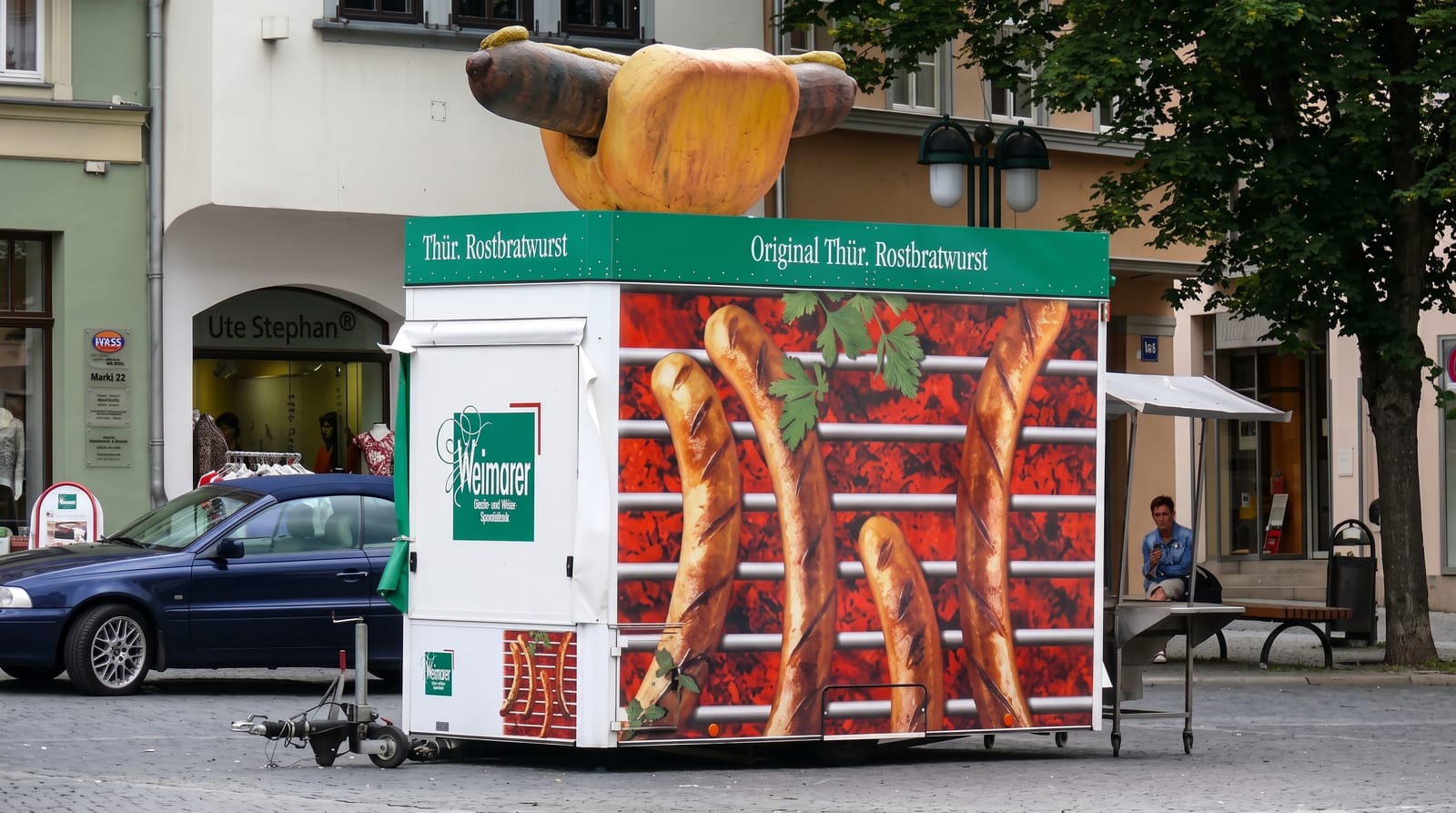
A record from an Arnstadt convent in 1404 mentions a payment for Bratwurst, and a Weimar statute of 1432 sets quality rules for it, which makes the Thüringer Rostbratwurst one of the earliest documented sausages in Europe. It is fifteen to twenty centimetres long, seasoned with marjoram, caraway and garlic in proportions that vary by family and butcher, and carries a protected geographical indication requiring production in Thuringia. It is grilled over charcoal, traditionally with pine cones or wood added, and served in a small bread roll with mustard, usually Born, a local brand, and never with ketchup by local convention.
What to look for
- The 1404 record - one of the earliest documented sausages in Europe.
- The marjoram seasoning - the herb that defines the Thuringian version.
- The charcoal grill - open grills at markets, roadsides and festivals.
- The mustard convention - served with local mustard, not ketchup.
When to go
Year-round; grills operate at markets, festivals and roadside stands through the year, and Christmas markets sell them heavily in December.
Things to know
Supermarket versions outside Thuringia often are not the protected product. Recipes vary between butchers. Asking for ketchup will get a reaction.
Nearby
Erfurt, Weimar and Arnstadt all claim their own versions.
What to pack for Thuringian Rostbratwurst
Chosen from what this place is for. Tap a kit for the full checklist.
- A reusable bag or container - For market produce and cutting down on packaging. Find on Amazon
- Wet wipes + hand sanitiser - Street food and washbasins do not always go together. Find on Amazon
Some links on this page are Amazon affiliate links - if you buy through them we may earn a small commission at no extra cost to you.
All packing kitsPlan your trip
Where to start if Thuringian Rostbratwurst is going on the list.
Booking links on this page are affiliate links - if you book through them we may earn a small commission at no extra cost to you. It never changes what we write about a place.
Opening times, ticket prices and seasonal closures change - check the official source before you go: official site.