Marburg
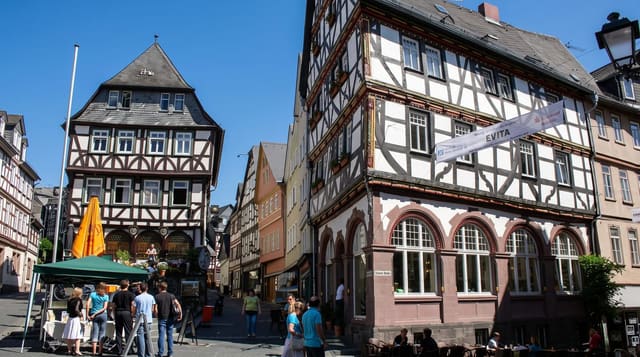
A hillside town so steep that its lanes climb by stairs, with the first purely Gothic church in Germany.
Updated 16 October 2026
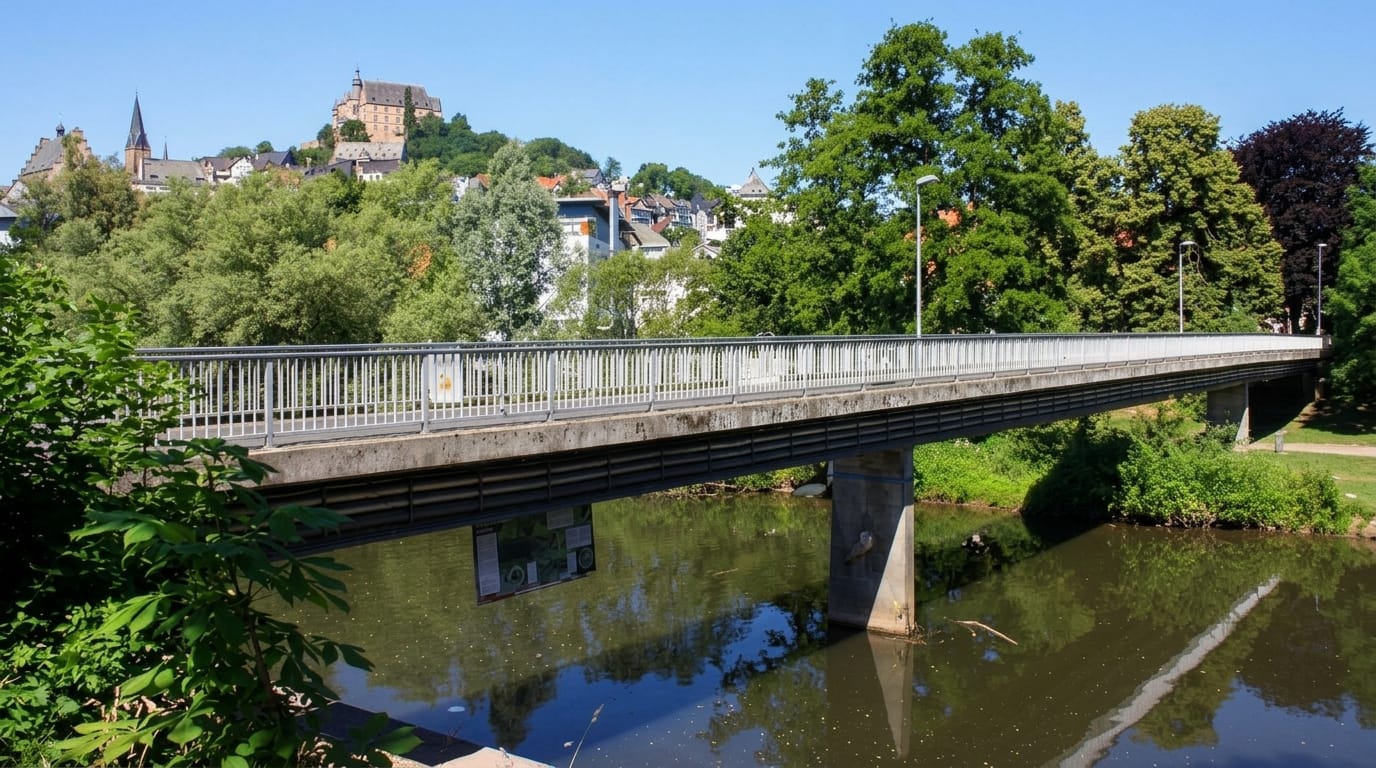
AI illustration
Elisabeth of Thuringia founded a hospital at Marburg and died there in 1231 at twenty-four; canonised four years later, she drew pilgrims in such numbers that the Teutonic Order built the Elisabethkirche from 1235, generally regarded as the first purely Gothic church in Germany, without Romanesque elements. The town climbs steeply from the Lahn to the landgraves' castle, with lanes running into staircases and public lifts installed to help. The university, founded in 1527, was the first Protestant one; the Brothers Grimm studied here. Marburg has an unusually large blind and partially sighted community, and the town is extensively adapted for it.
Background
Marburg grew where two early medieval trade routes met: one linked Cologne and Prague and crossed the Lahn here, the other led from the North Sea over the Alps to Italy. The settlement is first mentioned in 822 in the Reinhardsbrunner Chronik, coins show it has been a town since 1140, and it received town privileges in 1222. Elizabeth, the widowed landgravine of Thuringia, chose it as her dowager seat in 1228. It was the capital of Hessen-Marburg in 1485-1500 and once more in 1567-1605. Today it heads the Marburg-Biedenkopf district, with approximately 76,000 residents, and is a historic centre of the German pharmaceutical industry, with a BioNTech vaccine plant.
Source: Wikipedia, "Marburg"
What you'll find
- The Elisabethkirche - the first purely Gothic church built in Germany.
- The stepped lanes - a town so steep that streets become staircases.
- The landgraves' castle - a fortress and museum on the hilltop.
- The Grimm connection - the brothers' student years marked around the town.
When to go
April to October; the town is liveliest in term time. The castle closes Mondays. The climb to the upper town is steep, with public lifts as an alternative.
Good to know
The old town is genuinely steep and hard going. The castle museum is modest. Term breaks make the town noticeably quieter.
Nearby
Wetzlar lies south; the Kellerwald park is northwest.
Key facts
Source: Wikidata, item Q3869, read on 18 October 2026.
What to pack for Marburg
Chosen from what this place is for. Tap a kit for the full checklist.
- Comfortable walking shoes - Sightseeing means kilometres of pavement and cobbles daily. Find on Amazon
- Modest clothing - Shoulders and knees covered - the single most common requirement. Find on Amazon
- A slim anti-theft daypack - Zips that close properly; keep it in front in crowds and on transit. Find on Amazon
- A scarf or shawl - To cover the head or shoulders on entry; women especially at mosques. Find on Amazon
Some links on this page are Amazon affiliate links - if you buy through them we may earn a small commission at no extra cost to you.
All packing kitsPlan your trip
Where to start if Marburg is going on the list.
Booking links on this page are affiliate links - if you book through them we may earn a small commission at no extra cost to you. It never changes what we write about a place.
Opening times, ticket prices and seasonal closures change - check the official source before you go: official site.