Kloster Eberbach
A Cistercian abbey with a hall of old wine presses, used as the monastery location in The Name of the Rose.
Updated 19 October 2026
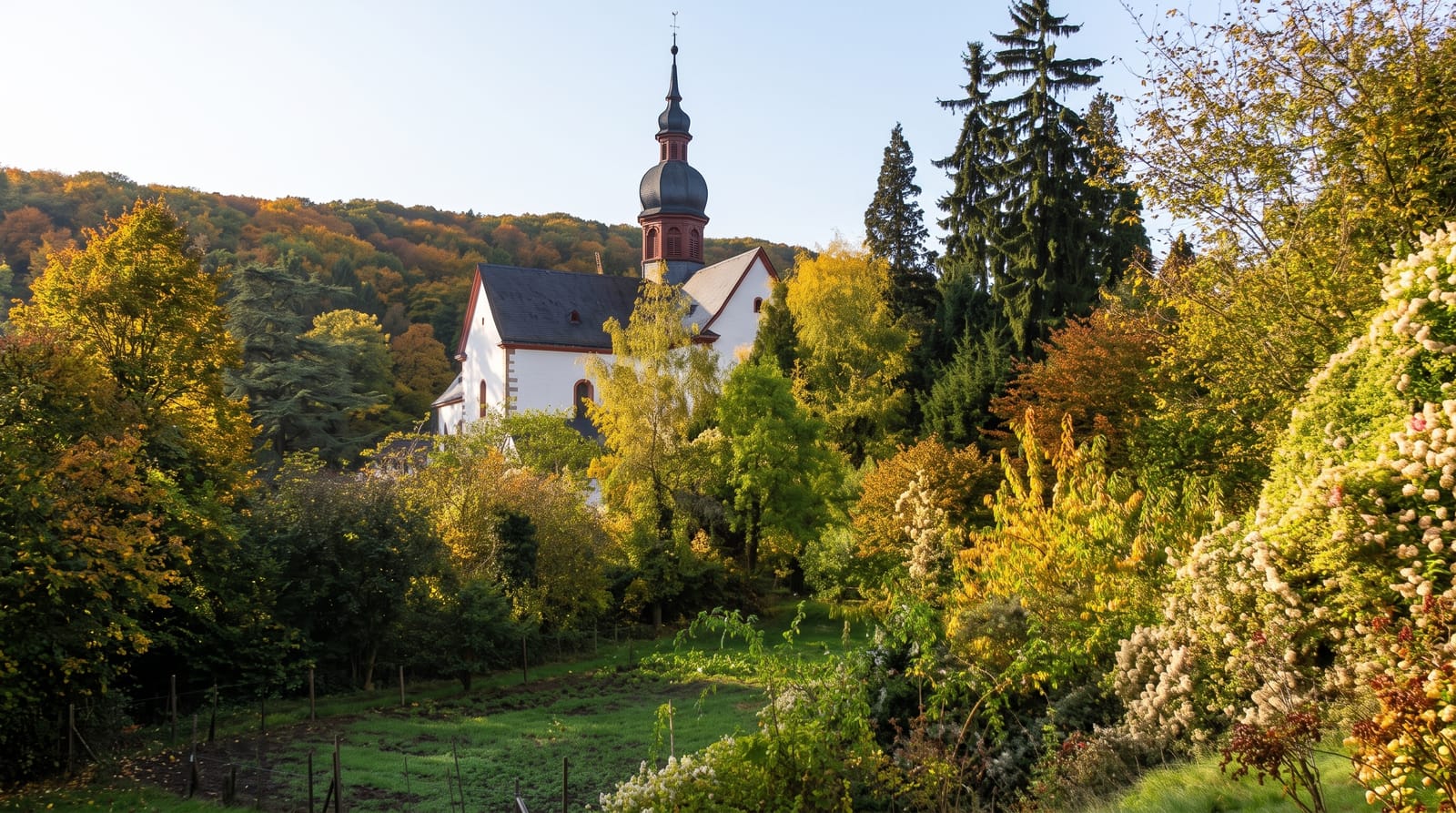
AI illustration
Founded in 1136 by Cistercians from Clairvaux, Eberbach became one of the largest wine producers in the medieval Rhineland, with its own fleet on the Rhine. The buildings survive largely intact: a plain Romanesque church, a vaulted monks' dormitory of about seventy-four metres, a chapter house and a lay refectory now holding a collection of large wooden wine presses, some from the seventeenth century. Jean-Jacques Annaud filmed the interiors of The Name of the Rose here in 1985 and 1986. The estate still makes wine as Hessische Staatsweingüter, and the surrounding Rheingau slopes carry Riesling.
History
Archbishop Adalbert of Mainz founded a house of Augustinian canons here in 1116 and gave it to the Benedictines in 1131, but neither took root, and in 1136 Bernard of Clairvaux founded Eberbach as the first Cistercian monastery on the east bank of the Rhine. It soon became one of the largest monasteries in Germany, founding daughter houses at Schönau in 1142, Otterberg in 1144, Gottesthal in 1155 and Arnsburg in 1174, with some 100 monks and over 200 lay brothers at its height, and it grew rich on wine; at least 14 Counts of Katzenelnbogen were buried in its church, among them Johann IV, the first to plant Riesling vines. Rebels from the Rheingau camped below the abbey in the Peasants' War of 1525 and drank from its great wine barrel, the Swedes sacked it in 1631, only 20 monks returning in 1635, and after prosperity in the 18th century it was dissolved on 18 September 1803; it later housed an asylum until 1873 and a prison until 1912, while its vineyards stayed in state hands (Wikipedia, Eberbach Abbey).
Highlights
- The monks' dormitory - a vaulted hall about seventy-four metres long.
- The press hall - large wooden wine presses in the lay refectory.
- The film location - interiors used for The Name of the Rose.
- The working estate - Riesling produced from the surrounding slopes.
When to go
April to October; the abbey is open year-round with shorter winter hours. Concerts and wine auctions use the halls in summer, restricting access on those days.
Before you go
Events close parts of the abbey without much notice. Wine tastings are separately priced. The complex is unheated and cold in winter.
Nearby
Eltville lies on the Rhine; Wiesbaden is east.
Key facts
Source: Wikidata, item Q697766, read on 18 October 2026.
What to pack for Kloster Eberbach
Chosen from what this place is for. Tap a kit for the full checklist.
- Comfortable walking shoes - Sightseeing means kilometres of pavement and cobbles daily. Find on Amazon
- Modest clothing - Shoulders and knees covered - the single most common requirement. Find on Amazon
- A slim anti-theft daypack - Zips that close properly; keep it in front in crowds and on transit. Find on Amazon
- A scarf or shawl - To cover the head or shoulders on entry; women especially at mosques. Find on Amazon
Some links on this page are Amazon affiliate links - if you buy through them we may earn a small commission at no extra cost to you.
All packing kitsPlan your trip
Where to start if Kloster Eberbach is going on the list.
Booking links on this page are affiliate links - if you book through them we may earn a small commission at no extra cost to you. It never changes what we write about a place.
Opening times, ticket prices and seasonal closures change - check the official source before you go: official site.