Hohentwiel
Germany's largest fortress ruin, on a volcanic plug, demolished by the French under a treaty in 1801.
Updated 16 October 2026
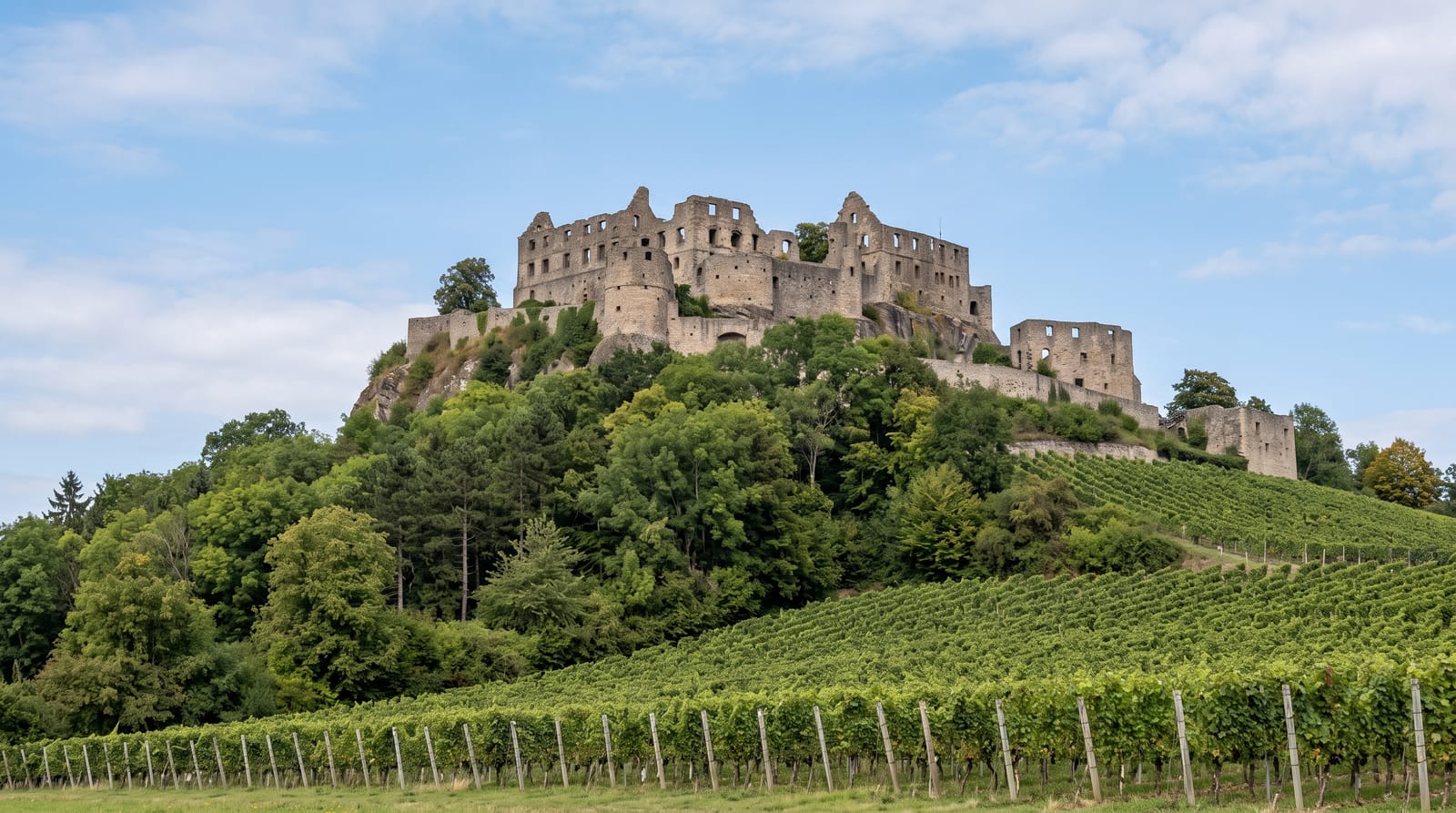
AI illustration
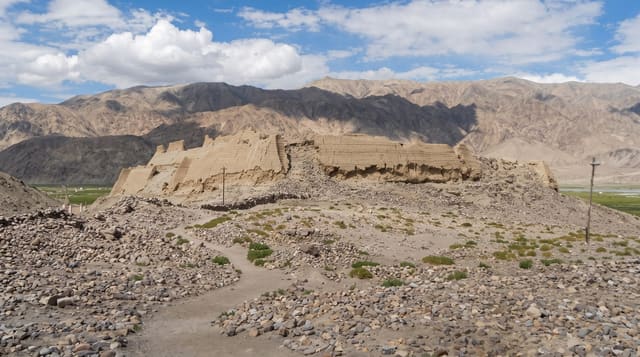
The Hohentwiel is a phonolite plug, the solidified throat of a Miocene volcano, standing about two hundred and sixty metres above the Hegau plain with a further ring of similar cones around it. Fortifications grew on it from the tenth century into a major Württemberg stronghold that withstood repeated sieges in the seventeenth century without falling. Napoleon's forces demolished it in 1801 under the terms of the Peace of Lunéville, and what remains, spread over some nine hectares, is described as the largest fortress ruin in Germany. The slopes carry a nature reserve with dry grassland flora and one of Germany's highest vineyards.
Background
The hill rises to 696.2 metres as the Hausberg of Singen, about 10 kilometres west of the Zeller See on Lake Constance. About 7-8 million years ago it was an active volcano, one of several in the Hegau. Early eruptions built a tuff cone, the Ur-Hohentwiel, standing 100-200 metres above its surroundings, while a vent plug formed beneath the tuff. Glaciers of the Riss glaciation later wore away the softer rock around it, leaving the hard phonolite core standing in an inverted relief. The Radolfzeller Aach flows past the foot of the eastern slope, Hilzingen lies 3 km west, and the extinct volcanoes Hohenkrähen, Mägdeberg and Hohenstoffeln stand 4-6 km to the north-northwest.
Source: Wikipedia, "Hohentwiel"
What's there
- The volcanic plug - a phonolite cone rising from the Hegau plain.
- The ruin extent - about nine hectares of demolished fortifications.
- The Hegau cones - a ring of similar volcanic hills around it.
- The dry grassland - a nature reserve with a vineyard on the slope.
When to go
April to October; the summit is exposed and the walk up takes about half an hour. Open-air concerts are staged in the ruins in summer. Winter access can be icy.
Things to know
Everything is ruin, with no roofed buildings. The climb is steady and exposed. Concert evenings restrict normal access.
Nearby
Lake Constance lies east; Switzerland is south.
What to pack for Hohentwiel
Chosen from what this place is for. Tap a kit for the full checklist.
- Warm base layers - Merino or synthetic against the skin - never cotton, which chills when damp. Find on Amazon
- Comfortable walking shoes - Sightseeing means kilometres of pavement and cobbles daily. Find on Amazon
- An insulated + windproof jacket - A down or synthetic layer under a hard shell handles most cold. Find on Amazon
- A slim anti-theft daypack - Zips that close properly; keep it in front in crowds and on transit. Find on Amazon
Some links on this page are Amazon affiliate links - if you buy through them we may earn a small commission at no extra cost to you.
All packing kitsPlan your trip
Where to start if Hohentwiel is going on the list.
Booking links on this page are affiliate links - if you book through them we may earn a small commission at no extra cost to you. It never changes what we write about a place.
Opening times, ticket prices and seasonal closures change - check the official source before you go: official site.