Hiddensee
A car-free island west of Rügen, where a hoard of Viking gold jewellery washed out of the dunes.
Updated 19 October 2026

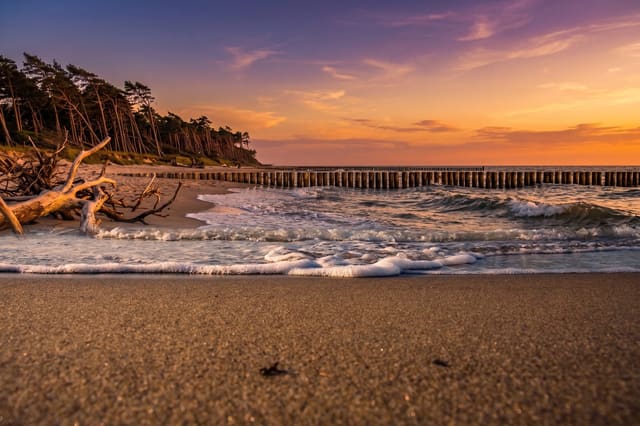
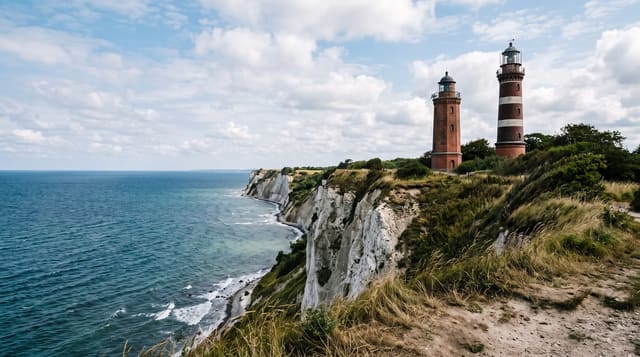
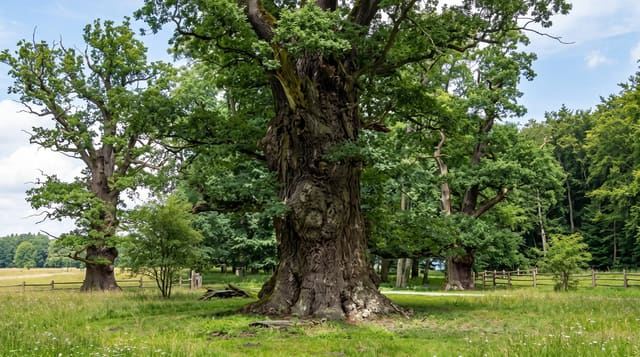
AI illustration
Hiddensee is about seventeen kilometres long and rarely more than two wide, with a hill of glacial moraine at the northern end and a long sand spit running south. Private cars are banned; movement is by bicycle, horse cart and foot. In the 1870s storms washed gold jewellery out of the dunes near Neuendorf, sixteen pieces of tenth-century Scandinavian work in filigree and granulation, one of the most important Viking gold finds in the Baltic; the originals are in Stralsund. Gerhart Hauptmann, the playwright, spent summers on the island for decades and is buried there. Sea buckthorn grows across the dunes.
History
The island was first settled in the Middle and Late Stone Age, and after much of the Germanic population left the southern Baltic in the 6th century AD the Slavic Rani took it; the Hiddensee treasure shows it lay within the Vikings' sphere in the 9th/10th century, and after King Waldemar I of Denmark defeated the Rani in 1168 it came under Danish rule. On 13 April 1296 Prince Wizlaw II of Rügen gave the island to Neuenkamp Abbey, which founded a Cistercian monastery here, and between 1302 and 1306 the Gellen church, a small beacon and the first harbour were built in the south; the island church was consecrated in 1332, the monastery was dissolved in the Reformation in 1536, and in 1628, in the Thirty Years' War, soldiers burned the oak forest on the Dornbusch, leaving an ash layer still visible by the road near the lighthouse (Wikipedia, Hiddensee).
What's there
- The car-free island - transport by bicycle, horse cart and foot only.
- The gold hoard story - Viking jewellery washed from the dunes in the 1870s.
- The Dornbusch lighthouse - a tower on the moraine hill at the north end.
- The Hauptmann house - the playwright's summer home and grave.
When to go
May to September; ferries run in season with a reduced winter service and are cancelled in storms. The island is quiet and largely closed out of season.
What to expect
No cars means everything is carried or cycled. The gold is displayed in Stralsund, not on the island. Ferries stop in bad weather.
Nearby
Rügen lies east; Stralsund is on the mainland.
What to pack for Hiddensee
Chosen from what this place is for. Tap a kit for the full checklist.
- Broken-in walking shoes or boots - Grip and ankle support matter more than looks; never hike in brand-new boots. Find on Amazon
- Padded shorts - The one thing that makes a full day in the saddle bearable. Find on Amazon
- Loose, light, long clothing - Covering up beats bare skin in the desert - and locals dress this way for a reason. Find on Amazon
- Modest clothing - Shoulders and knees covered - the single most common requirement. Find on Amazon
Some links on this page are Amazon affiliate links - if you buy through them we may earn a small commission at no extra cost to you.
All packing kitsPlan your trip
Where to start if Hiddensee is going on the list.
Booking links on this page are affiliate links - if you book through them we may earn a small commission at no extra cost to you. It never changes what we write about a place.
Opening times, ticket prices and seasonal closures change - check the official source before you go: official site.