Cape Arkona
A chalk cape at Rügen's northern tip with two lighthouses side by side and a Slavic temple site eroding into the sea.
Updated 4 September 2026
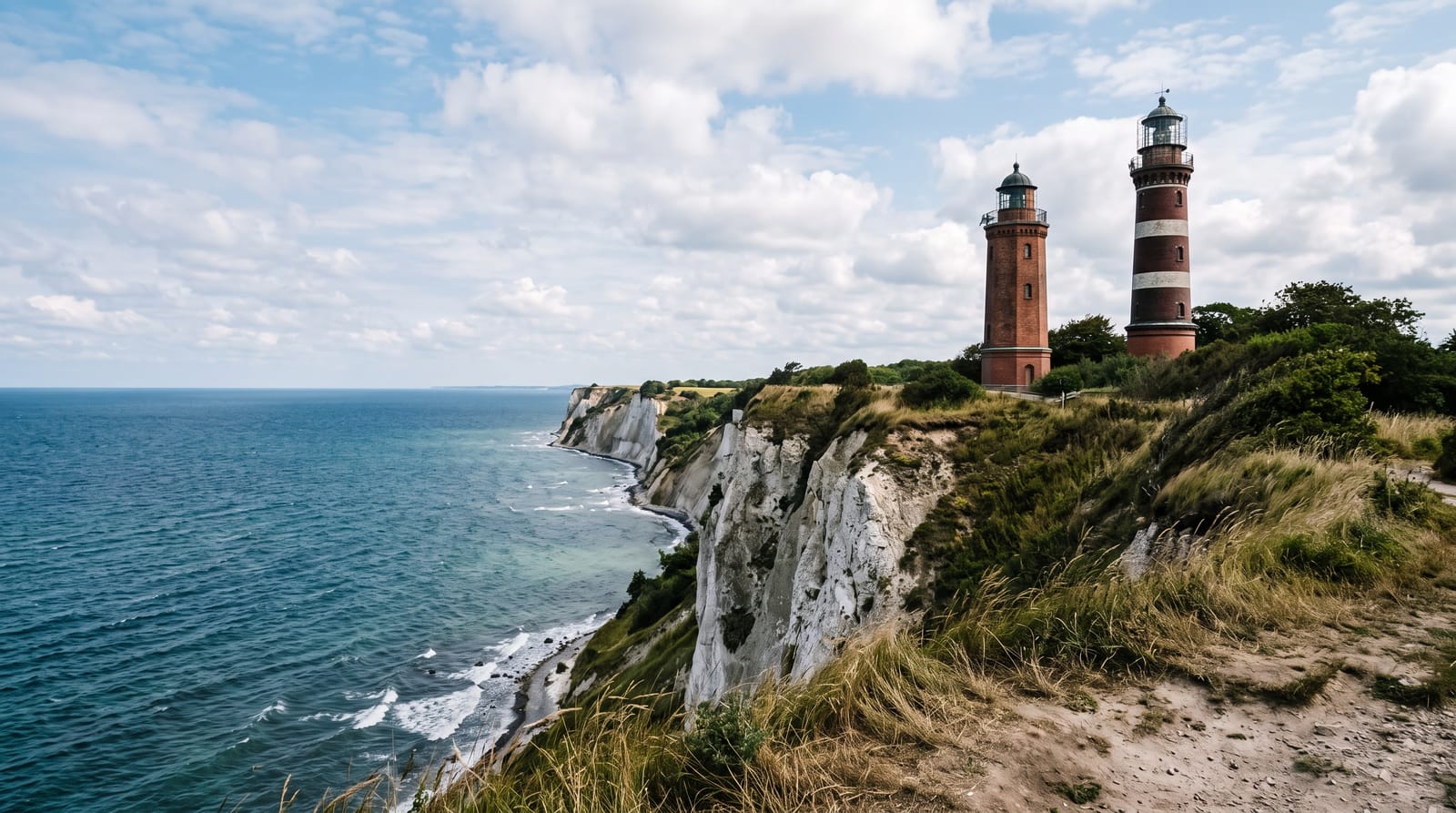
AI illustration
Arkona is a chalk and boulder clay cliff about forty-five metres high at the northern end of Rügen, retreating by roughly a quarter of a metre a year as the sea undercuts it. Two lighthouses stand together: a square brick tower of 1827 by Karl Friedrich Schinkel and a taller round one of 1902 built when the first proved too low. Behind them are the earthworks of the Jaromarsburg, a fortified Slavic temple site of the Rani that was destroyed in 1168; much of the enclosure has already fallen into the sea as the cliff retreats. The fishing village of Vitt lies below in a hollow.
What you'll find
- The two lighthouses - a Schinkel tower of 1827 beside a taller one of 1902.
- The Jaromarsburg - Slavic temple earthworks eroding into the sea.
- The chalk cliff - a retreating cliff about forty-five metres high.
- Vitt - a thatched fishing village in a hollow below the cape.
When to go
May to September; cars are excluded from the cape and access is on foot, by shuttle or by horse carriage from Putgarten. Winter is stormy and services close.
Good to know
Private cars stop at Putgarten and it is about a two-kilometre walk. Much of the temple site has already been lost to erosion. The cape is exposed and windy.
Nearby
Binz lies south; Hiddensee is west by boat.
Key facts
Source: Wikidata, item Q4110, read on 18 October 2026.
What to pack for Cape Arkona
Chosen from what this place is for. Tap a kit for the full checklist.
- Broken-in walking shoes or boots - Grip and ankle support matter more than looks; never hike in brand-new boots. Find on Amazon
- Travel rod + reel - A packable multi-piece rod fits in a case and covers most holiday fishing. Find on Amazon
- Modest clothing - Shoulders and knees covered - the single most common requirement. Find on Amazon
- Layers + a waterproof shell - Mountain weather turns fast; a packable rain jacket saves the day. Find on Amazon
Some links on this page are Amazon affiliate links - if you buy through them we may earn a small commission at no extra cost to you.
All packing kitsPlan your trip
Where to start if Cape Arkona is going on the list.
Booking links on this page are affiliate links - if you book through them we may earn a small commission at no extra cost to you. It never changes what we write about a place.
Opening times, ticket prices and seasonal closures change - check the official source before you go: official site.